
ExtraBrain Blog
AI Copilots for Finance and Ops Meetings: Capture Decisions Without Adding a Meeting Bot

How privacy-preserving AI copilots help finance and ops teams capture decisions, risks, owners, and follow-ups without adding a meeting bot.
Finance and operations meetings create expensive forgetting. A pricing exception gets approved verbally. A budget risk is acknowledged but never written down. A vendor renewal owner is named in passing. Everyone leaves thinking the decision is obvious, then the next meeting starts with: “Wait, what did we decide?”
AI meeting tools are trying to close that gap. But for finance and ops teams, the obvious solution can create a new problem. Adding a bot to every meeting may feel intrusive when the conversation includes forecasts, headcount, vendor contracts, incident costs, customer commitments, or internal tradeoffs. The team wants better memory, not another participant in the call.
The better pattern is an AI copilot that helps the meeting owner capture decisions, risks, and next steps while staying in control: less “bot joins your meeting,” more private decision support.
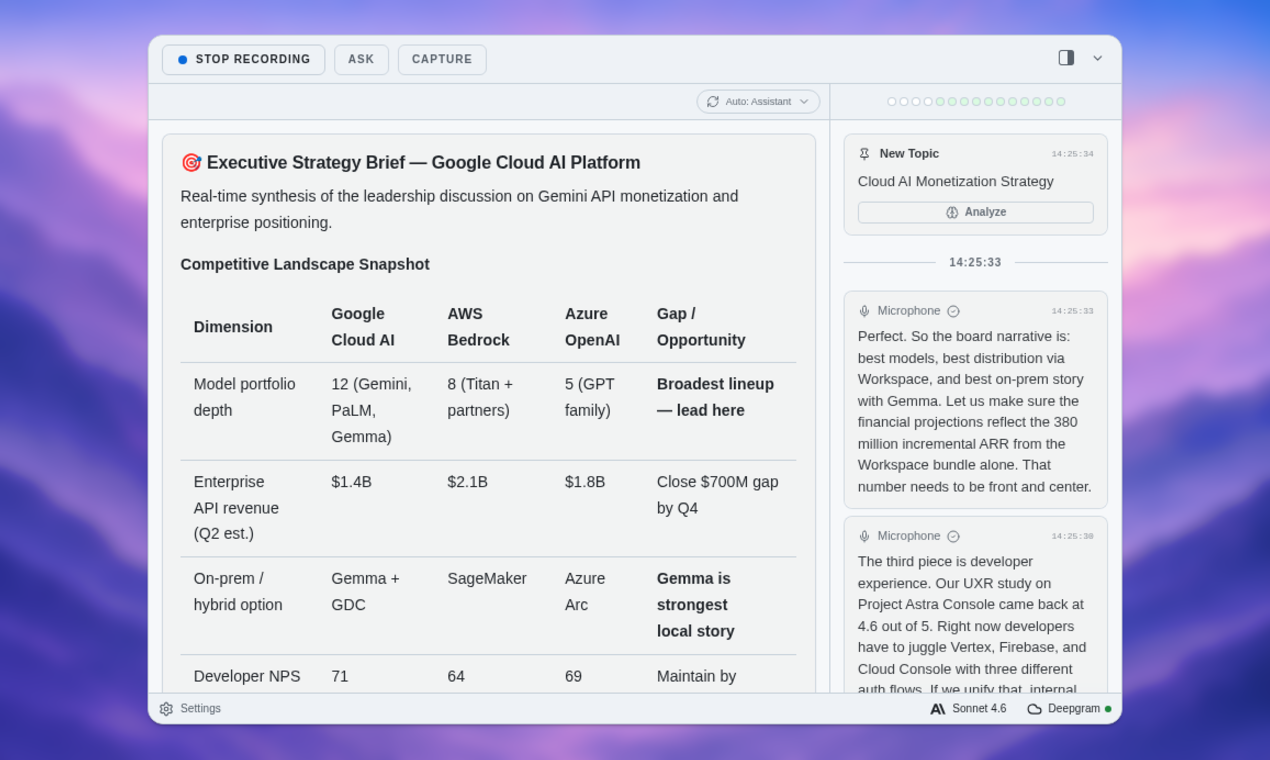
Finance and ops meetings do not fail because people take no notes
Most finance and ops teams already take notes. The problem is that the notes are rarely structured around what the business needs afterward.
A finance meeting might include forecast confidence, spend approvals, procurement timing, hiring dependencies, and risks to plan. An ops meeting might cover escalations, vendor constraints, SLAs, and owners. These conversations move fast because everyone is working from partial context.
The notes usually capture what was discussed. What they miss is what changed.
The useful artifact is not a transcript. It is a decision record:
- What was decided?
- Who owns the follow-up?
- What risk did we accept?
- What assumption needs validation?
- What number, date, or constraint changed the plan?
- What should be reviewed in the next meeting?
That is where AI copilots can help: not by replacing judgment, but by turning a messy conversation into structured working memory before details disappear.
Why “just add a meeting bot” is not always the right answer
Meeting bots are convenient when the goal is broad transcription. They join the calendar invite, appear as another participant, record the call, and generate a summary afterward. For some teams, that is fine.
Finance and ops often need a more careful model. Sensitive meetings need clear consent, tight access, and a narrower purpose than “record everything and make it available later.” A budget planning conversation can include performance concerns, confidential hiring changes, customer risk, legal exposure, or vendor negotiation posture. Even when everyone trusts the tool, the presence of a bot can change how people speak.
There is also a workflow problem. A bot-generated summary often arrives after the meeting, when the moment to clarify a decision has passed. If the summary says “team agreed to revisit vendor pricing,” but the room actually agreed that Priya owns a renegotiation by Friday, someone still has to reconstruct the truth.
For operational work, the best time to catch ambiguity is while the discussion is still alive.
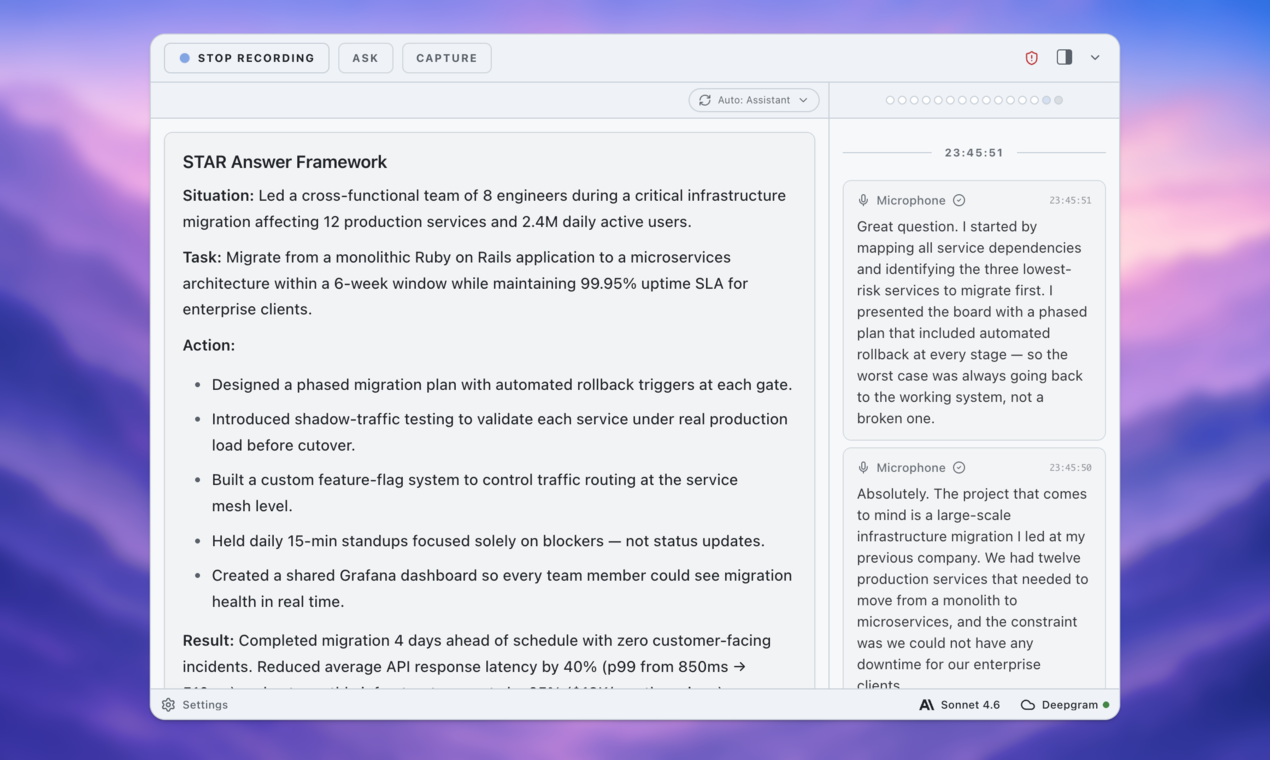
The copilot model: assist the operator, not the meeting
A privacy-preserving AI copilot has a different center of gravity. It is not trying to become a meeting attendee. It is helping one user pay attention, organize context, and leave with a better record.
That difference matters.
In a finance review, the person running the meeting may want a live read on unresolved decisions. In an operations sync, a chief of staff may want action items grouped by owner. In a procurement discussion, a manager may want risks separated from approved next steps. The tool should support those workflows without forcing the entire meeting to adapt around it.
A local-first AI meeting copilot like ExtraBrain points toward that model: user-controlled assistance for capturing and reasoning over conversations, rather than a surveillance layer that turns every meeting into a recorded performance.
The ideal copilot feels less like “someone else joined the call” and more like a private analyst beside your notes.
What a good AI copilot should capture
The most useful finance and ops summaries are not long. They are specific.
A good AI copilot should help extract five categories.
1. Decisions
A decision is stronger than a discussion point. “We talked about reducing contractor spend” is weak. “We will pause new contractor approvals until the Q3 forecast is updated” is useful. The copilot should separate actual decisions from topics that were merely explored.
2. Owners
Finance and ops work dies in passive voice. “Follow up on renewal terms” is not enough. “Marcus will ask the vendor for a 12-month renewal option by Thursday” is actionable. The tool should flag ownerless follow-ups so the meeting leader can clarify them before the call ends.
3. Risks and accepted tradeoffs
Many teams discuss risks without explicitly deciding whether they are accepted, mitigated, or unresolved. AI can help surface phrases like “we can live with that for one quarter” or “that is the risky part” and turn them into reviewable notes.
4. Numbers and constraints
Finance and ops decisions often hinge on budget variance, close date, renewal amount, headcount cap, SLA threshold, margin impact, or implementation timeline. A copilot should pull those details forward instead of burying them in a transcript.
5. Open questions
The most valuable meeting output is sometimes the question the team now knows it must answer: “Need legal input on auto-renewal clause,” “Need latest pipeline risk from sales,” or “Need implementation estimate before approving vendor migration.”
The practical workflow: before, during, after
The best AI-assisted meeting workflow starts before the meeting begins.
Before the meeting, decide what kind of output you need. A finance forecast review should not produce the same notes as an incident cost review. A vendor renewal call should not be summarized like a team standup. If your tool supports reusable profiles or custom instructions, create one for each recurring meeting type.
For example:
For finance and ops meetings, prioritize decisions, owners, deadlines, budget impacts, risks, unresolved questions, and changes from the previous plan. Do not summarize small talk. Distinguish decisions from proposals.
That instruction improves the output because it tells the AI what the meeting is for.
During the meeting, use the copilot to catch ambiguity. If the analysis shows an action item without an owner, ask the room to clarify. If a risk appears in the summary but nobody has accepted or mitigated it, pause and decide. If the tool surfaces three open questions, choose which ones must be answered before the next meeting.
After the meeting, turn the AI output into a lightweight decision log. Do not paste a raw transcript into Slack and call it done. Copy the decisions, owners, deadlines, and open questions into the system where the team already works: project tracker, finance planning doc, procurement tracker, CRM note, or operations dashboard.
The copilot reduces the cost of creating the artifact. The team still owns it.
Privacy is a product requirement, not a nice-to-have
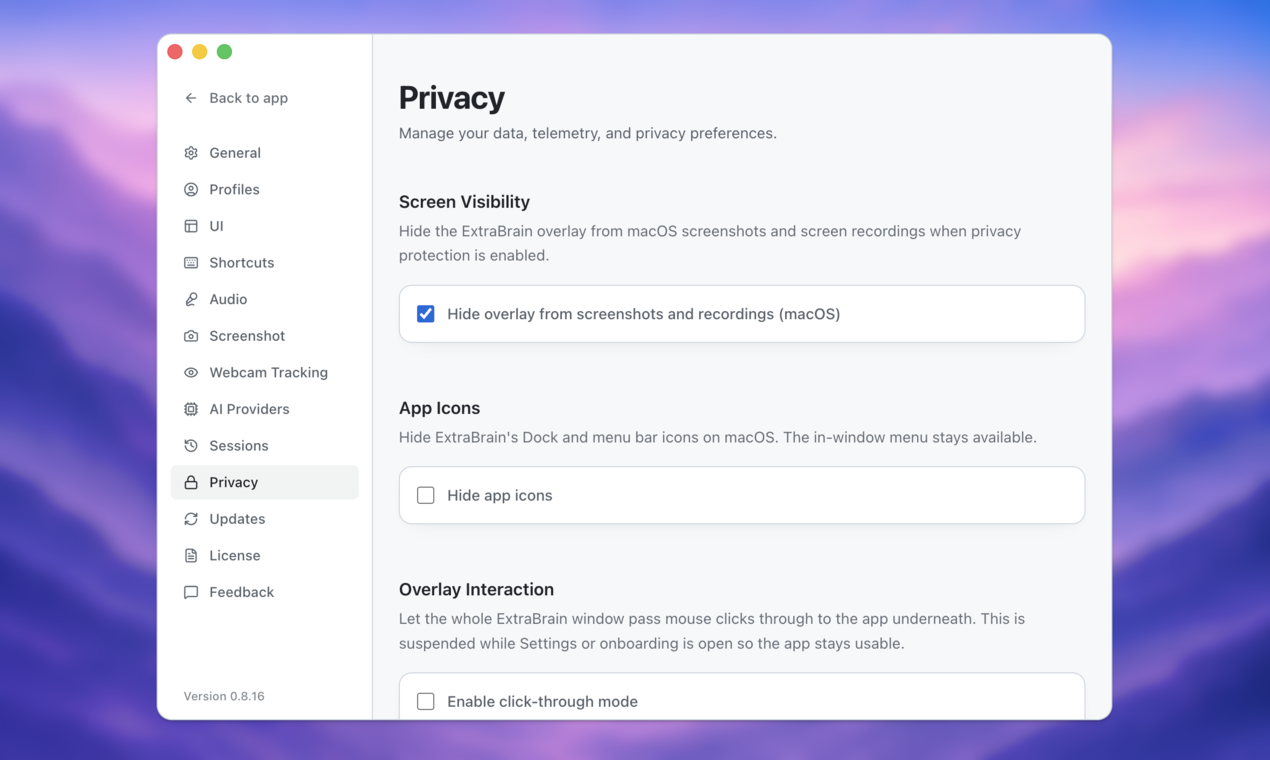
Finance and ops meetings sit close to the nervous system of the company. That makes privacy part of the workflow design.
Responsible AI assistance should answer a few plain questions:
- What is being captured?
- Who can see it?
- Where is it processed?
- Can the user stop or delete it?
- Is the meeting being recorded, summarized, or both?
- Are participants aware of the tool and its purpose?
These questions are not legal theater. They shape trust.
A tool that quietly records every conversation into a shared workspace creates different risks than a user-controlled assistant that helps an individual capture their own working notes. A tool that stores everything forever creates different risks than one designed around local-first capture, explicit user action, and selective sharing.
Teams should be especially careful not to use AI meeting tools as employee surveillance. The point is to improve operational memory, not score people on how they spoke in a meeting. If a tool makes people less willing to discuss uncertainty, risk, or bad news, it is hurting the very meetings it claims to improve.
How to evaluate AI finance meeting tools
Many AI meeting tools look impressive in a demo because summarization is easy to show. The harder question is whether the tool improves the next business action.
When evaluating a copilot for finance and ops, test it against real workflows:
- Can it distinguish decisions from discussion?
- Can it preserve context across follow-ups, such as “What changed since the last forecast?”
- Can it adapt to budget approvals, incident reviews, vendor negotiations, and executive ops syncs?
- Can users control when assistance happens?
- Does the output fit where decisions already live?
The winning tool is not the one with the longest summary. It is the one that helps the team leave the meeting with fewer unresolved assumptions.
A responsible copilot does not replace accountability
There is a tempting but dangerous way to talk about AI meeting tools: “Never miss a decision again.” That overpromises.
AI can mishear. It can overstate agreement. It can infer ownership where none was assigned. It can turn a proposal into a decision if nobody reviews the output. In finance and ops, those errors matter.
The responsible framing is simpler: AI can draft the decision record, but humans approve it.
That means the meeting owner should review the output before sharing it. Sensitive details should be edited intentionally. Decisions should be confirmed in the team’s source of truth. If the AI is uncertain, the uncertainty should be visible rather than smoothed away.
This is not a weakness. It is the right division of labor. The copilot listens for structure. The team provides judgment.
The real ROI is fewer repeated conversations
The value of AI copilots in finance and ops is not that they make meetings feel futuristic. It is that they reduce repeated work: fewer “what did we decide?” messages, fewer ownerless follow-ups, fewer stale assumptions, and fewer renewal deadlines rediscovered at the last minute.
That is workforce efficiency in practical terms: not squeezing more calls into the calendar, but making the calls you already have produce clearer outcomes.
The future is private, user-controlled meeting intelligence
Finance and ops teams do not need another bot that makes sensitive conversations feel crowded. They need tools that respect the room, support the operator, and turn complex discussions into useful artifacts.
The best AI copilots will be quiet where they should be quiet, explicit where they should be explicit, and practical where work actually happens. They will help users capture decisions without pretending to make them. They will support accountability instead of replacing it.
Start with one recurring meeting where decisions often get lost: weekly forecast review, vendor renewal sync, operational risk review, or cross-functional planning. Use an AI copilot to capture decisions, owners, risks, numbers, and open questions. Review the output. Share only what should be shared. Then see whether the next meeting starts with more clarity.
That is the promise of responsible AI assistance for finance and ops: better memory for the people trusted to make the work happen.
If your team is exploring that model, try ExtraBrain as a private, user-controlled way to bring AI assistance into sensitive professional conversations without turning the meeting itself into another system to manage.