
ExtraBrain Blog
AI Extensions for Interviews: A Practical 2026 Pros and Cons Review
A practical guide to AI interview extensions, their limits, and when a desktop copilot like ExtraBrain is a better fit.
AI extensions for interviews became popular because they promise fast help inside the browser. They can listen to an interviewer, read a coding prompt, summarize context, and show suggested answers in a sidebar. For short browser-based calls, that sounds convenient.
The problem is that interview tools are not all the same. A browser extension is easy to install, but it is also limited by the browser, the interview platform, and the way you share your screen. A desktop AI interview copilot has a different tradeoff profile because it can work across meeting apps, local IDEs, screen context, and post-session review.
This guide explains the practical pros and cons of an AI extension for interview preparation and live interview support. It also explains why a local-first desktop assistant such as ExtraBrain is often a better fit for candidates who need reliable context, privacy controls, and responsible support across real interview workflows.
Use any AI interview tool only where interview, employer, school, workplace, meeting, and platform rules allow AI assistance, transcription, screenshots, or notes. A tool can help you think more clearly, but you are still responsible for honest and allowed use.
Understanding AI extensions for interviews
What is an AI extension for an interview?
An AI extension for an interview is usually a browser plugin for Chrome, Edge, or another browser. It sits inside the browser and tries to help during an interview by reading web page content, capturing tab audio, analyzing visible coding prompts, or summarizing live captions.
In practice, an interview extension is a lightweight AI sidebar. It may provide reference answers, conceptual hints, bullet-point outlines, or starter code snippets while the interview is happening.
That design can be useful when the entire interview lives in one browser tab. It becomes weaker when the real interview moves across apps, screen shares, desktop IDEs, whiteboards, or follow-up discussion.
Common features in AI interview extensions
| Feature | What it usually does | Where it helps | Where it breaks down |
|---|---|---|---|
| Real-time transcription | Converts tab audio or captions into text. | Recruiter screens, short video calls, basic Q&A. | Desktop meeting apps, noisy audio, strict consent rules. |
| Real-time answer suggestions | Turns the latest question into answer bullets. | Behavioral prompts, general product questions, quick explanations. | Deep technical reasoning, highly personal stories, interviewer follow-ups. |
| Coding assistance | Reads a prompt or screenshot and suggests an approach or code. | Simple web-based coding questions. | Local IDEs, complex edge cases, system design, multi-file projects. |
| Browser context awareness | Reads page text or the DOM to understand a problem. | Browser-first assessment pages. | Non-browser tools, whiteboards, shared documents, desktop apps. |
| Sidebar display | Shows prompts and AI output next to the interview page. | Quick glance support. | Screen sharing, cramped layouts, visual distraction. |
The core appeal is simplicity. You install the extension, open the sidebar, and start using it.
The core weakness is also simplicity. The extension only understands the part of the interview that the browser exposes.
Pros of using an AI extension for interviews
Low barrier to entry
The biggest advantage is convenience. A browser extension is usually quick to install and easy to launch.
For candidates who only need basic interview practice or light note support, this can be enough. There is no separate desktop setup, no audio routing decision, and no complicated workspace to configure.
That makes extensions appealing for short preparation sessions. It also makes them appealing for people who are trying AI interview support for the first time.
Browser context can be useful
Because an extension runs inside the browser, it may be able to read text from a page. That can help when the interview prompt, coding challenge, or meeting transcript is already visible in the browser.
For example, a browser extension may detect the text of a coding problem without forcing you to copy and paste the prompt manually. It may also summarize browser captions or visible chat messages.
This is the best-case scenario for extension-based tools. They work best when the interview stays inside one browser environment.
Side-by-side answers are easy to scan
A sidebar can make AI output easy to skim. You can keep the prompt and suggested answer in roughly the same visual area.
That can be helpful for practice. It can also help you compare your own answer structure against a suggested outline.
For example, if you are practicing behavioral questions, an extension might remind you to use a situation, task, action, result, and reflection structure. That is useful as coaching support, especially before the live interview.
Good enough for lightweight preparation
Not every interview task needs a full desktop copilot. If you are reviewing common questions, practicing concise answers, or studying a browser-based prompt, an extension can be a reasonable lightweight tool.
The key is to understand the boundary. An extension is not a full interview workspace. It is a browser helper.
The major drawbacks of AI interview extensions
Screen sharing creates obvious friction
The first major drawback is visual exposure during screen sharing. A browser sidebar, popup, or extension window may be visible if you share the relevant browser window or the whole screen.
Even if you only share a single tab, many real interviews do not stay inside one tab. You may need to switch to a portfolio, a code editor, a whiteboard, a document, or a meeting window.
That creates pressure and distraction at exactly the wrong time. You should not be thinking about hiding a tool while also trying to answer a question well.
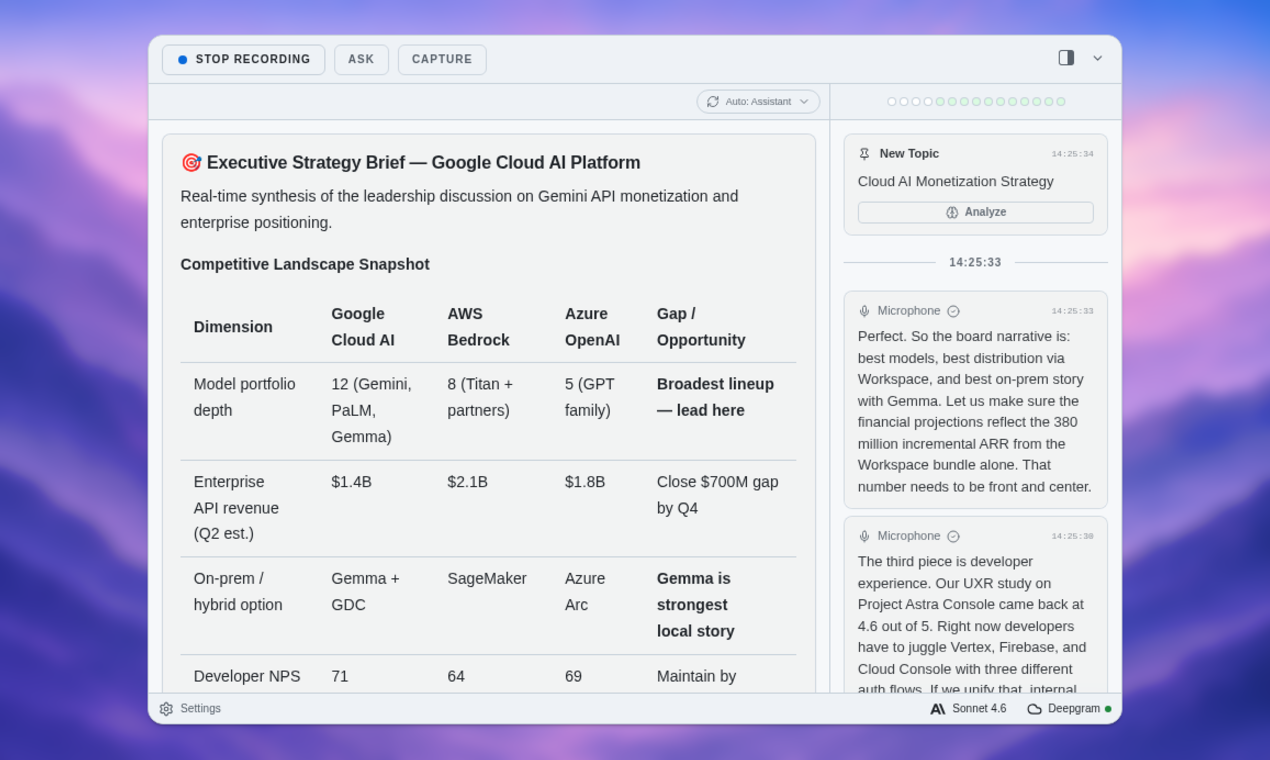
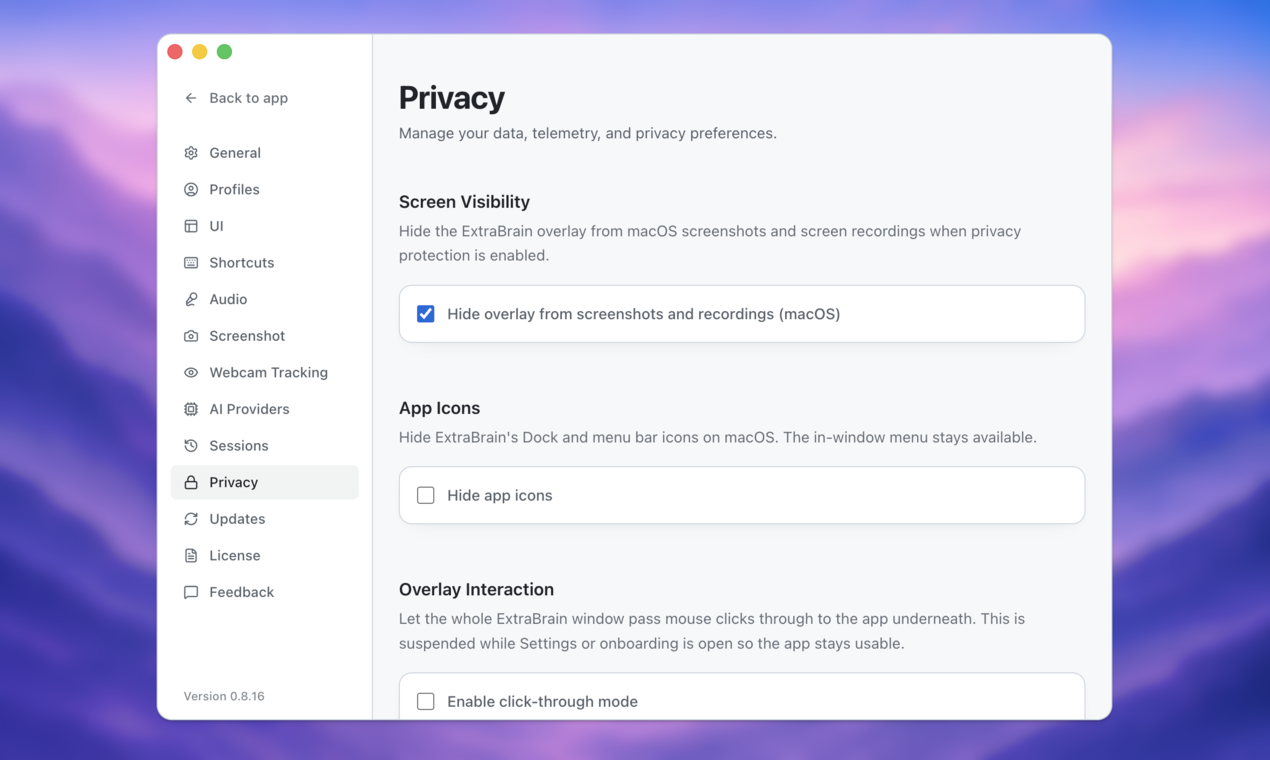
ExtraBrain is designed as a desktop app that can stay hidden from screen sharing and screen recording on major meeting tools. That does not remove your responsibility to follow the rules of the interview or meeting, but it does reduce the awkwardness of managing a browser sidebar during legitimate allowed use.
Browser extensions can conflict with assessment environments
Many assessment platforms care about browser integrity, tab focus, and unexpected page behavior. A browser extension may inject code, read page elements, add overlays, or require clicks outside the active work area.
Those behaviors can be fragile. They can break when the platform changes its page structure. They can also create unnecessary friction if the assessment environment has strict rules about browser extensions.
A desktop copilot has a different architecture. ExtraBrain can use screen-aware context instead of relying on DOM access, which means it does not need to modify the interview page to understand what is visible.
This distinction matters most in coding interviews and technical assessments. Reading the screen as context is often more robust than depending on the internal structure of a web page.
Extensions are trapped inside the browser
Real interviews often move beyond the browser. You might start in Google Meet, jump into Zoom, open a local IDE, sketch a system design in a whiteboard tool, or debug a local app.
A browser extension is not built for that kind of workflow. It can see what the browser sees, but it usually cannot maintain rich context across the full desktop environment.
ExtraBrain is built as a Mac desktop AI interview assistant and meeting copilot. It supports live transcription, screen-aware context, coding interviews, system design rounds, behavioral interviews, meetings, lectures, and research calls.
That broader scope matters because the hardest interview moments are usually not isolated browser moments. They are live reasoning moments across multiple tools.
Performance can suffer inside the browser
Extensions share browser resources. During video calls, browser-based coding environments, many open tabs, and AI sidebars, performance can degrade.
Lag is more than a minor annoyance. It interrupts your thinking, makes you look less fluent, and can cause you to miss details in the interviewer’s question.
A desktop assistant is not automatically lightweight, but it is not confined to the browser process. ExtraBrain is a desktop app with local-first options, which gives users more control over transcription, AI providers, and how their session is configured.
Generic answers can hurt more than they help
The most dangerous AI output is not obviously wrong. It is generic, plausible, and disconnected from your actual experience.
Extensions often optimize for fast answers in a small sidebar. That can encourage shallow responses.
In behavioral interviews, that means answers can sound rehearsed or impersonal. In system design interviews, that means missing tradeoffs, constraints, and clarifying questions. In coding interviews, that means producing code without being able to explain the reasoning.
A stronger interview copilot should help you think, not just hand you text. ExtraBrain can help generate answer outlines, STAR structures, technical explanations, and follow-up questions from live transcript and screen context while keeping the candidate responsible for the final answer.
Why a desktop AI interview copilot is often the better alternative
It fits the real interview workflow
A desktop AI interview copilot is designed around the whole session rather than one browser tab. That is the main advantage.
A real interview includes audio, screen context, interviewer follow-ups, your notes, shared documents, coding environments, and post-interview reflection. A browser extension sees only part of that picture.
ExtraBrain is a free, local-first desktop AI interview assistant and meeting copilot for Mac. It combines live transcription, screen-aware context, local Gemma 4 on-device AI where installed and compatible, bring-your-own AI providers, and clear privacy controls.
That makes it useful for coding interviews, system design rounds, behavioral interviews, product interviews, meetings, lectures, and research calls.
Screen-aware context is more flexible than DOM reading
DOM reading is useful only when the important context is in a browser page. Screen-aware context is useful when the important context is visible anywhere on your desktop.
For example, a coding interview might involve a browser prompt, a local VS Code window, a terminal, and a diagram. A product interview might involve a case prompt, a spreadsheet, a whiteboard, and a meeting transcript.
ExtraBrain can use screen context to help interpret what is happening in the session. That is a better match for modern remote interviews, where the work rarely stays in one clean browser tab.
Local-first options improve privacy control
Privacy is one of the biggest reasons to choose a desktop assistant carefully. Interview transcripts, screenshots, notes, and prompts can contain personal history, compensation details, company context, or confidential work information.
ExtraBrain gives users local-first options. A fully local posture requires local Parakeet transcription plus local Gemma 4 on-device AI where installed and compatible, with no external provider requests.
External providers may receive selected prompts, transcript text, screenshots, audio, or context depending on configuration. That is why provider choice and privacy settings matter.
Bring-your-own providers give users more control
Many browser extensions hide the model and provider stack behind the product. That can make it hard to understand quality, latency, privacy, and cost.
ExtraBrain supports bring-your-own provider setup. Supported provider options include Google Gemma 4 local AI, Anthropic, OpenAI, custom OpenAI-compatible endpoints, Claude Subscription, and Codex Subscription.
This gives users more control over the tradeoff between speed, reasoning quality, privacy posture, and provider billing. External AI and transcription usage is billed separately by the providers users choose.
It can support before, during, and after the interview
An extension is usually focused on the live moment. A desktop copilot can support the full interview loop.
Before the interview, you can practice answering aloud and refine your stories. During the interview, you can use live transcript and screen context where allowed. After the interview, you can review what happened, capture follow-up notes, and improve your preparation for the next round.
This is where ExtraBrain acts like a focused AI second brain for interviews and meetings. It is not trying to replace a general note-taking database. It is a second-brain-style workspace for live sessions, transcripts, notes, screen context, and review.
Practical examples
Recruiter screen
A browser extension can help summarize common recruiter questions if the call is simple and browser-based. However, recruiter screens often include personal details, salary expectations, scheduling constraints, and company-specific notes.
ExtraBrain is better suited when you want a private session record and post-call review. You can use it to capture what was asked, what you answered, and what needs follow-up.
Behavioral interview
A sidebar can remind you of the STAR method. That is helpful, but it is not enough.
The best behavioral answers are grounded in your real experience. ExtraBrain can help structure answers from live context and notes, but you should still speak from your actual work history.
A good copilot should help you remember the right story, not invent a fake one.
Coding interview
A browser extension may read a LeetCode-style prompt and suggest a solution. That can be useful for practice, especially when you are learning patterns.
Live coding interviews are more demanding. You need to explain tradeoffs, test edge cases, respond to hints, and adapt when the interviewer changes the constraints.
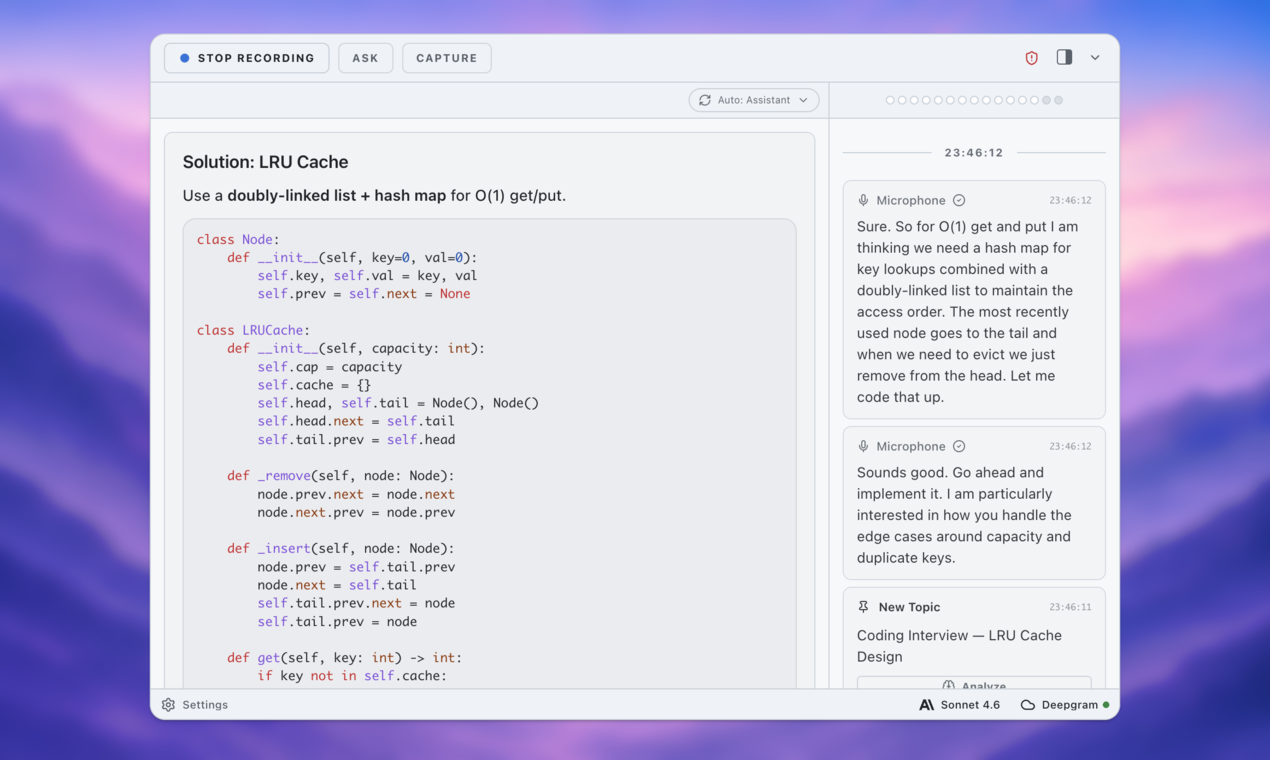
ExtraBrain is a stronger fit when the coding workflow includes screen context, local IDEs, terminal output, and spoken reasoning. It can help with outlines, technical explanations, debugging context, and follow-up questions while you remain responsible for the code you submit.
System design interview
System design interviews rarely fit neatly inside a browser sidebar. They involve diagrams, constraints, clarifying questions, tradeoffs, bottlenecks, reliability, data models, and follow-up changes.
An extension might generate a generic architecture checklist. That is not enough for a senior-level conversation.
A desktop copilot with screen-aware context is more useful because it can follow the visual state of the discussion and help you organize tradeoffs as the conversation evolves.
A responsible way to compare tools
When comparing an AI extension with a desktop copilot, avoid asking only which one can produce the fastest answer. Ask which one helps you perform better while staying within the rules.
Use this checklist:
- Does the tool work in the actual apps you use for interviews?
- Does it support your meeting platform, browser, IDE, and screen workflow?
- Does it explain what data may leave your device?
- Does it support local transcription or local AI when you need that posture?
- Can you control the AI provider?
- Does it help you structure your own thinking rather than replace it?
- Does your interview, employer, school, workplace, or platform policy allow this use?
For many candidates, the answer is that a browser extension is fine for lightweight practice. For serious interview workflows, a desktop app like ExtraBrain is more flexible, more private by design, and more aligned with the way interviews actually happen.
FAQ
Is an AI extension for interview support always a bad idea?
No. An AI extension can be useful for practice, browser-based study sessions, and lightweight coaching.
It becomes a poor fit when you need cross-app context, local IDE support, stronger privacy controls, post-session review, or a less distracting live workflow.
Can ExtraBrain run fully local?
A fully local ExtraBrain posture requires local Parakeet transcription plus local Gemma 4 on-device AI where installed and compatible, with no external provider requests. External providers may receive selected prompts, transcript text, screenshots, audio, or context depending on configuration.
What platforms does ExtraBrain support?
ExtraBrain is available for macOS today, including Apple Silicon and Intel Macs. Windows and Linux are planned future platforms.
How much does ExtraBrain cost?
The core ExtraBrain Mac app is free. ExtraBrain Pro is $9.99/month, $79/year, or $149 Lifetime launch pricing. External AI and transcription provider usage is billed separately by the providers users choose.
Can ExtraBrain generate interview answers?
ExtraBrain can help generate answer outlines, STAR structures, technical explanations, and follow-up questions from live transcript and screen context. Candidates remain responsible for honest and allowed use.
Is Extra Brain the same as ExtraBrain?
Yes. ExtraBrain is the official product name, and Extra Brain is a common spaced search alias for the same app.
Bottom line
AI interview extensions are convenient, but they are narrow. They work best when everything happens in one browser tab and the goal is lightweight support.
Modern interviews are usually broader than that. They include meeting apps, shared screens, code editors, diagrams, live discussion, and post-interview learning.
That is why a desktop AI interview copilot is often the better choice. ExtraBrain gives Mac users a free, local-first desktop workflow with live transcription, screen-aware context, local AI options where installed and compatible, bring-your-own providers, and privacy controls.
Use it responsibly, follow the rules that apply to your interview or meeting, and treat AI as a thinking aid rather than a substitute for your own judgment.