
ExtraBrain Blog
The Best AI Career Tools Help You Remember Your Own Experience

The best AI career tools help job seekers recall real examples, organize career context, prepare responsibly, and protect privacy.
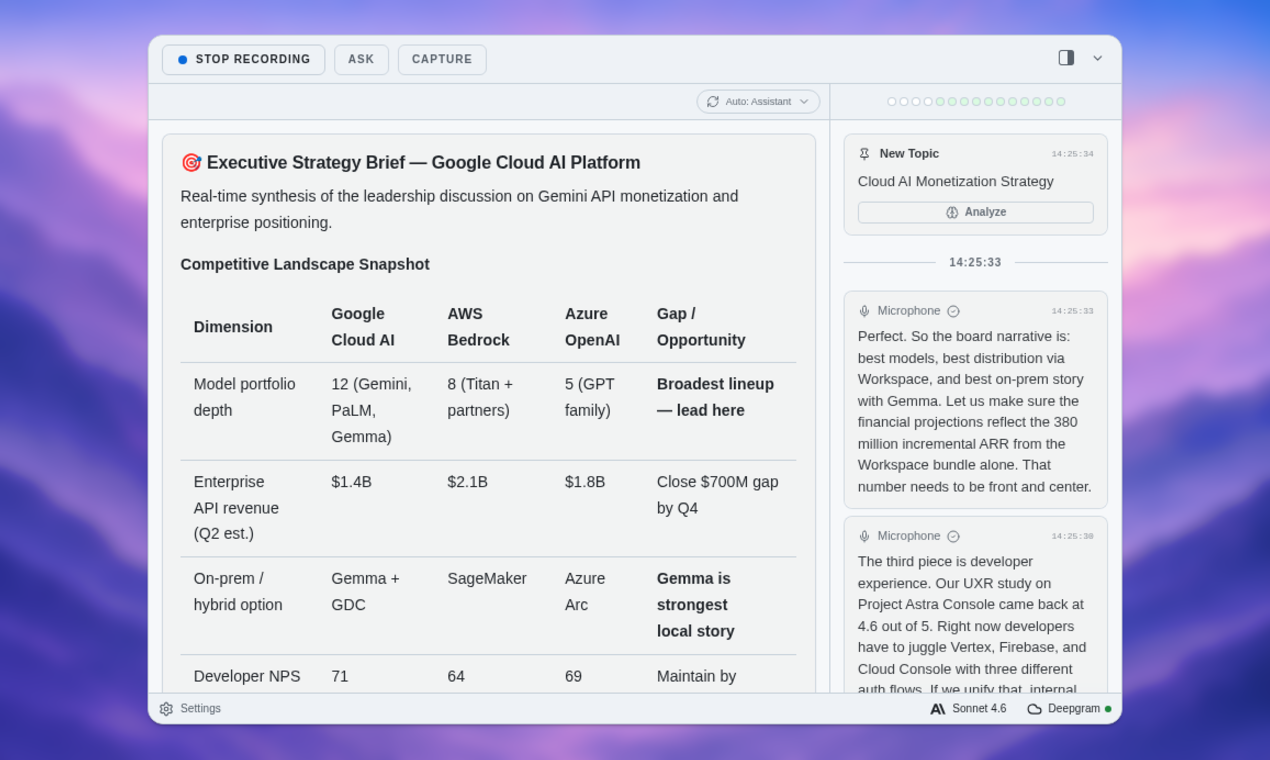
The most useful AI career tool is not the one that writes the most impressive answer for you.
It is the one that helps you remember the answer you already earned.
That distinction matters more than most job seekers realize. Interviews are getting more AI-aware. Recruiters know candidates have access to polished answer generators. Hiring teams are listening for evidence, specificity, and judgment. A generic story about “driving cross-functional impact” does not land the way it used to, especially when every candidate can produce one in five seconds.
The advantage now is not sounding like the internet’s idea of a strong candidate. The advantage is being able to retrieve your own experience clearly: the project that almost failed, the stakeholder who changed their mind, the metric you improved, the decision you made under pressure, the lesson you carried into the next role.
That is where AI can be genuinely helpful. Not as a machine for inventing career fiction, but as a private memory layer for the work you have actually done.
A tool like ExtraBrain makes the most sense in that role: a user-controlled workspace that helps you capture conversations, organize notes, review transcripts, and turn messy career context into clearer preparation. The goal is not to become someone else in the interview. The goal is to stop forgetting yourself at the exact moment you need to explain your work.
The fake answer problem is really a memory problem
Most candidates do not set out to lie in interviews. They reach for generic answers because their real examples are hard to access under pressure.
You know you handled conflict, but cannot remember the cleanest story. You know you improved a process, but the metric is buried in an old performance review. You know you navigated ambiguity, but every example feels too long, too political, or too confidential. So when an interview question lands, your brain grabs the nearest safe template.
“Tell me about a time you influenced without authority.”
You have probably done that. Several times. But in the moment, the memory is not indexed by that phrase. It is indexed by something messier: the dashboard migration, the launch review, the manager who wanted one thing and the customer who needed another, the Slack thread that turned into a two-week negotiation.
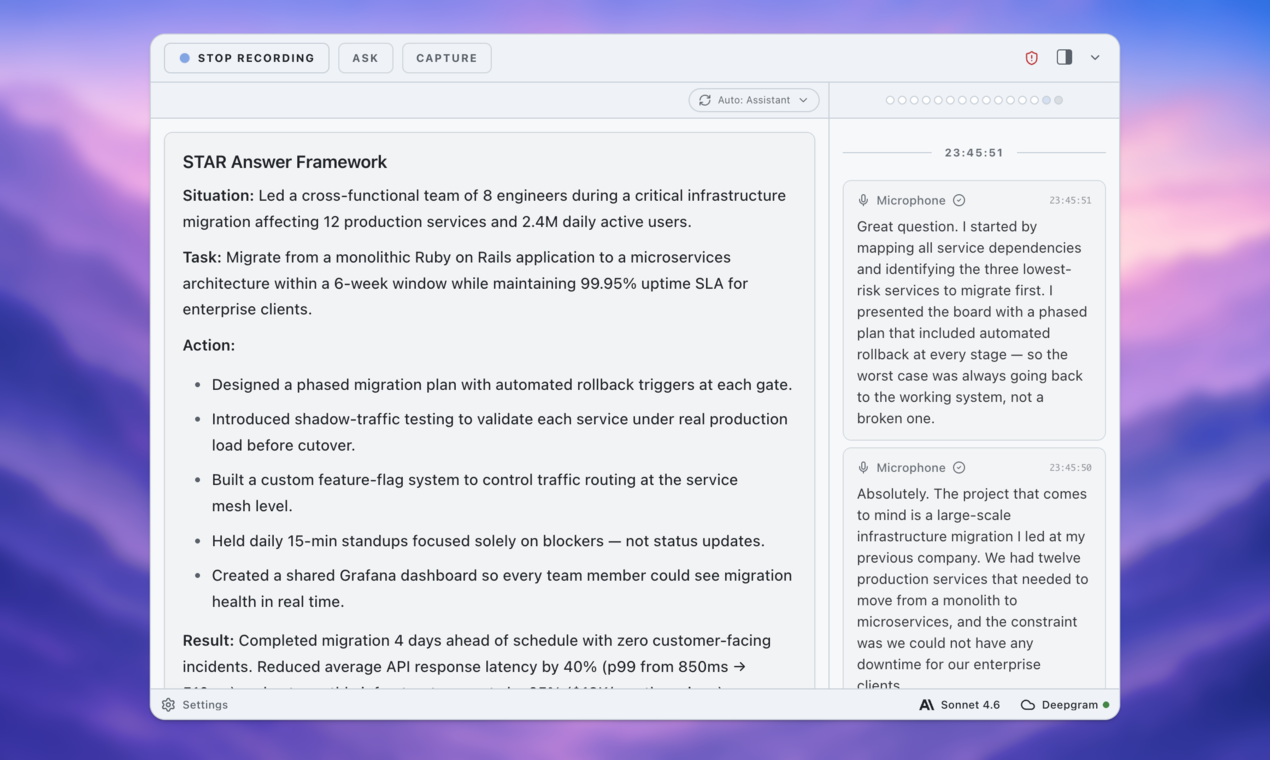
This is why AI-generated answers can feel helpful and hollow at the same time. They solve the formatting problem before solving the memory problem. They give you a neat story shape, but the raw material may not belong to you.
The better workflow is reversed: first recover the real experience, then shape it into an answer.
Your career is full of unstructured evidence
A career is not stored in one place. It is scattered across calendars, meeting notes, project docs, retrospectives, performance reviews, customer calls, interview transcripts, voice memos, old resumes, offer notes, and half-finished reflections after difficult days.
That is why job searching often feels strangely disorienting. You are asked to summarize years of work into a handful of crisp stories, but the evidence lives everywhere.
A senior engineer may have the best example of technical leadership hidden in a post-incident review. A product manager may have the strongest stakeholder story buried in a launch debrief. A mid-career candidate may have a powerful resilience story spread across three roles and never written down in one place.
The resume compresses all of this into bullets. The interview expands it again.
Good AI career tools should help with that expansion. They should help you find the details behind the bullet, not replace the bullet with fiction.
An AI interview preparation workspace can act like a bridge between scattered work context and interview-ready recall. Instead of asking, “Write me an answer about leadership,” you can ask, “Which real situations in my notes show leadership, tradeoffs, conflict, or measurable change?”
That is a very different use of AI. It starts from evidence.
Specificity is the new polish
For a long time, interview advice over-indexed on polish. Use the STAR method. Keep answers concise. Mention impact. Do not ramble. Practice your opener.
That advice is still useful, but it is no longer enough.
AI can polish anything. It can turn weak material into confident prose. It can generate a perfectly structured behavioral answer about a project that never happened. Because polish is now cheap, specificity has become more valuable.
Specificity sounds like:
- “The support queue was taking four days to clear, and we got it under 24 hours by changing the handoff process.”
- “The migration was not blocked by code. It was blocked by two teams disagreeing about ownership.”
- “I originally chose the wrong metric, and the customer conversation forced us to redefine success.”
- “The hard part was not building the dashboard. It was convincing people to trust one source of truth.”
These details are hard to fake consistently because they come from lived context. They also make interviewers lean in. A real answer has texture: constraints, names you may need to anonymize, tradeoffs, false starts, and lessons that sound earned.
AI should help you find and protect that texture. It can ask follow-up questions, spot missing context, suggest clearer framing, and help redact sensitive names. But the strongest material should still come from you.
Memory support is not cheating
There is an important ethical line here.
Using AI to invent accomplishments is dishonest. Secretly using AI to answer restricted live interview questions can violate the rules of the process. Outsourcing your judgment to a tool is not the same as demonstrating skill.
But using AI to prepare from your own notes is not cheating. It is closer to building a better notebook, a better search system, and a better coach around the experience you already have.
Candidates have always prepared. They have always written story banks, rehearsed with friends, reviewed resumes, practiced salary conversations, and read common interview questions. AI changes the quality and speed of that preparation, but the ethical principle remains simple: use tools to understand and communicate your real experience, not to impersonate experience you do not have.
A responsible private AI interview copilot should make that boundary obvious. It should encourage recall, reflection, and clarity. It should not push the user toward deception or hidden live performance.
The best prompt is not “Give me a perfect answer.”
The better prompt is “Help me remember where I have actually done this.”
The best career tools ask better questions
A generic AI tool often starts with a blank box. That blank box can be powerful, but it can also nudge people toward generic requests.
“Write a behavioral answer.”
“Make me sound more senior.”
“Help me explain this gap.”
Those requests may produce useful language, but they do not necessarily produce self-knowledge. A career-focused tool should ask questions that pull real evidence forward:
- What project created the most ambiguity in your last role?
- Which decision did you make with incomplete information?
- When did you change someone’s mind?
- What is a conflict you can discuss without exposing confidential details?
- Which metric improved because of your work?
- What did you learn after something did not go well?
- Which story sounds impressive but does not actually represent your best judgment?
These questions do something answer generators cannot do by themselves. They reconnect the candidate with the source material.
Many people underestimate their own experience. They remember the title, not the work; the stress, not the judgment they showed. A good AI tool can help identify patterns the user is too close to see: stakeholder alignment, recovery after ambiguity, translating technical work for non-technical teams.
A private workspace makes honesty easier
The most useful career preparation is often the least polished at first.
You may need to write the awkward version of why you left. You may need to admit that you froze during a mock interview. You may need to paste a transcript where your answer rambled for three minutes. You may need to compare salary expectations, personal constraints, immigration timing, burnout, or confidence gaps.
That is sensitive material. It is also exactly the material that makes AI coaching useful.
If the workspace does not feel private, you will sanitize too early. You will remove the names, emotions, numbers, uncertainties, and context before the tool has a chance to help. The result is safer, but shallower. You get generic advice because you supplied generic material.
This is why privacy is not just a compliance issue for AI career tools. It is a product quality issue.
A local-first AI meeting copilot points toward a healthier default: keep sensitive context under user control, make capture visible, support review and deletion, and help users turn raw conversations into durable lessons without scattering private career data across random tools.
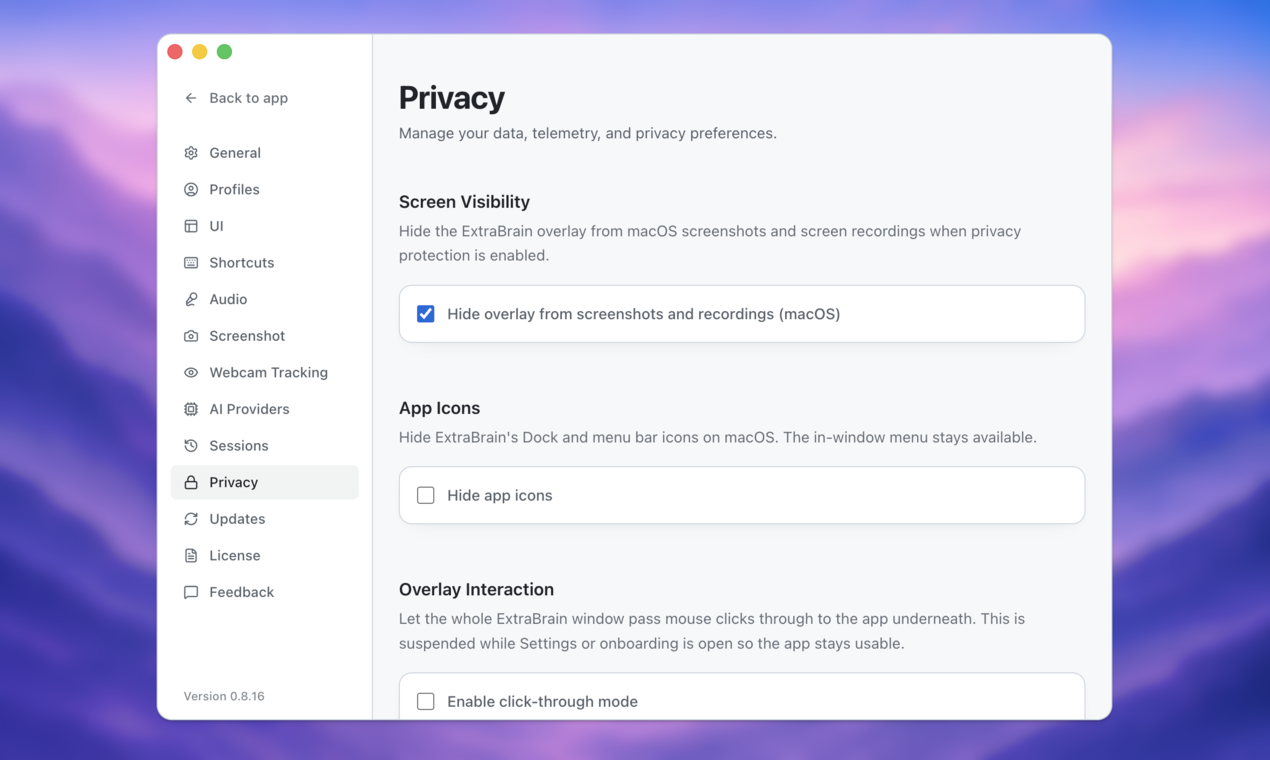
When people trust the workspace, they can be more honest. When they are more honest, the preparation gets better.
The workflow: capture, organize, recall, rehearse
The best AI career workflow is not a one-time prompt. It is a loop.
First, capture the raw material. That might be notes after a project, a transcript from a mock interview, a debrief after a recruiter screen, or reflections after a meeting where you handled something difficult.
Second, organize it into themes. Leadership, conflict, ambiguity, technical depth, customer empathy, operational rigor, speed, quality, mentorship, influence, recovery, and learning from failure.
Third, recall examples when interview questions appear. Instead of starting from a blank page, you start from your own archive.
Fourth, rehearse the answer. AI can help compress the story, clarify the stakes, identify missing metrics, and suggest follow-up questions an interviewer might ask.
Finally, update the memory after each real conversation. What landed? What felt unclear? What did the interviewer ask twice? Which story should be retired, sharpened, or saved for a different role?
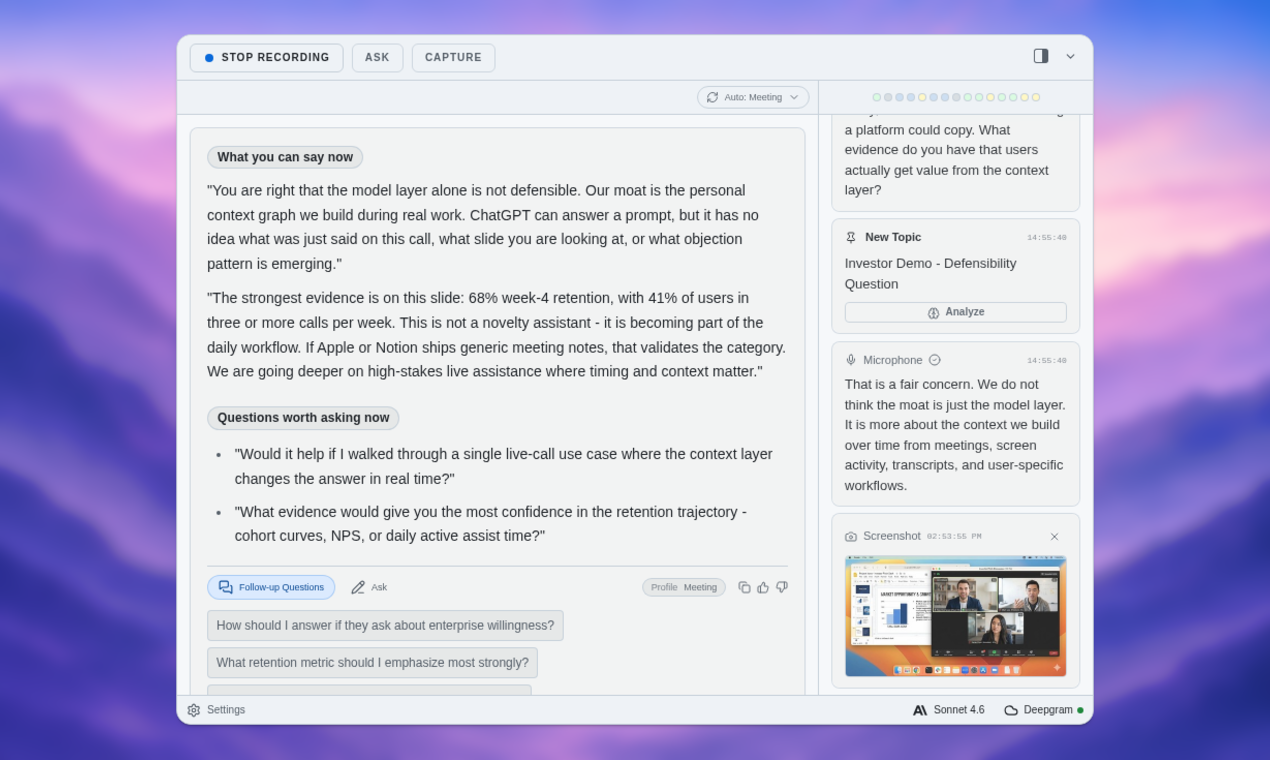
This loop turns interview prep from panic writing into accumulated context. Each conversation makes the next one better.
Choose tools that make you more yourself
The future of AI in careers should not be a race to see who can generate the smoothest professional persona.
That race is already boring. It fills the internet with identical cover letters, interchangeable interview answers, and candidates who sound impressive until the second follow-up question.
The better future is more grounded. AI helps people remember what they have done, understand what it means, protect the sensitive context around it, and explain it with confidence. It gives candidates a clearer mirror, not a mask.
That is the standard job seekers should use when evaluating AI career tools:
Does this tool help me recall real evidence?
Does it protect the private context that makes preparation useful?
Does it make me clearer without making me fake?
Does it keep me responsible for the final answer?
If the answer is yes, AI belongs in the workflow.
If you are preparing for interviews, organizing career notes, or trying to build a more reliable memory of your own work, try ExtraBrain. The best AI career tools do not invent a better version of you. They help you remember the real one, then explain that person clearly when it counts.