
ExtraBrain Blog
The Coding Interview Is Not Dead. The Memory Test Is.
AI is changing coding interviews from memorized LeetCode patterns toward explanation, tradeoffs, debugging, and responsible AI fluency.
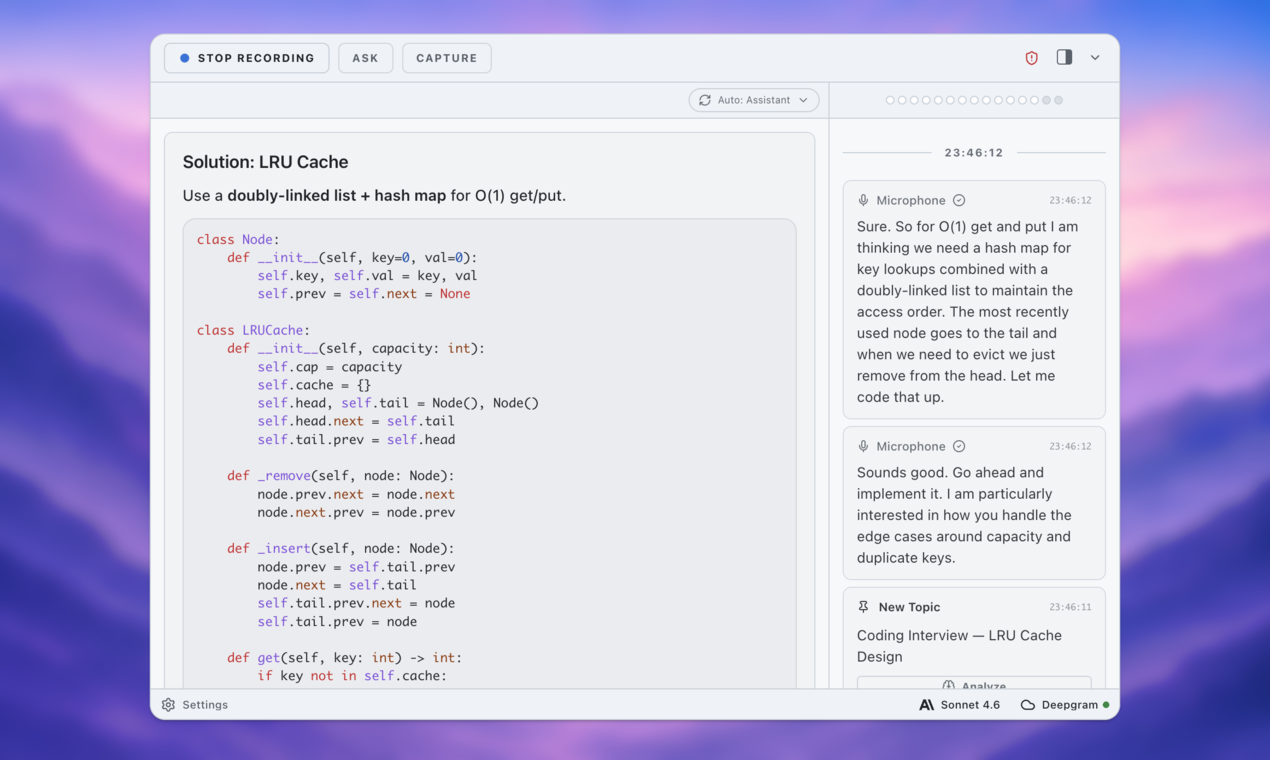
The coding interview is not going away. It is just becoming much harder to fake.
For years, the technical interview rewarded a strange kind of performance. You memorized patterns, rehearsed common problems, learned when to reach for two pointers or a heap, and hoped the interviewer asked the version you had seen before. That system was never perfect. It often measured preparation and pattern recognition more than the work engineers do every day.
Now AI has broken the old bargain.
When a model can draft a solution, explain a data structure, and help debug an implementation, the interview can no longer pretend that typing the right answer from memory is the highest signal. The new signal is whether you can understand the problem, explain your choices, use tools responsibly, and defend tradeoffs when the situation changes.
That is not the end of the coding interview. It is the end of the memory test.
The LeetCode Era Was Always a Compromise
LeetCode-style interviews became popular because companies needed something scalable. A standardized coding problem is easier to administer than messy real-world work. It gives interviewers a rubric and produces a pass/fail feeling.
But candidates have known the flaw for years: the work of grinding algorithm puzzles often feels detached from the work of building software.
Most engineers are not asked to invert a binary tree from memory on a Tuesday afternoon. They are asked to read unfamiliar code, understand constraints, ask clarifying questions, debug systems, review tradeoffs, and make small decisions that accumulate into reliable products.
That gap is no longer just a candidate complaint. HackerRank’s 2025 Developer Skills Report says 97% of developers use at least one AI assistant, while its writing on real-world interview design says 66% of developers want practical, real-world evaluation. Algorithms are not useless; the interview format has simply been overfitting to a narrow slice of engineering ability.
The old system trained candidates to ask, “Which pattern is this?” The new system needs to ask, “Can you reason through this?”
AI Did Not Create the Problem. It Exposed It.
AI did not make coding interviews unfair. It exposed how much of the old interview was already vulnerable to rehearsal.
If the goal is to see whether a candidate has memorized a known solution, AI is a threat. A candidate can prompt for hints, generate code, or compare approaches. That creates obvious fairness and integrity problems, especially in unsupervised assessments. It also creates a deeper question: if the task can be completed by quietly retrieving a memorized pattern or by quietly asking a model, what exactly was the assessment measuring?
The answer cannot simply be “ban all tools forever.” That does not match the way software is increasingly written.
AI is already part of daily development. Anthropic’s Economic Index reports that computer and mathematical tasks continue to dominate Claude use, and its launch report found usage concentrated in software development and technical writing tasks. The exact tools will change. The direction is clear: modern engineering now includes collaboration with intelligent systems.
So interview design has to move from tool denial to tool literacy.
That does not mean cheating is acceptable. It means the interview should make the rules explicit. If AI is not allowed, say so and design the environment accordingly. If AI is allowed, evaluate the candidate’s judgment in using it: what they ask, what they accept, what they reject, how they verify, and whether they can explain the final result without hiding behind the tool.
Responsible AI use is not a shortcut around competence. It is becoming part of competence.
The New Interview Signal Is Explanation
The easiest way to modernize a coding interview is not to make the problem harder. It is to make the conversation deeper.
A candidate who memorized a solution can often produce code. A candidate who understands the solution can explain why it works, where it fails, and what they would change under different constraints.
That difference shows up in simple follow-ups:
- Why did you choose this data structure?
- What happens if the input is ten times larger?
- What edge case are you most worried about?
- How would you test this in production?
- What would you do if latency mattered more than memory?
- Where could this solution become difficult to maintain?
These questions are harder to memorize because they depend on context. They also feel more like real engineering. Production software is full of tradeoffs. A solution is rarely just “correct” or “incorrect.” It is correct enough for a set of constraints, risky under another set, and expensive in ways the team has to understand.
The best candidates do not merely finish the problem. They narrate their reasoning. They make assumptions visible. They say when they are uncertain. They recover when they hit a bug. They can move from code to design to testing to communication.
That is the interview signal AI has a harder time replacing: not the first draft, but the human judgment around it.
The Best Candidates Will Practice Differently
If you are preparing for interviews, this shift should change how you study.
You still need fundamentals. Data structures, complexity, recursion, concurrency, databases, APIs, and system design all matter. AI does not remove the need to understand what code does. In fact, it raises the bar, because you may need to catch mistakes in code you did not personally write line by line.
But the grind changes.
Instead of solving 300 problems and hoping pattern memory carries you, practice explaining 50 problems extremely well. After each one, record yourself answering the questions an interviewer would ask after the solution is done:
- What was the simplest version of the problem?
- What constraint changed your approach?
- What alternatives did you reject?
- What tests would give you confidence?
- What bug did you almost introduce?
- If you had AI assistance, how would you verify its output?
This is where tools can help responsibly. You can use an assistant to role-play an interviewer, generate follow-up questions, or critique your explanation after the mock interview is over. A tool like ExtraBrain can be useful as a private AI interview copilot for practice sessions: capture what you said, review your reasoning, and help you see where your explanation got vague. The key is using AI to improve your preparation, not to secretly outsource your performance in a live interview.
That distinction matters.
Using AI after a practice round to identify weak explanations is learning. Using AI to feed hidden answers during an interview that forbids assistance is cheating. The industry needs better assessment design, but candidates still need integrity.
The Best Interviewers Will Ask Better Questions
Interviewers also have to change.
If your interview can be defeated by a candidate who memorized a canonical solution, the problem is not only the candidate pool. The assessment is too shallow.
A better interview creates room for engineering behavior. Start with a problem small enough to solve, then evolve it. Change a constraint. Ask for tests. Introduce a bug. Ask the candidate to read unfamiliar code. Let them explain a tradeoff.
For example, instead of stopping after a candidate implements a cache, keep going:
- What should happen when the cache is full?
- How would you measure whether it helps?
- What failure mode worries you?
- How would this change in a distributed system?
- What would you log?
- What would make you delete this optimization later?
Those questions reveal how someone thinks. They also reduce the reward for pure memorization. A candidate who has only rehearsed the happy path will struggle when the interview becomes a conversation. A candidate who understands the system can adapt.
Code still matters. But code should be the artifact the conversation uses, not the entire conversation.
AI Fluency Should Be Evaluated, Not Ignored
The next uncomfortable step is that some interviews should explicitly test AI fluency.
That does not mean “let the model solve it and hire whoever copies best.” It means designing controlled tasks where candidates can use AI and must show judgment.
For example, give a candidate a flawed AI-generated solution and ask them to review it. Ask what tests they would add, which part of the explanation is misleading, what risks they see, and what they would verify manually before shipping.
This measures a skill engineers increasingly need: supervising generated work.
In real teams, AI output still needs review. It can be confident and wrong. It can solve the wrong problem elegantly. It can miss domain constraints. It can produce code that passes visible tests but fails under production data. The engineer’s value is not only writing from scratch. It is knowing what good looks like.
That is a far better signal than asking candidates to pretend they will never use tools once hired.
Privacy and Control Will Matter More
As AI enters interview preparation, privacy becomes part of the conversation.
Candidates may want to practice with recordings, transcripts, screenshots, mock interview prompts, and personal performance notes. That material can be sensitive. It may include company names, unreleased projects, compensation context, or personal anxieties about job searching.
The responsible path is not just “use more AI.” It is use AI with clear boundaries, user control, and privacy-conscious workflows.
That is one reason local-first and user-controlled tools are interesting for interview prep. If you are using a local-first AI meeting copilot, you should know what is being captured, when analysis runs, and how your context is used. The same principle applies inside companies: if employers allow AI in assessments, they should disclose the rules clearly and avoid turning interviews into surveillance theater.
Trust is part of the product now. It is also part of the hiring process.
The Interview Is Becoming More Human, Not Less
The fear around AI in interviews often sounds like this: if AI can code, how will we know who is good?
The better question is: what did we overlook when coding from memory was the main test?
We overlooked communication. We overlooked debugging. We overlooked judgment. We overlooked the ability to say, “I don’t know yet, but here is how I would find out.” We overlooked the difference between a candidate who can recite a trick and a candidate who can collaborate through ambiguity.
AI pushes those qualities back into the center.
The future interview will still include code. It should. But the code will be surrounded by explanation, critique, testing, and tradeoff discussion. Candidates will be evaluated on how they think, not just how quickly they recognize a pattern. Interviewers will need to design tasks that resemble work, not trivia. Companies will need to decide where AI is allowed, where it is not, and why.
That is a healthier direction.
The coding interview is not dead. The part that deserved to die was the ritual of pretending memorized patterns were the same thing as engineering ability.
The memory test is ending.
The reasoning test is just beginning.