
ExtraBrain Blog
Ctrlpotato Review 2026: Where It Helps, Where It Gets Risky

A practical Ctrlpotato review for 2026 covering real-time AI help, stealth claims, multi-device setup, pros, cons, and ExtraBrain as a Mac alternative.
Ctrlpotato is one of the louder names in the 2026 AI interview assistant conversation. It promises real-time help, stealth-oriented controls, context capture, model switching, and a multi-device workflow that can put answers on a phone while the interview runs on a computer. That combination sounds attractive if you are preparing for coding interviews, system design rounds, behavioral screens, finance interviews, or remote technical assessments.
The harder question is whether that setup actually helps you perform better when the pressure is real. A live interview is not just a prompt window. You have to listen, think, ask clarifying questions, share tradeoffs, write code, recover from mistakes, and stay within the rules of the interview or assessment platform. Any AI tool that slows you down, confuses context, or pushes you toward risky behavior can hurt more than it helps.
This Ctrlpotato review looks at the product through that practical lens. It covers the real-time assistant experience, stealth and security concerns, multi-device tradeoffs, pros and cons, suitable use cases, and why Mac candidates may prefer ExtraBrain as a local-first AI interview and meeting copilot.

Quick Verdict
Ctrlpotato is most interesting for people who want a multi-device AI assistant during mock interviews or private practice sessions. Its phone-based control flow can be useful when you want a separate screen for prompts, follow-up ideas, or generated answer drafts. Its context capture approach also makes sense in theory because interviews combine audio, text, screen content, and changing conversation history.
The main concern is that the workflow can become awkward in a real interview. A second device may look unusual, may be disallowed by assessment rules, or may create extra friction when you should be focused on the interviewer. If the desktop overlay blocks normal interaction, breaks shortcuts, or requires manual triggering at the wrong moment, the tool becomes another source of cognitive load.
For candidates who want a simpler Mac desktop workflow, ExtraBrain is the stronger fit. ExtraBrain is a free, local-first desktop AI interview assistant and meeting copilot for Mac with live transcription, screen-aware context, local Gemma 4 on-device AI where installed and compatible, bring-your-own AI providers, and clear privacy controls. It is designed for coding interviews, system design rounds, behavioral interviews, product interviews, meetings, lectures, and research calls.
What Ctrlpotato Is Trying to Solve
AI interview assistants generally try to solve four problems. They listen to the conversation, capture context, suggest structured responses, and help you review what happened afterward. For technical interviews, they may also help explain algorithms, generate code outlines, identify edge cases, and translate a problem into steps. For behavioral interviews, they may help structure STAR answers and remind you to include impact, constraints, and lessons learned.
Ctrlpotato adds an extra layer by emphasizing stealth-oriented usage and multi-device control. The pitch is that you can keep the assistant separate from the main interview screen, trigger actions remotely, and receive help without constantly switching windows. That sounds especially appealing when candidates are worried about screen sharing or recording.
The risk is that interview assistance is only useful when it feels calm and natural. If you need to fight the interface, stare at a phone, manually feed context, or debug an overlay during the interview, the assistant is no longer assisting. It is competing with the interview itself.
Ctrlpotato Feature Experience
Real-Time AI Assistance
The biggest promise in Ctrlpotato is real-time AI help. In a good workflow, a candidate should be able to hear a question, let the assistant understand the transcript and screen, then receive a useful outline before answering. For example, a system design prompt about building a notification service should produce clarifying questions, API boundaries, storage tradeoffs, scaling risks, and failure modes. A coding prompt should produce a clean approach, complexity analysis, and edge cases rather than a generic final answer.
In practice, real-time help depends on three things. The app must detect the right question quickly. It must preserve enough context to avoid hallucinating or answering the wrong prompt. It must return guidance in a format you can actually use while speaking.
The source experience for this review raised concerns on all three points. The app transcribed text, but the answer generation flow could stall at the point where it should recognize a question. That matters because a live interview does not give you unlimited recovery time. If the assistant waits while the interviewer expects you to think aloud, the silence can become more damaging than simply answering on your own.
Context Capture
Ctrlpotato emphasizes audio, screenshots, selected text, and a rolling context buffer. That is the right direction for modern interview assistance. The best AI interview copilot is not just a chatbot pasted beside Zoom. It should understand the conversation, the coding environment, the prompt, and the recent history of what you already said.
Context capture is still only as good as the product experience around it. If the buffer mixes up speakers, carries stale information, or misses the key prompt, generated answers can sound confident but wrong. That is especially risky in technical interviews because one mistaken assumption can push the entire solution in the wrong direction.
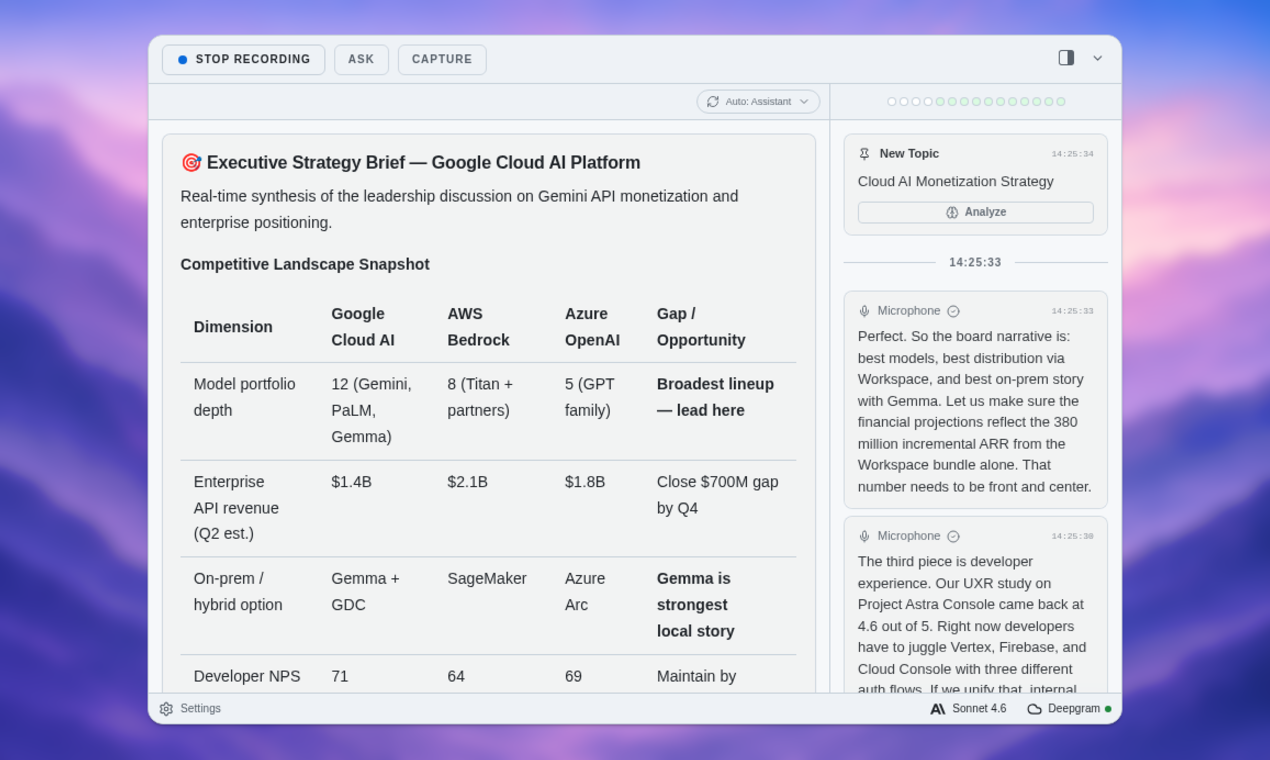
ExtraBrain takes this problem seriously by combining live transcription, screen-aware context, session history, screenshots, and post-session review in a Mac desktop app. The goal is not to replace your thinking. The goal is to give you a better live workspace for understanding what is being asked and organizing the answer you already need to deliver.
Stealth and Security Claims
Stealth is one of the most sensitive parts of any AI interview assistant review. Some candidates want a tool to stay out of screen sharing or screen recording because they are using it for private notes, practice prompts, or allowed preparation support. Other candidates are looking for help in settings where AI assistance is explicitly prohibited. Those are very different situations.
You should use any interview assistant only where interview, employer, school, workplace, meeting, and platform rules allow AI assistance, transcription, screenshots, or notes. That applies to Ctrlpotato, ExtraBrain, and every other AI copilot. If a proctored assessment bans second devices, AI tools, screen capture, or external help, do not try to route around those rules.
Ctrlpotato appears to lean heavily into stealth-oriented positioning, including the idea of hiding or separating assistance through another device. That may reduce what appears on the shared screen, but it does not remove the practical risk. Many assessment platforms, proctoring workflows, and live interviewers can notice second-device behavior, unusual eye movement, room setup changes, or unexplained delays.
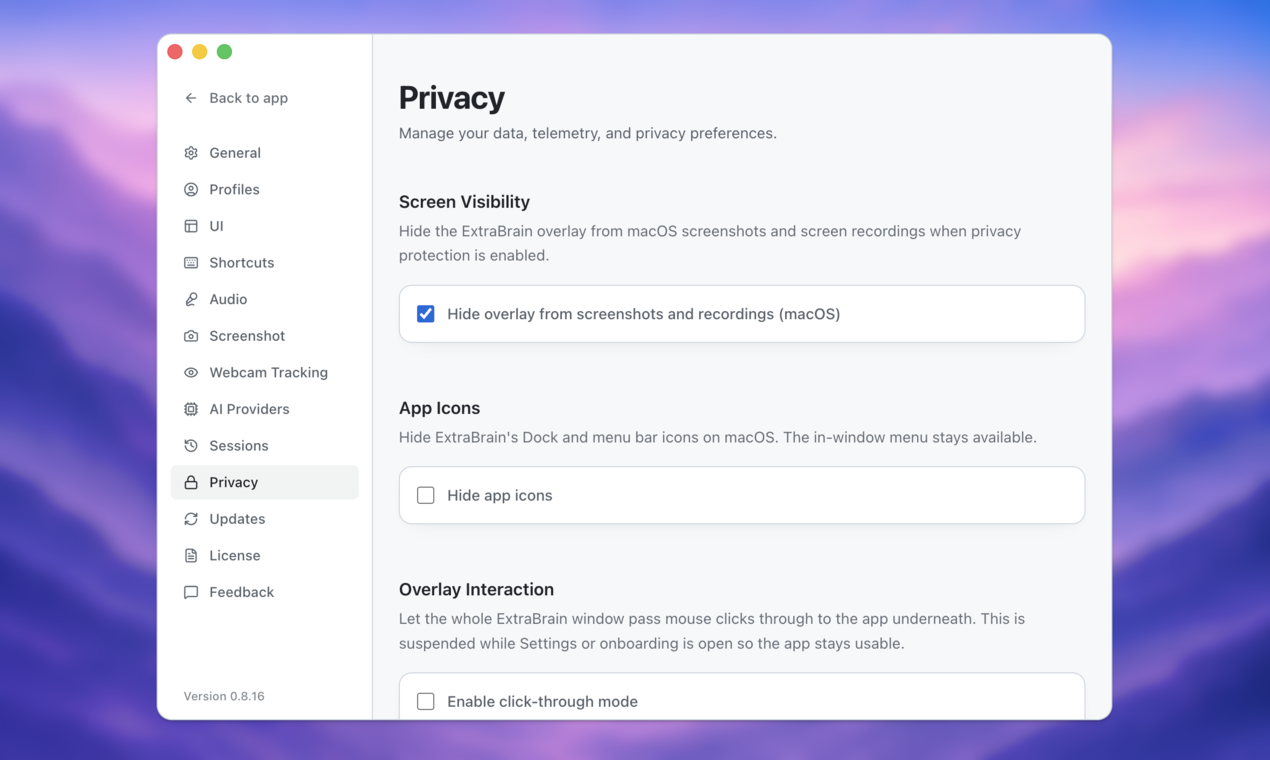
ExtraBrain is also designed to stay hidden from screen sharing and screen recording on major meeting tools, but the responsible-use boundary remains the same. The right use case is allowed support, preparation, note-taking, review, and private context management. It is not permission to violate interview or assessment rules.
The Multi-Device Tradeoff
Ctrlpotato’s multi-device support is the feature that sounds most impressive and can feel most awkward. The benefit is obvious. You can view answers on a phone, trigger screenshots or follow-ups remotely, and keep the main interview screen cleaner.
The downside is also obvious once you imagine the actual interview. A phone screen may be too small for dense system design guidance or coding explanations. A tablet or second laptop may be easier to read, but it can look unnatural beside the main interview device. A second screen also adds setup complexity before the call even starts.
For mock interviews, this may be fine. For a real interview, the setup can create unnecessary tension. You may spend more attention managing the assistant than listening to the interviewer. You may also create a compliance problem if the assessment or proctoring rules require a single device.
That is one reason many candidates prefer a single-device desktop workflow. ExtraBrain runs as a Mac desktop app and supports live transcription, screen context, and bring-your-own providers without forcing the candidate into a phone-first control loop. For candidates who want local-first privacy, ExtraBrain can use local Parakeet transcription and local Gemma 4 on-device AI where installed and compatible. When external providers are selected, prompts, transcript text, screenshots, audio, or context may leave the device depending on configuration.
Pros of Ctrlpotato in 2026
Ctrlpotato does have real strengths, especially for practice and controlled environments. Here are the main positives.
| Strength | Why it matters |
|---|---|
| Real-time answer concept | Live interviews move quickly, so immediate outlines and follow-up ideas can help when they are accurate. |
| Multi-device control | A phone or second device can separate the assistant from the main interview screen during practice. |
| Context capture | Audio, screenshots, selected text, and rolling context can produce more relevant answers than a plain chatbot. |
| Model choice | Switching models can be useful when candidates want different answer styles or stronger technical reasoning. |
| Coding support | Regenerating or reframing code can help during mock coding practice and post-interview review. |
The best version of Ctrlpotato is a practice tool for candidates who want to simulate pressure, test different answer styles, and see how AI-generated guidance fits their natural speaking rhythm. It can also be useful for people who want to keep interview preparation material on a separate device while rehearsing.
Cons of Ctrlpotato in 2026
The downsides become more important when the session is live, recorded, proctored, or high-stakes.
Manual Setup Can Slow You Down
If you need to paste resume details, job descriptions, or role context by hand, the workflow feels less modern. Good interview support should make context setup easy before the session starts. During the session, the assistant should reduce work rather than create another preparation checklist.
The Copilot Flow Can Feel Confusing
A live copilot needs a clear interaction model. You should know what is listening, what is being captured, what will be sent to a model, and how to trigger follow-ups. If the interface requires guessing, clicking around, or manually discovering shortcut behavior, it is not ready for a stressful interview.
Single-Device Usability Matters
The source experience for this review described a desktop app that could block normal screen interaction and interfere with shortcuts. That is a serious issue because the interview computer is also where you write code, read prompts, share screens, and talk to the interviewer. An assistant that prevents normal interaction becomes a liability.
Two Devices Can Look Suspicious
A multi-device workflow may be acceptable for practice, but it can be risky in real interviews or assessments. Some proctored environments explicitly require one device. Others require a room scan or a second device only for proctoring. Adding your own assistant device in those contexts can violate the rules.
Generic Answers Are Easy to Notice
Interviewers can often tell when a candidate is reading a generic AI answer. The issue is not only ethics or policy. It is performance. If an answer does not match your own experience, your resume, the company context, or the exact question, follow-up questions will expose the gap quickly.
ExtraBrain is built around live context and review rather than one-size-fits-all answer dumping. It can help generate answer outlines, STAR structures, technical explanations, and follow-up questions from transcript and screen context, while candidates remain responsible for honest and allowed use.
Ctrlpotato vs ExtraBrain
Here is the practical comparison for candidates evaluating Ctrlpotato against ExtraBrain.
| Category | Ctrlpotato | ExtraBrain |
|---|---|---|
| Primary workflow | Real-time AI help with multi-device control | Mac desktop AI interview assistant and meeting copilot |
| Current platform fit | Positioned for desktop and second-device workflows | Available for macOS today, including Apple Silicon and Intel Macs |
| Local-first posture | Depends on product configuration and provider choices | Local Parakeet transcription plus local Gemma 4 where installed and compatible can keep transcription and AI prompts local |
| Provider model | Model switching is part of the pitch | Bring-your-own providers including local Gemma 4, Anthropic, OpenAI, custom OpenAI-compatible endpoints, Claude Subscription, and Codex Subscription |
| Interview use cases | Mock interviews, remote interviews, coding practice, multi-device assistance | Coding, system design, behavioral, product interviews, meetings, lectures, and research calls |
| Responsible-use boundary | Must follow interview, employer, school, workplace, and platform rules | Must follow interview, employer, school, workplace, and platform rules |
| Pricing clarity | Review pricing before purchase because plans can affect feature access | Core Mac app is free, with ExtraBrain Pro available at $9.99/month, $79/year, or $149 Lifetime launch pricing |
ExtraBrain is not trying to be a broad note-taking database or a generic second brain for everything. It can work as a focused AI second brain for interviews and meetings because it gives you a workspace for live sessions, transcripts, notes, screen context, and review. That focus matters when your goal is to perform better in specific high-context conversations.
Who Ctrlpotato May Fit
Ctrlpotato may fit you if you mainly want to practice with a second device. It may also fit if you like manually controlling when AI analysis happens and you are comfortable testing the setup repeatedly before using it.
It is most suitable for:
- Candidates running mock interviews at home.
- People who want to experiment with phone-based AI prompts.
- Users who prefer manually triggered assistance over a desktop workspace.
- Interview practice groups that want to test how AI changes answer quality.
- Candidates who are not using the tool in a restricted or proctored setting.
If you use Ctrlpotato, test it before any important session. Run a full mock interview with the same device, same meeting app, same screen-sharing setup, same microphone, and same coding environment. Check whether shortcuts still work. Check whether the assistant can detect questions without manual rescue. Check whether you can keep eye contact and speak naturally while using the second device.
Who Should Choose ExtraBrain Instead
Choose ExtraBrain if you want a Mac-first interview copilot that feels more like a live workspace than a second-device hack. It is especially useful if you care about local-first options, provider control, screen-aware context, and reviewing the session afterward.
ExtraBrain is a strong fit for:
- Software engineers preparing for coding and system design interviews.
- Product managers practicing product strategy and execution answers.
- Candidates who want structured behavioral interview support.
- People who want live transcription and screen context in one Mac app.
- Users who want local Parakeet transcription and optional local Gemma 4 where installed and compatible.
- Professionals who also want the same copilot for meetings, lectures, research calls, and customer conversations.
The core ExtraBrain Mac app is free. ExtraBrain Pro adds paid options, while external AI and transcription provider usage is billed separately by the providers users choose. That separation is important because it gives users more control over cost, privacy, and model selection.
Practical Tips Before Using Any AI Interview Assistant
Read the Rules First
Before using Ctrlpotato, ExtraBrain, or any other AI assistant, read the rules for the interview, school, employer, meeting, or platform. If AI help, transcription, screenshots, or external notes are not allowed, do not use them. If the rules are unclear, ask.
Practice Without Reading
The best AI assistance gives you structure, not a script. Use outlines, reminders, edge cases, and clarifying questions. Do not train yourself to read generated answers word for word. Interviewers care about how you think, not whether you can recite a polished paragraph.
Prepare Your Own Context
Upload or enter your resume, role notes, project examples, and target company context before the session when the tool supports it. For behavioral interviews, prepare real stories with scope, conflict, tradeoffs, and measurable outcomes. For technical interviews, prepare common patterns, debugging stories, architecture decisions, and constraints you can explain honestly.
Test the Exact Setup
A tool that works in a quiet solo test can fail during a live call. Test microphone permissions, screen capture permissions, meeting software behavior, local transcription, provider keys, shortcuts, and screenshot settings. If you plan to use a second device during allowed practice, test the second device too.
Use Post-Interview Review
The session does not end when the call ends. Review the transcript, identify weak answers, rewrite missed examples, and save follow-up questions. This is where AI tools can be especially useful without creating the pressure or policy concerns of live assistance.
FAQ
Is Ctrlpotato good for real interviews?
Ctrlpotato can be useful for mock interviews and controlled practice sessions, but it may be awkward or risky in real interviews if the workflow depends on a second device or unclear stealth behavior. For real interviews, always follow the rules and test the setup beforehand.
Can I use Ctrlpotato during proctored assessments?
Only use it if the assessment rules explicitly allow AI assistance, second devices, transcription, screenshots, and notes. Many proctored assessments restrict these behaviors, so using an AI assistant in that setting can violate the rules.
Does Ctrlpotato work better with two devices?
The multi-device workflow is one of its main selling points. It can make answers easier to separate from the main screen, but it also creates practical and compliance risks during real interviews. For practice sessions, it may be helpful if you are comfortable with the setup.
What should I do if Ctrlpotato mixes up context?
Pause and reset the context before continuing in practice. If a tool repeatedly confuses speakers, stale prompts, or screenshots, do not rely on it for high-stakes sessions. You need guidance that matches the actual question, not a confident answer to the wrong situation.
What is the best Ctrlpotato alternative for Mac?
ExtraBrain is a strong Ctrlpotato alternative for Mac users who want a free core desktop app, live transcription, screen-aware context, local-first options, bring-your-own AI providers, and post-session review. It is built for coding interviews, system design rounds, behavioral interviews, meetings, lectures, and research calls.
Can ExtraBrain run fully local?
A fully local ExtraBrain posture requires local Parakeet transcription plus local Gemma 4 on-device AI where installed and compatible, with no external provider requests. External providers may receive selected prompts, transcript text, screenshots, audio, or context depending on configuration.
Is ExtraBrain only for interviews?
No. ExtraBrain is also useful as an AI meeting copilot for workplace meetings, lectures, research calls, customer conversations, and other live sessions where transcription, screen context, and review are allowed.
Final Takeaway
Ctrlpotato is an ambitious AI interview assistant with interesting ideas around real-time help, context capture, and multi-device control. Those ideas can be useful for mock interviews, but the same workflow can become distracting or risky when the interview is live, proctored, or rule-sensitive.
If you want a calmer Mac-first workflow, ExtraBrain is the better place to start. It gives candidates a free local-first desktop app with live transcription, screen-aware context, local AI options where compatible, provider control, and privacy settings that are clear enough to understand before the interview begins. Use it responsibly, practice before the session, and treat AI as a thinking aid rather than a replacement for your own judgment.