
ExtraBrain Blog
eSkill AI Help in 2026: Detection Risks, Rules, and Safer Prep

A practical 2026 guide to eSkill AI help, proctoring risks, detection signals, and responsible ExtraBrain preparation.
People search for “eSkill how to cheat” because skills assessments can feel high stakes and unusually controlled. The webcam may be on, the browser may be locked down, the timer may be running, and the questions may not match the practice material you saw the night before. It is easy to look for invisible AI help, prepared notes, second-device tricks, or ways to stay natural on camera while the platform watches.
That search also points to the real problem. If an eSkill assessment is proctored or employer-administered, undisclosed outside help can become misconduct, not just a clever shortcut. The safer path is to understand what eSkill-style monitoring may check, prepare with AI before the real test, and use tools like ExtraBrain only where the employer, school, platform, and assessment rules allow AI assistance, transcription, screenshots, or notes.
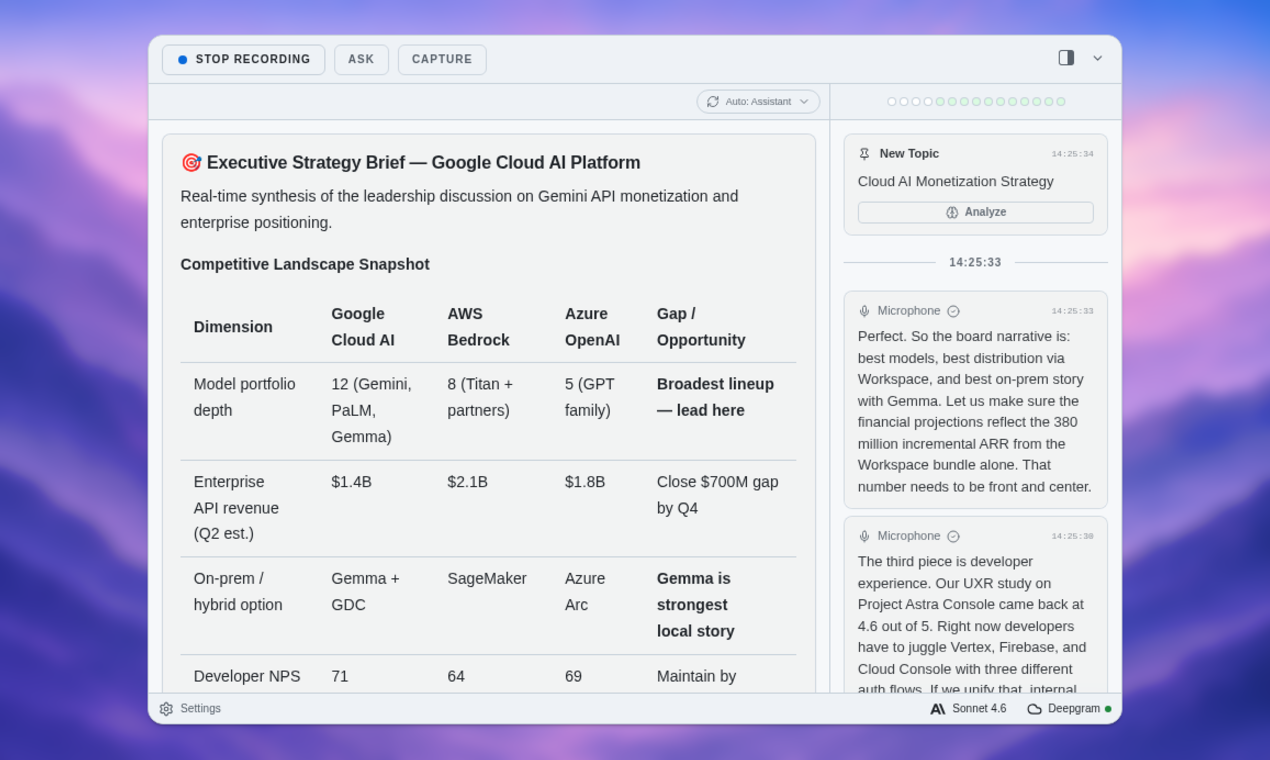
ExtraBrain is a free, local-first Mac desktop AI interview assistant and meeting copilot with live transcription, screen-aware context, local Gemma 4 on-device AI where installed and compatible, bring-your-own AI providers, and clear privacy controls. For eSkill-style assessments, its strongest use is preparation, mock practice, allowed live interview support, and review after the session.

Key Takeaways
- eSkill-style assessments may monitor identity, webcam behavior, microphone audio, screen activity, browser focus, timing, copy-paste behavior, and answer consistency.
- AI can help you prepare for eSkill question types, explain concepts, rehearse answers, and review mistakes before the real assessment.
- Live AI use during a restricted assessment can violate rules, even if the tool is technically available on your computer.
- Randomized questions make memorized answers weak, so concept mastery and timed practice matter more than answer banks.
- ExtraBrain should be used only where interview, employer, school, workplace, meeting, and platform rules allow AI assistance, transcription, screenshots, or notes.
eSkill Anti-Cheat Technologies
The exact setup can vary by employer, role, test configuration, and proctoring mode. You do not need private implementation details to understand the main risk areas. Most online assessment monitoring systems look for signals that the person, device, environment, and answer process do not match a normal test session.
AI-Powered Proctoring
AI-powered proctoring is usually built around identity and behavior. It may ask you to verify your identity, keep your webcam on, keep your microphone active, and remain visible for the full assessment. It may record video, audio, the desktop screen, or screenshots for later review. It may also create suspicion scores from signals like unusual movement, another person in the room, repeated looking away, background noise, lighting changes, or inconsistent attention.
None of that means every flag is proof of misconduct. It does mean that trying to improvise hidden help during the test can create a pattern that is hard to explain afterward.
Tab Tracking and Browser Focus
Tab tracking is one of the simplest ways candidates get into trouble. If the assessment logs browser focus, opening another tab, switching windows, minimizing the test, or moving into a different app can become part of the activity record. Even a quick switch may look suspicious if the rules say the assessment is closed-book or full-screen.
The practical answer is not to find a clever tab-switching rhythm. The practical answer is to know the rules before the timer starts and keep the test environment clean.
Randomized Questions
Many skills assessments use item banks and randomized delivery. That makes direct answer sharing less useful and makes shallow memorization fragile.
| Technique | What it changes for candidates |
|---|---|
| Item banking | You may see questions drawn from a larger pool than the examples you studied. |
| Question randomization | Two candidates may receive the same concepts in a different order or with different wording. |
| Variant prompts | A familiar problem may appear with different constraints, data, or role context. |
The best response is to study patterns rather than exact answers. For coding, that means practicing arrays, strings, maps, sorting, SQL, debugging, edge cases, and complexity. For role-specific tests, that means practicing judgment, communication, prioritization, domain knowledge, and scenario reasoning.
Copy-Paste Disabling
Some assessment environments disable copy and paste, especially for free-response answers or coding prompts. Others allow typing but log paste events or sudden large text insertions. This is meant to reduce pre-written responses, outside answer feeds, and copied solutions.
Treat copy-paste restrictions as a signal to practice typing and explaining your own answers. If you can only perform with a prepared paragraph ready to paste, you are probably underprepared for a reviewed assessment.
Full-Screen Enforcement
Full-screen enforcement can restrict access to other apps and websites during the assessment. Some platforms warn, flag, or remove candidates after leaving the assessment window. Even when a warning threshold exists, relying on it is risky because the activity may still be recorded.
Before the test, close unrelated apps, silence notifications, charge your laptop, check your internet connection, and test your camera and microphone. Those steps are basic readiness, not evasion.
Responsible Ways to Use AI Around eSkill in 2026
AI is useful around eSkill-style assessments when it improves preparation and review. It becomes risky when it replaces your own work in a restricted test.
Use AI Before the Assessment
Before the assessment, AI can help you turn vague study goals into a concrete practice plan. You can ask for sample questions by role, explanations of missed concepts, timed drills, and follow-up questions. You can also ask for feedback on how clearly you explain your reasoning.
A strong practice loop looks like this:
- Pick one skill area that is likely to appear on the assessment.
- Try a timed practice question without AI.
- Ask AI to critique your answer, edge cases, and reasoning.
- Rewrite the answer in your own words.
- Repeat with a harder variation.
That loop helps you build durable skill instead of depending on a hidden answer source.
Practice Staying Natural Without Reading Scripts
Candidates often worry about looking natural on camera. That worry usually gets worse when they are trying to read hidden answers or coordinate with another device.
A better approach is to practice speaking and typing under realistic pressure before the assessment. Use mock sessions to rehearse short explanations, calm pauses, and clear tradeoffs. If you are allowed to use notes, keep them brief and relevant. If notes are not allowed, do not use them during the test.
ExtraBrain can help in practice sessions by generating answer outlines, technical explanations, STAR structures, and follow-up questions from live transcript and screen context. The stories, judgment, and final answers should still be yours.
Use Screen-Aware Context Only Where Allowed
Some interview and meeting workflows allow AI assistance, transcription, screenshots, or notes. In those contexts, screen-aware context can reduce manual retyping and help the assistant understand what is happening.
ExtraBrain is built as a real-time AI interview assistant for Mac with live transcription, screen-aware context, coding and system design support, local-first options, bring-your-own AI providers, and post-interview review. It is available for macOS today, including Apple Silicon and Intel Macs. Windows and Linux are planned future platforms.
If the eSkill instructions prohibit screenshots, screen reading, transcription, outside notes, or AI help, do not use those capabilities in the assessment. Use them for preparation, mock interviews, or permitted sessions instead.
Handling Common eSkill Pressure Points
The original instinct behind many “how to cheat” searches is understandable. Candidates want to avoid freezing, losing time, or missing something obvious. The better solution is to prepare for the pressure points directly.
AI Proctoring Anxiety
AI proctoring can make normal behavior feel suspicious. You may become hyper-aware of your eyes, hands, posture, background noise, and lighting.
Practice a few timed sessions in the same physical setup you plan to use. Make sure your camera angle is comfortable, your lighting is stable, your desk is clean, and your permitted materials are clear. If the real instructions require a room scan, follow them calmly.
Randomized Questions
Randomization punishes candidates who memorize exact answers. It rewards candidates who understand the underlying pattern.
For technical assessments, build a small concept map for each topic. For example, connect arrays to indexing, duplicates, sorting, two pointers, hash maps, and edge cases. For workplace judgment assessments, connect each scenario to the business priority, stakeholder risk, communication style, and decision tradeoff.
Copy-Paste Restrictions
If copy and paste are blocked, the test wants live work or live writing. Prepare by typing your own answers during practice. For coding, practice writing from memory in a plain editor without relying on autocomplete. For written responses, practice concise answers that sound like you.
Full-Screen Mode
Full-screen mode is stressful when your setup is messy. It is much easier when your machine is ready before the test begins.
Close extra apps, disable notifications, remove unnecessary browser extensions, keep your power cable connected, and open only what the rules allow. If the platform fails, document the issue honestly and contact support.
Where ExtraBrain Fits
ExtraBrain is not a promise that any assessment platform will ignore your behavior. No candidate should assume an outside tool is impossible to detect or always allowed. The correct boundary is the written rule for the session you are in.
ExtraBrain is useful when you want a local-first AI workspace for interview and assessment preparation. It can support live transcription, screen-aware context, coding interview practice, system design reasoning, behavioral answer structure, meeting notes, lectures, and research calls.
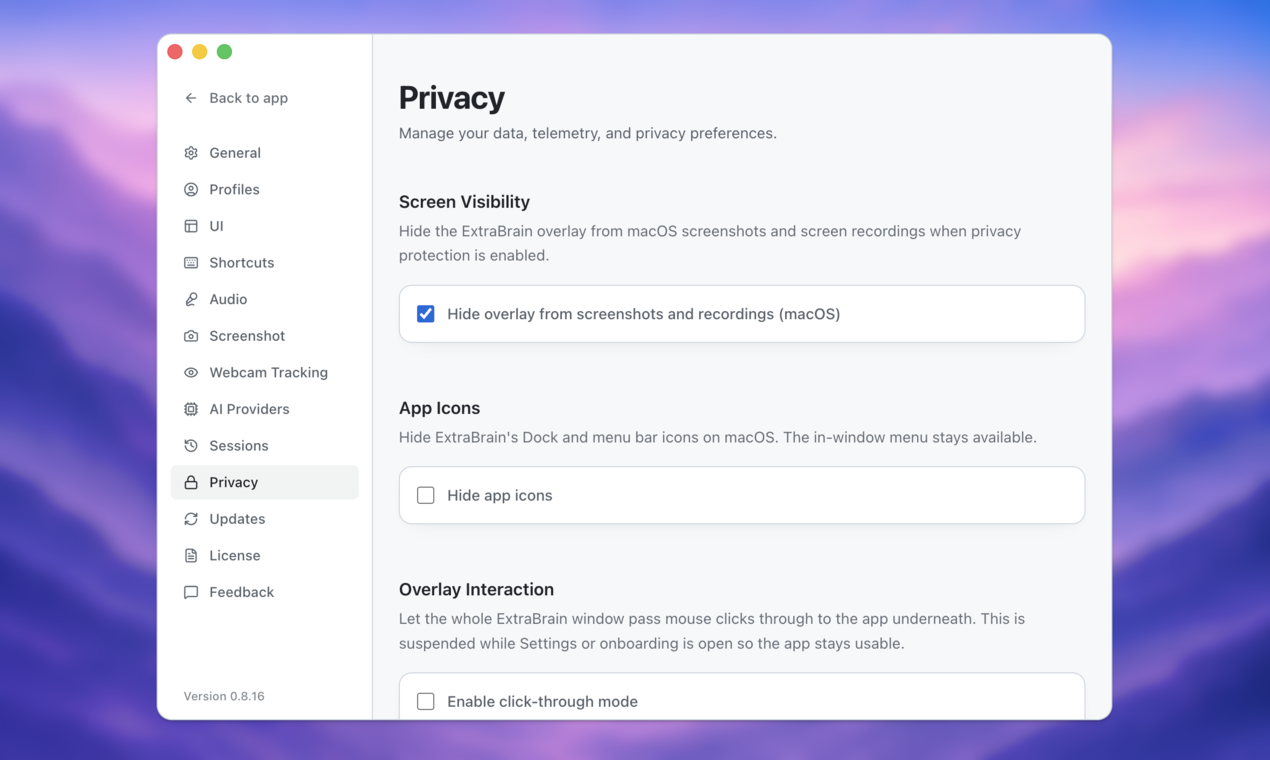
Privacy and Provider Control
Privacy matters because assessment prompts, company names, transcripts, screenshots, and personal notes can be sensitive. ExtraBrain supports local Parakeet transcription and local Gemma 4 on-device AI where installed and compatible. A fully local ExtraBrain posture requires local Parakeet transcription plus local Gemma 4 on-device AI where installed and compatible, with no external provider requests.
External providers may receive selected prompts, transcript text, screenshots, audio, or context depending on configuration. ExtraBrain also supports bring-your-own providers such as Anthropic, OpenAI, custom OpenAI-compatible endpoints, Claude Subscription, and Codex Subscription. Review your provider choices before putting assessment or interview material into any AI tool.
Pricing Context
The core ExtraBrain Mac app is free. ExtraBrain Pro is $9.99/month, $79/year, or $149 Lifetime launch pricing. External AI and transcription provider usage is billed separately by the providers users choose.
Proxy Test-Takers and Multi-Device Risks
Proxy test-takers and second-device workflows are common in online cheating discussions. They are also among the highest-risk choices.
Proxy Test-Takers
Hiring someone else to take an eSkill assessment can create identity, payment, privacy, legal, academic, and employment risks. Proctoring may compare face, voice, ID, typing behavior, login location, and later interview performance. Even if a proxy gets through the test, the mismatch can surface later when you are asked to explain the work.
Do not hand your assessment, account, ID, or job opportunity to a stranger. The risk is not worth it.
Second Devices
Second devices create attention problems even before any technical detection. Looking down at a phone, glancing away repeatedly, waiting for messages, or pausing at odd times can look unnatural on webcam. If the rules prohibit phones, extra monitors, messaging, or outside help, using a second device is misconduct.
Use your phone only for permitted setup tasks, such as two-factor authentication or contacting support if the assessment instructions allow it. Keep it away during the test when the rules require a clean environment.
Common Mistakes and Detection Risks
Most risky behavior looks risky because it does not match normal problem solving. The platform may not need to see a specific prohibited tool if the overall pattern is strange.
Suspicious Behaviors
- Switching tabs or windows during a closed assessment.
- Looking away from the screen repeatedly while answering.
- Using a second device when the rules prohibit it.
- Submitting answers that sound polished but do not match your normal writing or speaking style.
- Producing a complete solution after a long period of no visible work.
- Copying generated text or code you cannot explain afterward.
- Letting another person help during an individual assessment.
Timing Errors
| Pattern | Why it can raise questions |
|---|---|
| Very fast perfect answers | The answer may look copied, memorized, or externally supplied. |
| Long silent pauses | The pause may look like off-screen searching or messaging. |
| Sudden large text changes | The response may look pasted or generated elsewhere. |
| Inconsistent difficulty | A candidate may solve hard items instantly but miss easy follow-up reasoning. |
Risk Management
Risk management does not mean hiding misconduct. It means reducing avoidable problems before a legitimate test.
- Read the assessment rules before choosing any tool.
- Practice with similar question types before test day.
- Test your internet, camera, microphone, browser, and power setup.
- Close unrelated apps and notifications.
- Keep only permitted materials in your workspace.
- Use AI for preparation and review unless live assistance is clearly allowed.
Summary of Safer Methods
If you arrived here looking for ways to cheat on eSkill in 2026, the useful answer is that shortcuts are fragile. The stronger approach is to prepare with AI, understand monitoring signals, and avoid behaviors that can invalidate the result.
| Method | Best responsible use | Risk level during a restricted test |
|---|---|---|
| ExtraBrain or another AI assistant | Practice, mock interviews, allowed live support, transcript review, and study planning | High if rules prohibit AI assistance |
| Study groups | Share concepts, question types, and explanations before the test | High if used for live answer sharing |
| Prepared notes | Build concise review material before the test | High if notes are not allowed during the assessment |
| Second device | Support contact or allowed authentication only | High if used for hidden answers |
| Proxy test-taker | No responsible use for an individual assessment | Very high |
The best preparation feels less dramatic than a bypass. You know the rules, understand the concepts, rehearse under time pressure, and can explain your own answers.
FAQ
Can I use my phone during an eSkill test?
Only if the assessment instructions allow it. If phones or second devices are prohibited, do not use one. Even if a phone is out of camera view, repeated eye movement, pauses, or attention shifts can create suspicion.
What happens if eSkill or an employer flags my assessment?
Possible outcomes include canceled results, disqualification, employer review, offer withdrawal, academic consequences, or loss of future opportunities. The exact outcome depends on the employer, school, administrator, and platform rules. Ask yourself whether the risk is worth one assessment result.
Will eSkill know if I use ExtraBrain?
No tool should be treated as a guaranteed way to avoid detection. Assessment platforms may monitor screen activity, browser focus, timing, webcam behavior, copy-paste behavior, answer consistency, and later review signals. Use ExtraBrain during eSkill-related work only where AI assistance, transcription, screenshots, or notes are allowed.
Is hiring a proxy test-taker safe?
No. A proxy test-taker can expose your identity, account, money, and job opportunity. It can also create a mismatch between your assessment result and your later interview performance.
Can ExtraBrain run fully local for private preparation?
Yes, with the right setup. A fully local ExtraBrain posture requires local Parakeet transcription plus local Gemma 4 on-device AI where installed and compatible, with no external provider requests. Local Gemma 4 requires installation and compatible hardware and may not be available on every Mac or customer environment.
What is the best way to prepare for an eSkill assessment with AI?
Use AI before the assessment to practice the concepts the test is likely to measure. Run timed drills, review missed questions, rehearse explanations, and turn weak areas into a study plan. During the real assessment, follow the rules exactly.