
ExtraBrain Blog
Invisible AI Help for Otomeyt-Style Interviews: A Responsible 2026 Guide

Use ExtraBrain responsibly around Otomeyt-style interviews with private prep, live notes where allowed, and realistic detection-risk guidance.
Key takeaways
- Otomeyt-style assessments can include proctoring, fullscreen rules, timing checks, answer-pattern review, and other integrity controls.
- If a company, school, employer, or platform does not allow AI assistance during a live assessment, do not use AI during that assessment.
- ExtraBrain is most useful before and after Otomeyt-style interviews: practice aloud, organize your experience, review technical prompts, and improve answer structure.
- In allowed live contexts, ExtraBrain can support live transcription, screen-aware context, answer outlines, STAR structures, clarifying questions, and post-session review.
- The safest way to avoid detection problems is not to hide rule-breaking, but to stay within the rules, keep your answers authentic, and use AI as preparation and memory support.
The real question: can you use AI on Otomeyt in 2026?
Many candidates search for ways to get invisible AI help for Otomeyt because they feel pressure, anxiety, or uncertainty during online interviews. That pressure is understandable. Remote screening can feel unnatural, timed, and high stakes.
But there is a difference between responsible AI support and cheating on an assessment. If Otomeyt is being used for a hiring test, school exam, or monitored evaluation, the rules of that specific session matter more than any generic online advice. Some sessions may allow notes, documentation, calculators, screen sharing, or AI support. Others may explicitly ban external help, transcription, screenshots, second devices, or copilot tools.
ExtraBrain should be used only where interview, employer, school, workplace, meeting, and platform rules allow AI assistance, transcription, screenshots, or notes. If the rules are unclear, ask before the assessment or use AI only for preparation and review.
Why candidates look for invisible AI help
People usually look for invisible AI help on Otomeyt for a few practical reasons. They want to stay calm when a question appears on screen. They want help turning rough thoughts into clear answers. They want reminders from their own resume, project history, or previous interview notes. They want support for coding, system design, behavioral, or product interview prompts.
Those are legitimate needs. The problem starts when the workflow becomes an attempt to bypass a platform’s integrity rules. A better approach is to build a responsible support system around the interview instead of trying to outsmart detection.
ExtraBrain is designed as a free, local-first desktop AI interview assistant and meeting copilot for Mac. It can help with live transcription, screen-aware context, local Gemma 4 on-device AI where installed and compatible, bring-your-own AI providers, and clear privacy controls. Use it to prepare, rehearse, organize, and review, while keeping responsibility for honest and allowed use.
Choosing AI tools for Otomeyt-style preparation
Compare the AI workflow, not just the model
Candidates often compare ChatGPT, Claude, Gemini, and other models when preparing for online interviews. Model quality matters, but the full workflow matters more. A strong interview assistant should help you understand the question, think through tradeoffs, structure an answer, and practice saying it in your own voice.
Here is a practical comparison for preparation use:
| Option | Useful for | Watch out for |
|---|---|---|
| General chatbots | Practice questions, explanations, rewriting notes | Easy to over-rely on generic answers |
| Browser-based copilots | Quick research and tab-based writing support | May not fit fullscreen or proctored workflows |
| Second-device setups | Reviewing notes before or after a session | Can look distracting and may violate rules |
| Desktop interview copilots | Live context, transcripts, screenshots, session review where allowed | Must be configured according to session rules |
ExtraBrain focuses on the desktop interview workflow for Mac users. It can help you connect live transcript, screen context, notes, and follow-up questions in one place. That is different from copying an answer from a chatbot and hoping it passes review.
What to avoid
Avoid tools or tactics that encourage you to break assessment rules. Avoid products that promise magical undetectability without explaining data flow, provider choices, privacy controls, or responsible use. Avoid workflows that make you sound like a generic AI model instead of a real candidate. Avoid copying and pasting answers you cannot explain.
Also avoid giving unknown tools unnecessary access to your resume, identity documents, meeting audio, or assessment content. Free tools can still have costs if they collect data, lock you into unclear providers, or push risky behavior.
ExtraBrain gives users provider control instead of forcing one opaque setup. The core Mac app is free, with optional Pro pricing for advanced features, and external AI or transcription usage is billed separately by the providers users choose.
Setting up ExtraBrain before an Otomeyt-style interview
Use AI for preparation first
The best time to use AI is before the assessment begins. Preparation use is lower risk, more useful, and easier to keep within the rules.
Start by collecting the materials you are allowed to use. That might include your resume, project notes, job description, public portfolio, study notes, or previous practice answers. Then use ExtraBrain to rehearse common prompts and build a personal answer bank.
For example, you can practice:
- Explaining a project you shipped and the tradeoffs you made.
- Walking through a coding problem out loud before writing code.
- Turning a rough behavioral story into a STAR answer.
- Preparing clarifying questions for ambiguous prompts.
- Reviewing system design patterns without memorizing scripts.
The goal is not to create a script you secretly read. The goal is to make your own experience easier to access under pressure.
Test the permitted setup
Before any real Otomeyt-style session, test your setup in the same posture you plan to use. Check your microphone, camera, screen sharing settings, keyboard shortcuts, transcription mode, and AI provider configuration. If the assessment rules allow notes or AI support, confirm how those tools are supposed to be used.
ExtraBrain is designed to stay hidden from screen sharing and screen recording on major meeting tools, but that does not grant permission to use it everywhere. You remain responsible for following all interview, workplace, school, and platform rules.
A responsible test run might include:
- Starting a practice call with a friend.
- Confirming your audio and transcription settings.
- Checking whether local Parakeet transcription or optional Deepgram is enabled.
- Choosing whether to use local Gemma 4 where installed and compatible or an external provider.
- Reviewing what information may leave your device when external providers are selected.
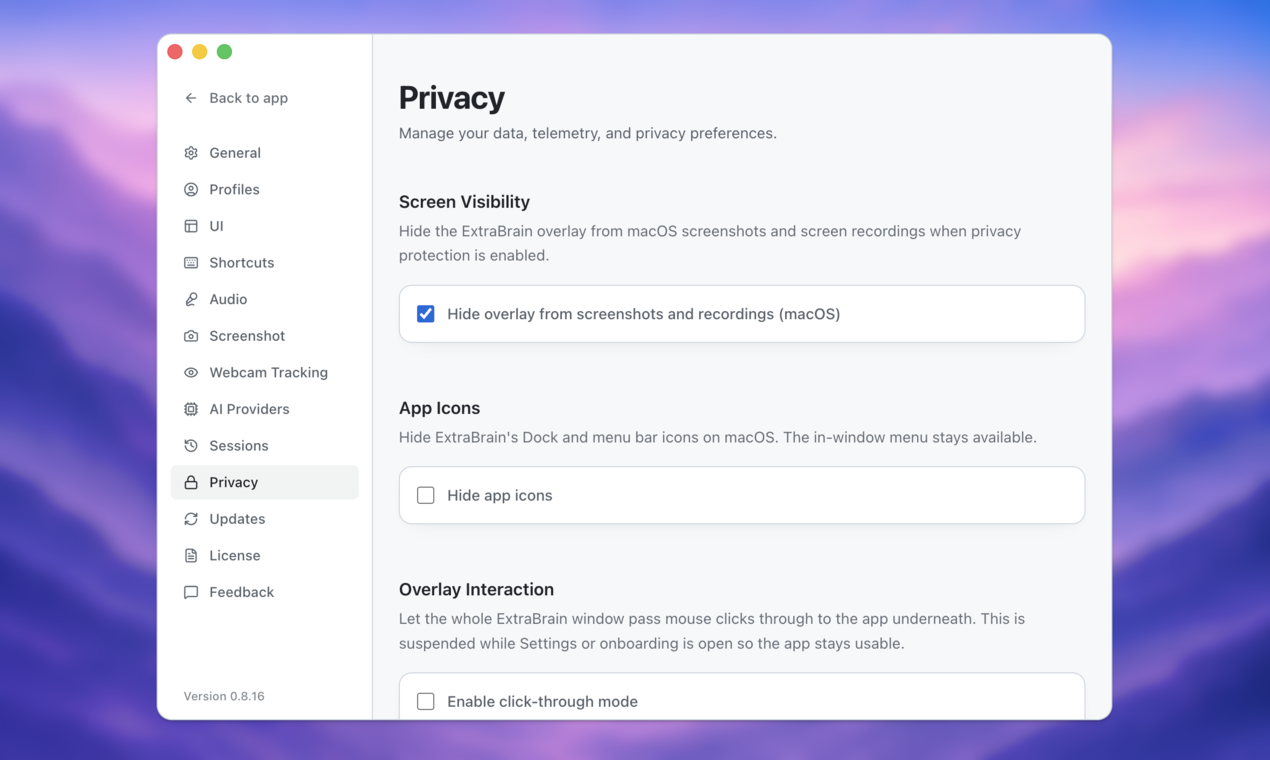
Understand local-first privacy choices
A fully local ExtraBrain posture requires local Parakeet transcription plus local Gemma 4 on-device AI where installed and compatible, with no external provider requests. That can help keep transcription and AI prompts local.
If you use external providers, selected prompts, transcript text, screenshots, audio, or context may be sent to those providers depending on your configuration. That is not automatically bad, but it should be a conscious choice. For sensitive interviews, school contexts, customer calls, or workplace meetings, review the rules and your provider settings before the session.
How to use ExtraBrain responsibly during allowed live sessions
Use outlines, not scripts
If AI assistance is allowed during a live Otomeyt-style interview, use it to support thinking rather than replace thinking. Ask for an outline, a tradeoff list, or a clarifying question. Do not read a generated answer word for word if it does not match your experience.
A healthy live workflow looks like this:
- Listen to the prompt carefully.
- Restate the problem in your own words.
- Use ExtraBrain to capture transcript and screen context where allowed.
- Ask for a structure, not a finished speech.
- Answer from your own experience and explain your reasoning.
- Use follow-up prompts to check edge cases, risks, or examples.
This kind of use can help you communicate more clearly without pretending to know something you do not know.
Keep your voice human
AI-generated answers often sound too polished, too broad, or too formal. Interviewers usually want to hear how you think. They care about the assumptions you notice, the tradeoffs you make, and how you recover when something is unclear.
Use these habits to stay authentic:
- Say what you are assuming.
- Include real details from your projects.
- Admit uncertainty when appropriate.
- Explain why you chose one approach over another.
- Use language you would naturally say aloud.
- Avoid answers you cannot defend in follow-up questions.
ExtraBrain can help create STAR structures, technical explanations, and follow-up questions. You still need to provide the judgment, memory, and honesty.
Use screen-aware context carefully
Screen-aware context can be helpful for coding prompts, system design diagrams, product exercises, and case interviews. For example, if a prompt includes a bug report, architecture diagram, or code snippet, ExtraBrain can help you reason about what is visible where screenshots are allowed.
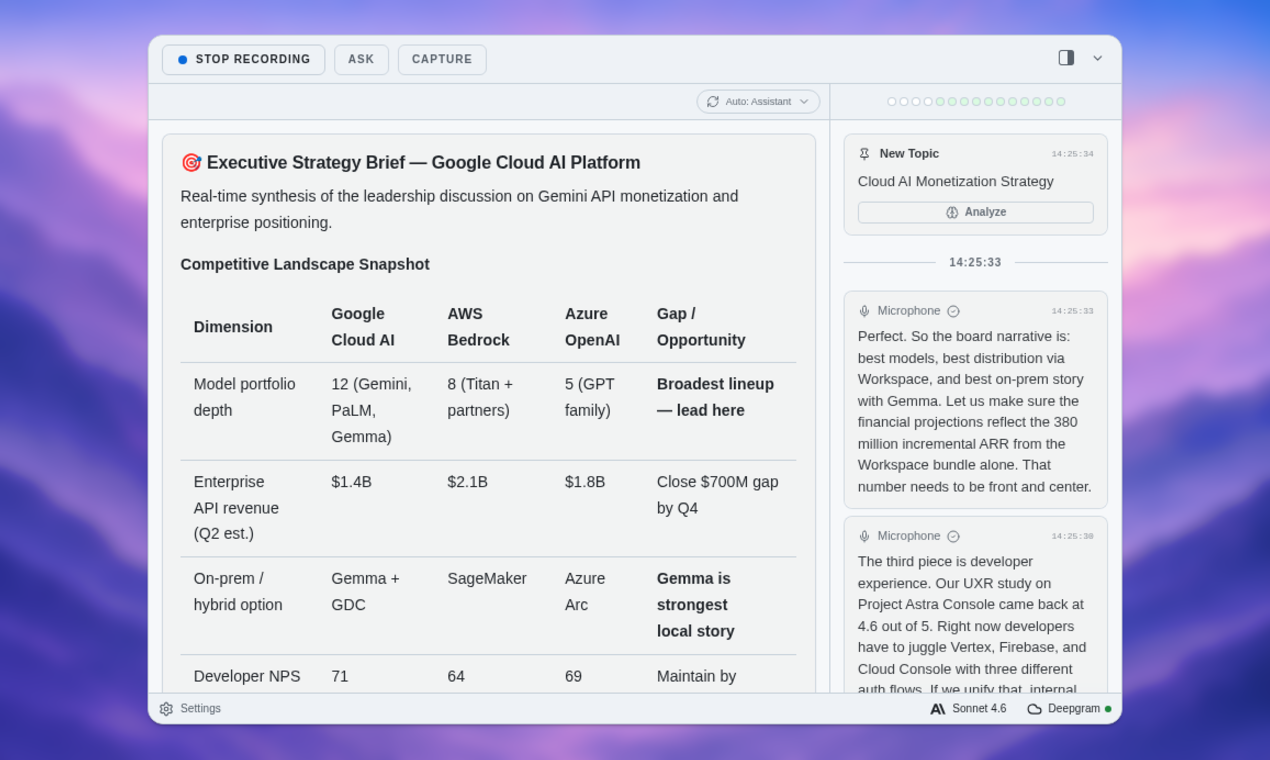
Use this feature only when screenshots or screen context are permitted. Some platforms or employers may prohibit screenshots, recording, or external analysis. If those rules apply, keep ExtraBrain for pre-session practice and post-session review instead.
What detection systems often look for
It is risky to assume any online assessment platform can or cannot detect a specific tool. Detection practices can change, and different customers may configure assessments differently. Instead of relying on internet rumors, assume that monitored environments may look at multiple signals.
Those signals can include:
- Fullscreen exits or window switching.
- Copy-paste behavior.
- Very fast answer submission.
- Repeated wording across answers.
- Unnatural writing style.
- Suspicious camera or gaze patterns.
- IP, device, or browser inconsistencies.
- Audio, screen, or proctoring events.
The responsible solution is not to hide those signals. The responsible solution is to use AI only in ways the session permits. If AI is not allowed, use ExtraBrain before the assessment to practice and after the assessment to debrief.
Practical Otomeyt prep workflow with ExtraBrain
Step 1: Build your private interview memory
Create a short inventory of your real experience. Include projects, metrics, challenges, mistakes, lessons, technologies, and leadership examples. Then practice retrieving those details quickly.
Good source material includes:
- Your resume.
- Project writeups.
- GitHub or portfolio notes.
- Previous interview debriefs.
- Job descriptions.
- Study notes.
- Behavioral stories.
ExtraBrain can work as a focused AI second brain for interviews and meetings. It is not a broad replacement for every note-taking database, but it can help organize live sessions, transcripts, notes, screen context, and review.
Step 2: Rehearse the likely formats
Otomeyt-style workflows may include recorded answers, coding questions, multiple-choice screening, live technical discussion, or behavioral prompts. Prepare for the format you expect.
For coding interviews, practice explaining the algorithm before implementation. For system design, practice naming constraints and tradeoffs. For behavioral interviews, practice telling the truth with structure. For product interviews, practice clarifying the goal before jumping to solutions.
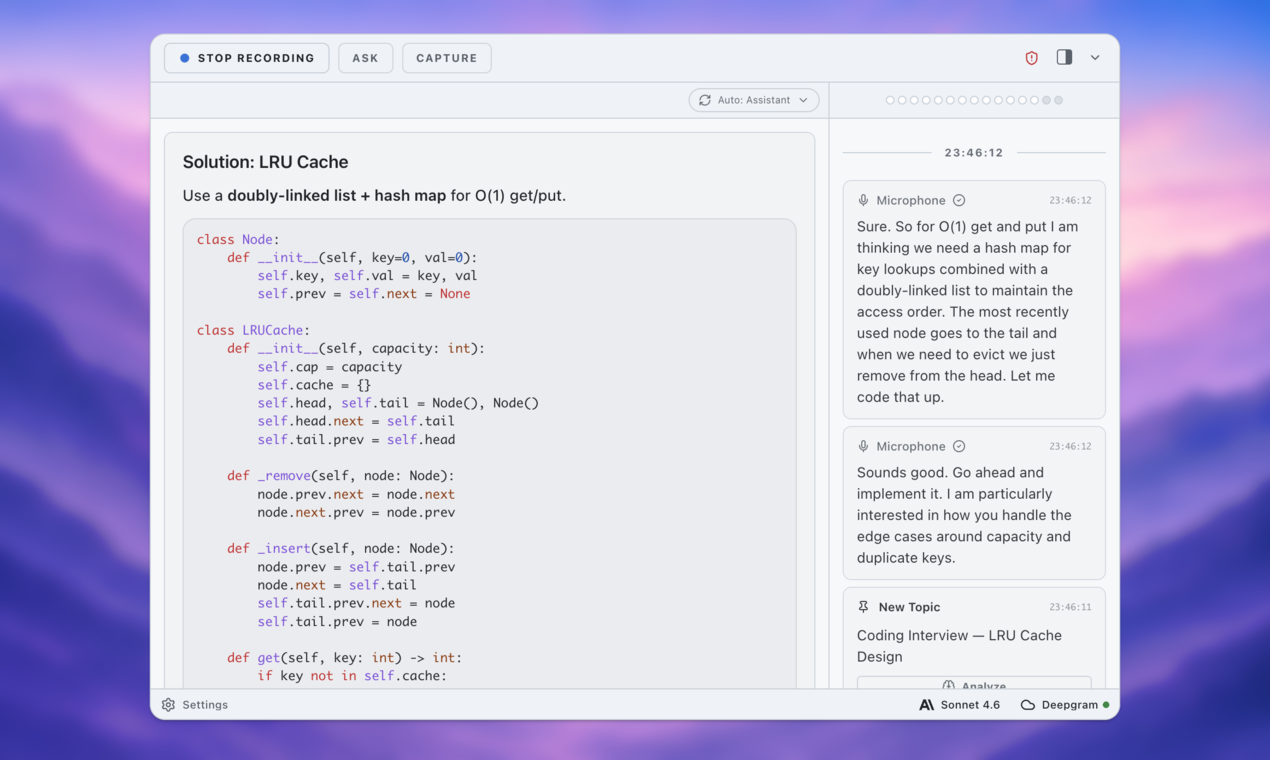
Step 3: Create answer outlines, then rewrite them in your words
Use AI to create a first draft, but do not stop there. Rewrite every important answer so it sounds like you. Replace generic claims with real examples. Remove phrases you would never say. Practice out loud until the answer feels natural.
A useful answer outline might include:
- Context.
- Goal.
- Constraints.
- Action.
- Tradeoff.
- Result.
- What you would improve next time.
This is especially helpful for candidates who freeze under pressure. You are not memorizing a fake answer. You are making your real answer easier to access.
Step 4: Debrief after the session
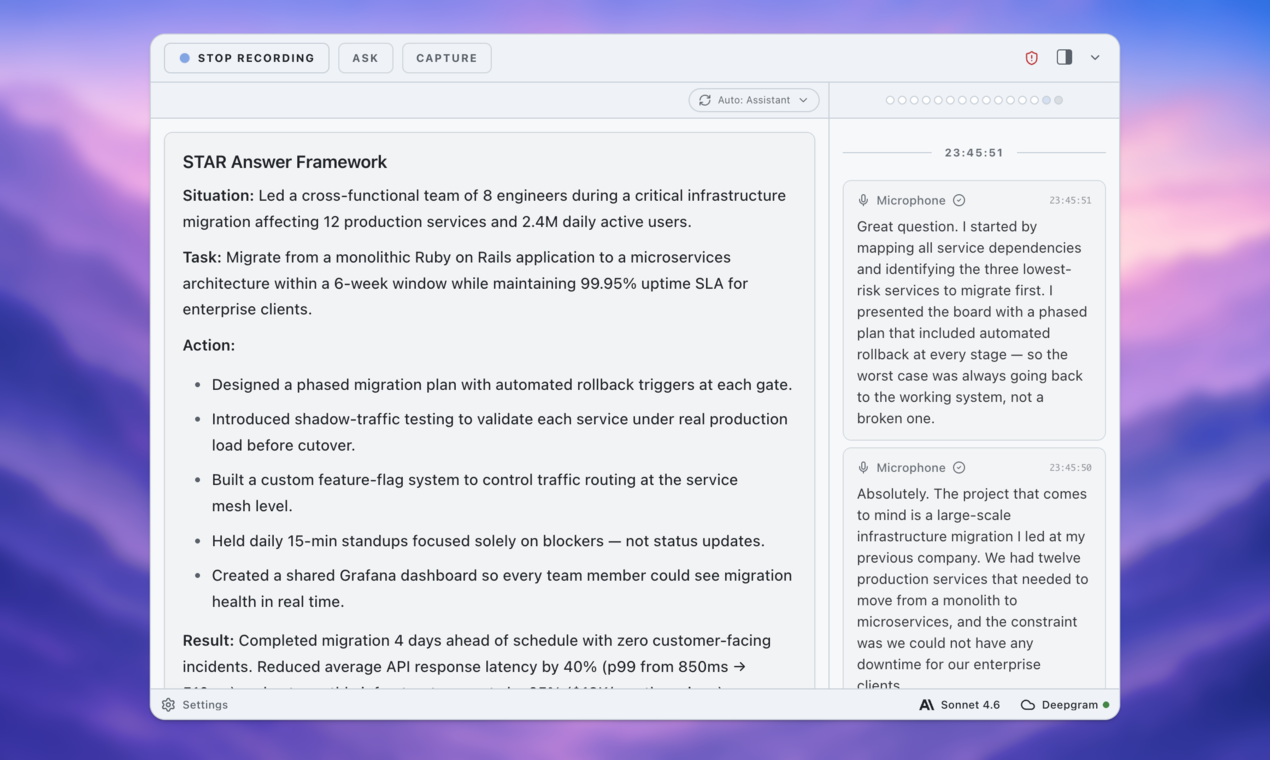
Post-interview review is one of the safest and most valuable uses of AI. After the interview, use your transcript and notes to identify what went well, what felt weak, and what you should practice next.
ExtraBrain can help turn a session into a learning loop:
- Summarize the questions asked.
- Extract follow-up topics.
- Identify moments where your answer lacked evidence.
- Rewrite one answer for future practice.
- Create a study plan for the next round.
Common mistakes to avoid
Copying AI answers verbatim
Copying AI output is the fastest way to sound generic. It also leaves you vulnerable when an interviewer asks a follow-up question. If you cannot explain the answer, do not use it as your answer.
Ignoring the platform rules
Do not assume invisible means allowed. A tool can be designed not to appear in screen sharing, while still being prohibited by the session rules. Read the instructions for your specific Otomeyt assessment and follow them.
Over-optimizing for detection instead of performance
Some candidates spend more time worrying about detection than learning the material. That is backwards. The better you understand your own experience and the interview domain, the less you need risky shortcuts.
Sharing sensitive data with unclear tools
Be careful with resumes, assessment prompts, recordings, screenshots, and customer or employer information. Use local-first options where appropriate. If you select external providers, understand what context may be sent outside your device.
ExtraBrain positioning for Otomeyt-style interviews
ExtraBrain is a strong fit for Mac users who want a private, real-time interview preparation and meeting copilot. It is available for macOS today, including Apple Silicon and Intel Macs, with Windows and Linux planned. It supports use cases such as coding interviews, system design rounds, behavioral interviews, product interviews, meetings, lectures, and research calls.
The core app is free. ExtraBrain Pro is available for users who want paid features, with regular monthly, annual, and Lifetime launch pricing. External AI and transcription provider usage is billed separately by the providers users choose.
You can learn more at ExtraBrain. When people search for “Extra Brain,” they are usually referring to the same app with a spaced brand alias.
FAQ
Can Otomeyt detect AI-generated answers?
Otomeyt-style platforms may use integrity checks, answer-pattern review, timing analysis, proctoring signals, fullscreen controls, or customer-specific rules. You should not rely on claims that any AI tool is undetectable. Use AI only where it is allowed.
Is ExtraBrain invisible on screen sharing?
ExtraBrain is designed to stay hidden from screen sharing and screen recording on major meeting tools. That design is useful for privacy and focus, but it does not override assessment, employer, school, or platform rules.
What is the safest way to use AI for Otomeyt preparation?
Use AI before the assessment to practice, organize your experience, rehearse technical explanations, and improve answer structure. Use AI after the assessment to debrief and prepare for the next round. During the assessment itself, use AI only if the rules explicitly allow it.
Can ExtraBrain generate interview answers?
ExtraBrain can help generate answer outlines, STAR structures, technical explanations, and follow-up questions from transcript and screen context. Candidates remain responsible for honest and allowed use.
Can ExtraBrain run fully local?
A fully local ExtraBrain posture requires local Parakeet transcription plus local Gemma 4 on-device AI where installed and compatible, with no external provider requests. External providers may receive selected prompts, transcript text, screenshots, audio, or context depending on configuration.
Is ExtraBrain available on Windows?
ExtraBrain is available for macOS today, including Apple Silicon and Intel Macs. Windows and Linux are planned future platforms.