
ExtraBrain Blog
Interview Copilot or Interview Crutch? How to Tell the Difference

Learn the difference between responsible AI interview support and unhealthy dependency, with practical boundaries and examples.
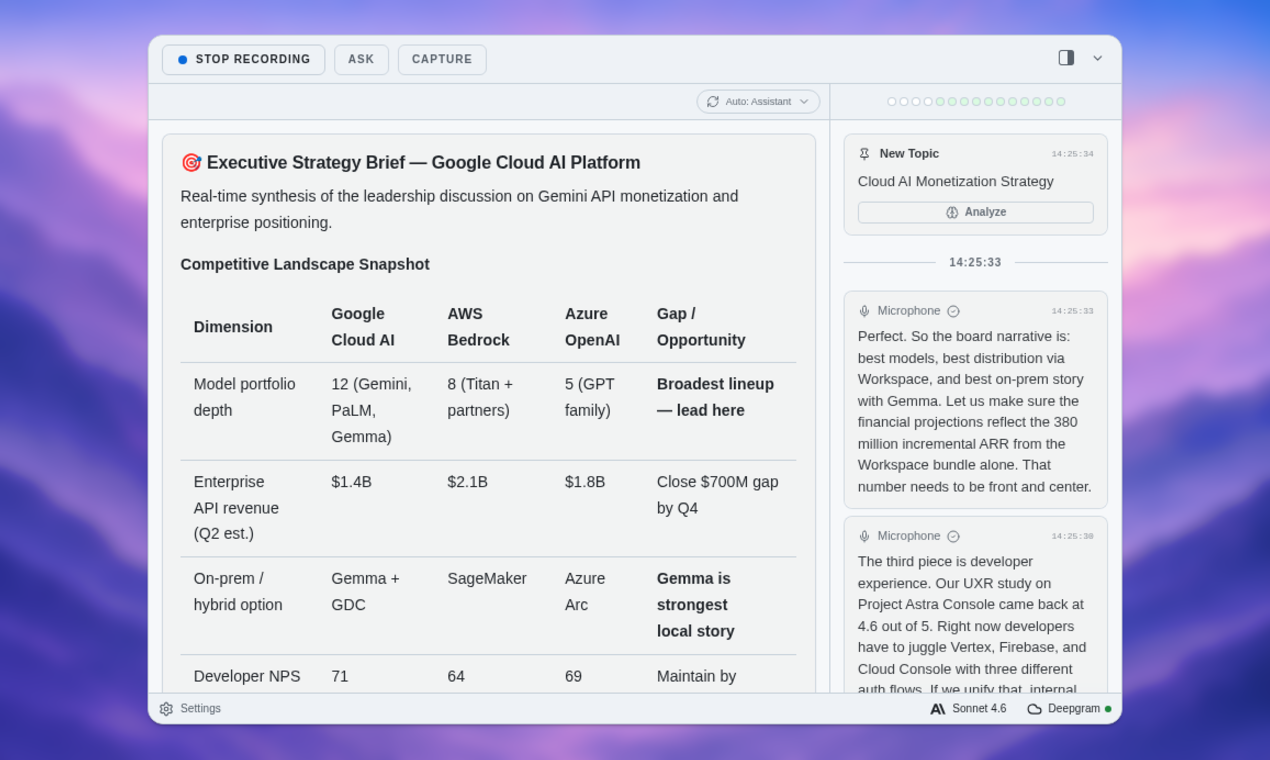
The first warning sign is not that you used AI. It is that you feel nervous answering without it.
That is the difference between an interview copilot and an interview crutch. A copilot helps you navigate. A crutch carries weight you have stopped building the strength to carry yourself. In interview preparation, the distinction matters because the goal is not to produce the smoothest answer. The goal is to show real judgment, experience, and the ability to think under pressure.
AI can absolutely help with that. It can organize messy career stories, generate follow-up questions, capture practice sessions, summarize where you rambled, and remind you to prepare for the questions you usually avoid. Used well, a private AI interview copilot can make you clearer and calmer.
Used poorly, the same category of tool can make you dependent. You start collecting generated answers instead of understanding your own examples. You sound polished but interchangeable. You become less able to handle interruption, ambiguity, or follow-up questions because the preparation happened outside your own head.
This article is about telling the difference before it matters.
A copilot strengthens the pilot
The word “copilot” is useful only if we take it seriously. A copilot does not replace the pilot. It helps monitor, organize, cross-check, and reduce overload. The pilot still understands the aircraft, makes decisions, and owns the outcome.
That is the right model for AI-assisted interview preparation.
A good interview copilot helps you notice what you missed. It can turn a rambling practice answer into a clearer structure. It can ask, “What was the measurable result?” or “What did you personally own?” It can help you compare your experience against a job description and identify the stories worth practicing.
But you still have to choose the story. You still have to explain the tradeoff. You still have to know which detail is true, which detail is confidential, and which detail should be left out. You still have to answer when the interviewer says, “Why did you make that decision?”
That is the first test: after using AI, are you more capable of answering on your own? If yes, it is probably acting as a copilot. If no, it is becoming a crutch.
A crutch creates confidence you cannot defend
Unhealthy AI use often feels productive at first.
You paste a behavioral question into a chat box. You get a clean STAR answer. You ask for a more senior tone. You ask for a version tailored to the company. You save it. Then you do that twenty more times.
Now you have a library of answers that look better than your messy notes. The problem is that they may not be yours in the only way that matters: you cannot move around inside them.
A generated answer can say, “I aligned stakeholders around a shared roadmap.” But if the interviewer asks which stakeholders disagreed, what tradeoff you made, what you tried first, or what you would do differently now, the sentence stops helping. It was a surface. There was no working memory underneath it.
A crutch creates confidence that collapses under follow-up. AI should help you recover the texture of real experience, not sand it down.
The clearest boundary: assistance versus substitution
The most practical distinction is this: assistance helps you do the work better; substitution quietly does the work for you.
Examples of AI as assistance include:
- Turning a job description into likely interview themes
- Helping you organize real stories from your career
- Asking skeptical follow-up questions during practice
- Summarizing a mock interview transcript so you can improve
- Rewriting your own answer in plainer language
- Helping you debrief after an interview and prepare for the next round
Examples of AI as substitution include:
- Inventing accomplishments you did not have
- Writing answers you plan to memorize but cannot explain
- Feeding you hidden live responses during an assessment
- Solving a coding, case, or writing test without permission
- Making claims about systems, metrics, or leadership experience you cannot defend
- Replacing your judgment with a generated opinion because it sounds impressive
The tool is not the whole issue. The relationship to the tool is the issue.
A calculator is normal in one setting and forbidden in another. Notes are expected in some conversations and inappropriate in closed-book tests. AI is similar. Before the interview, it can be a powerful preparation partner. During an interview, permission and format decide the boundary. After the interview, it can help you learn.
If AI secretly performs the skill being evaluated, you are no longer being assisted. You are being substituted.
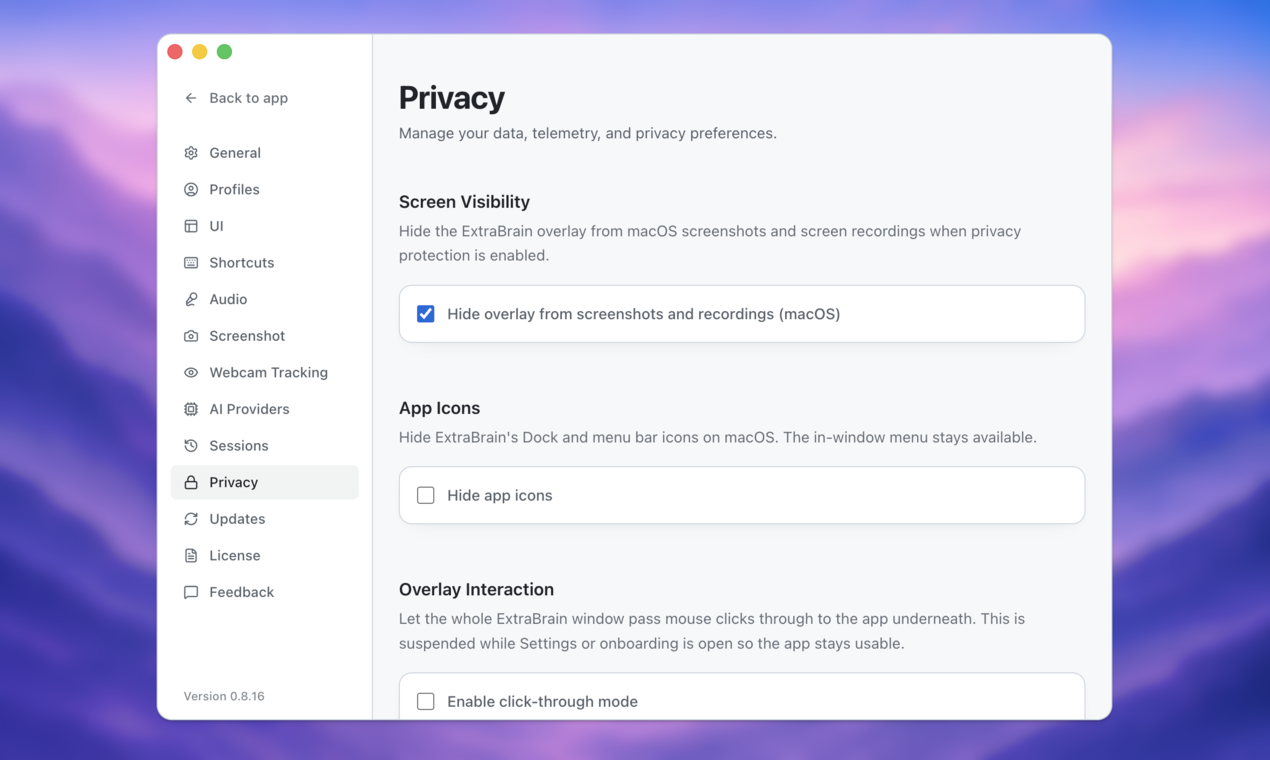
Five questions that reveal whether AI is helping or hurting
You do not need a philosophy seminar every time you use AI. You need a quick diagnostic.
1. Could I explain this without the output in front of me?
If the answer depends on reading, copying, or recalling the exact generated wording, you are in fragile territory. Strong preparation survives paraphrase.
Close the AI window and explain the answer out loud. If you can still cover the context, tension, decision, result, and lesson, the tool helped. If you freeze, the tool may have created the illusion of readiness.
2. Did the answer become more specific or more generic?
Good AI use should add structure while preserving detail. Bad AI use often turns a real story into interview paste.
Compare these two versions:
“I leveraged cross-functional collaboration to improve customer outcomes.”
“I got support, product, and engineering into the same incident review because we were disagreeing about whether the bug or the workaround mattered more to customers.”
The second one is stronger because only someone close to the work would say it that way. If AI makes you sound like everyone else, push it back toward the facts.
3. Am I practicing follow-ups or collecting first drafts?
First drafts are cheap now. Follow-up readiness is the signal.
After each prepared answer, ask AI to challenge you:
- What sounds vague?
- Where did I hide behind “we”?
- What metric or evidence is missing?
- What would a skeptical interviewer ask next?
- What part sounds too polished to be natural?
Then answer those questions without reading. That is where the learning happens.
4. Would I be comfortable disclosing this use?
You do not need to announce every prep tool you used. But if the honest description would embarrass you or violate the employer’s stated rules, pay attention.
“I used AI to organize my practice notes and generate follow-up questions” is very different from “I had AI feed me answers during the live case.” One sounds like preparation. The other sounds like deception because it is.
5. Is AI making me braver or more avoidant?
A healthy copilot helps you face weak spots. It points out that your impact is unclear, your technical explanation skips a constraint, or your leadership story avoids the conflict. A crutch helps you avoid those weak spots by generating a smoother version around them.
If AI is helping you practice the hard questions, it is strengthening you. If it is helping you hide from them, it is not.
The best use case: turning practice into feedback
The most responsible AI interview workflow starts with your own voice.
Instead of asking for an answer from scratch, record yourself answering a real question. Talk through it badly if you need to. Ramble. Pause. Start over. Include the details that feel too messy for a polished document.
Then use AI to analyze what happened.
This is where ExtraBrain is useful as an AI interview preparation workspace. The value is not that it magically creates a better candidate. The value is that it can help capture a practice session, preserve context, and turn your own words into something you can review.
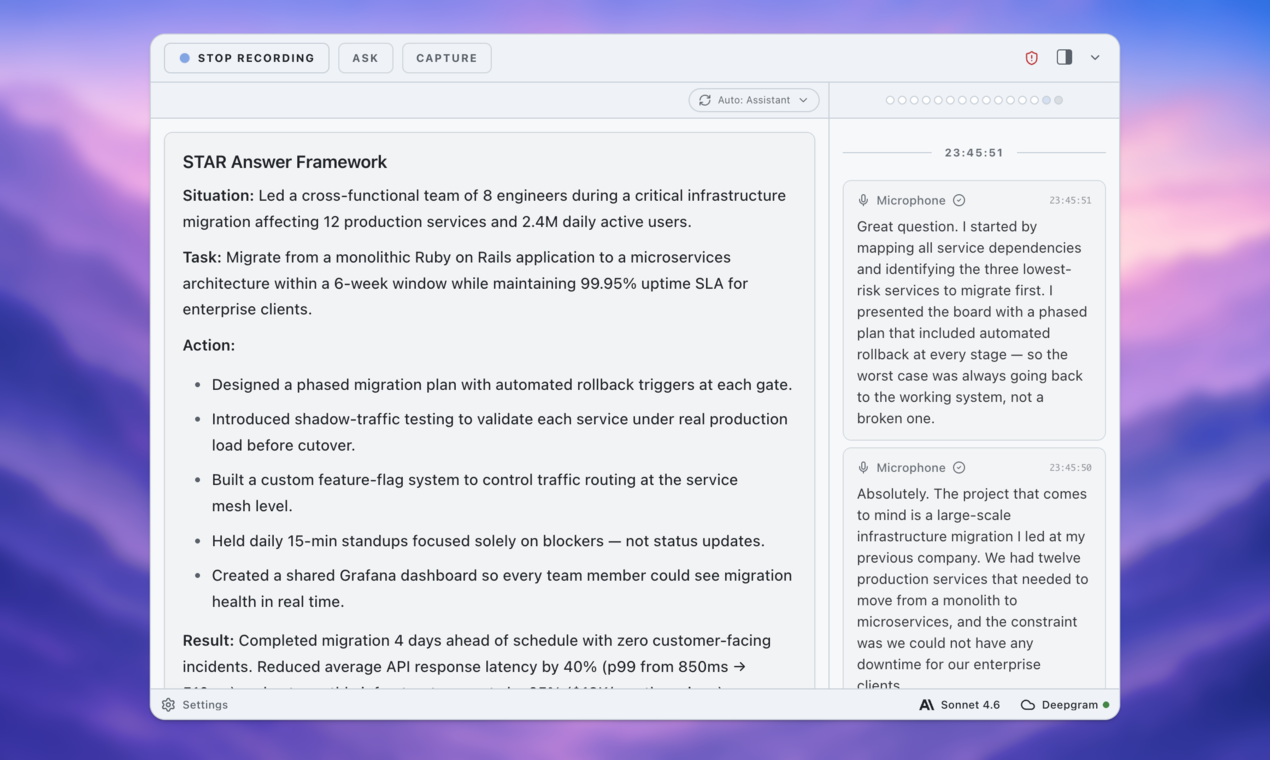
A strong practice loop looks like this:
- Pick one real interview question.
- Answer out loud without a script.
- Review the transcript or summary.
- Identify what was unclear, missing, or too long.
- Generate follow-up questions.
- Answer again in your own words.
- Save only the structure, not a memorized paragraph.
This loop builds skill because it keeps the human action at the center. AI observes, organizes, and challenges. You still do the reps.
Where candidates most often cross into dependency
Dependency rarely starts with bad intent. It usually starts with pressure.
You have three interviews this week. You are tired after work. The job market feels unforgiving. You know other candidates are using AI. You worry that your normal answers are not polished enough. So you let the tool do a little more.
At first, it rewrites. Then it decides. Then it invents a stronger framing than the facts support. Then you start trusting the generated version more than your memory.
Watch for these signs:
- You have many saved answers but have not practiced them out loud.
- You cannot explain the examples without reading notes.
- You keep asking AI to make you sound “more executive” instead of more specific.
- You avoid follow-up questions because they make the answer feel weaker.
- You use AI to smooth over gaps you should actually study.
- You feel anxious when imagining the interview without live AI nearby.
None of these signs mean you have failed. They mean the workflow needs correction.
The fix is to move from answer generation to skill rehearsal. Use AI less as a ghostwriter and more as a coach. Ask it to find weak spots. Ask it to make you prove claims. Ask it to help you simplify, not inflate.
A simple traffic-light framework for interview AI
When in doubt, use a traffic-light model.
Green: preparation and reflection. Use AI before interviews to research themes, organize your experience, run mock interviews, review transcripts, improve clarity, and protect privacy. Use it after interviews to debrief and decide what to practice next.
Yellow: live support with permission. Notes, transcription, search, documentation, or AI tools may be acceptable in some interviews, especially if the employer explicitly allows them. Ask first. Different stages may have different rules.
Red: hidden performance replacement. Do not use AI to secretly answer questions, solve assessments, fabricate experience, or impersonate judgment. If the interview is designed to evaluate your independent reasoning and you quietly outsource that reasoning, you have crossed the line.
Privacy matters because real preparation uses real material
The best interview prep often involves sensitive context.
You may talk about former employers, customer problems, internal systems, compensation goals, team conflicts, unreleased projects, health constraints, immigration concerns, or confidential metrics. The more honest your preparation, the more careful you need to be with the workspace that holds it.
Responsible AI use includes privacy hygiene:
- Remove customer names and private identifiers.
- Generalize confidential systems and project names.
- Avoid pasting proprietary code or internal documents.
- Use ranges instead of exact confidential metrics when possible.
- Keep personal career notes in tools you trust.
A local-first AI meeting copilot matters here because interview preparation is not generic productivity data. It is your career history, your uncertainty, your private notes, and sometimes other people’s confidential information. Control is not a luxury feature. It is part of responsible preparation.
The goal is not less AI. It is more ownership.
The easiest reaction is to say candidates should avoid AI entirely. That sounds clean, but it does not match reality. AI is already part of how people write resumes, study, practice, summarize, and work. For many roles, AI fluency is becoming part of the job itself.
The harder and better answer is ownership.
Use AI to prepare more honestly. Use it to remember examples you would otherwise forget. Use it to see when your answer is vague. Use it to practice the follow-up question that scares you. Use it to shorten a ramble into a clear explanation. Use it to protect your privacy before you paste too much.
But do not let it become the source of your competence.
A copilot should make your judgment more visible. A crutch hides the absence of judgment until pressure exposes it. The difference is not always obvious in the moment, which is why you need rules before the interview starts.
Before your next interview, try this: open your preparation notes, choose one important story, and answer it out loud without AI. Then bring in a tool like ExtraBrain to review what you said, generate follow-up questions, and help you clarify the structure. Close the tool and answer again.
If the second answer is more yours, you are using AI well.
That is the standard. Not perfect polish. Not hidden help. Not artificial confidence. Just clearer thinking, stronger practice, and a human candidate who still owns the answer.