
ExtraBrain Blog
The Interview Has Changed. Your Preparation Should Too.

Interviews now include AI tools and transcripts. Learn how to prepare with clarity, privacy, and responsible AI support.
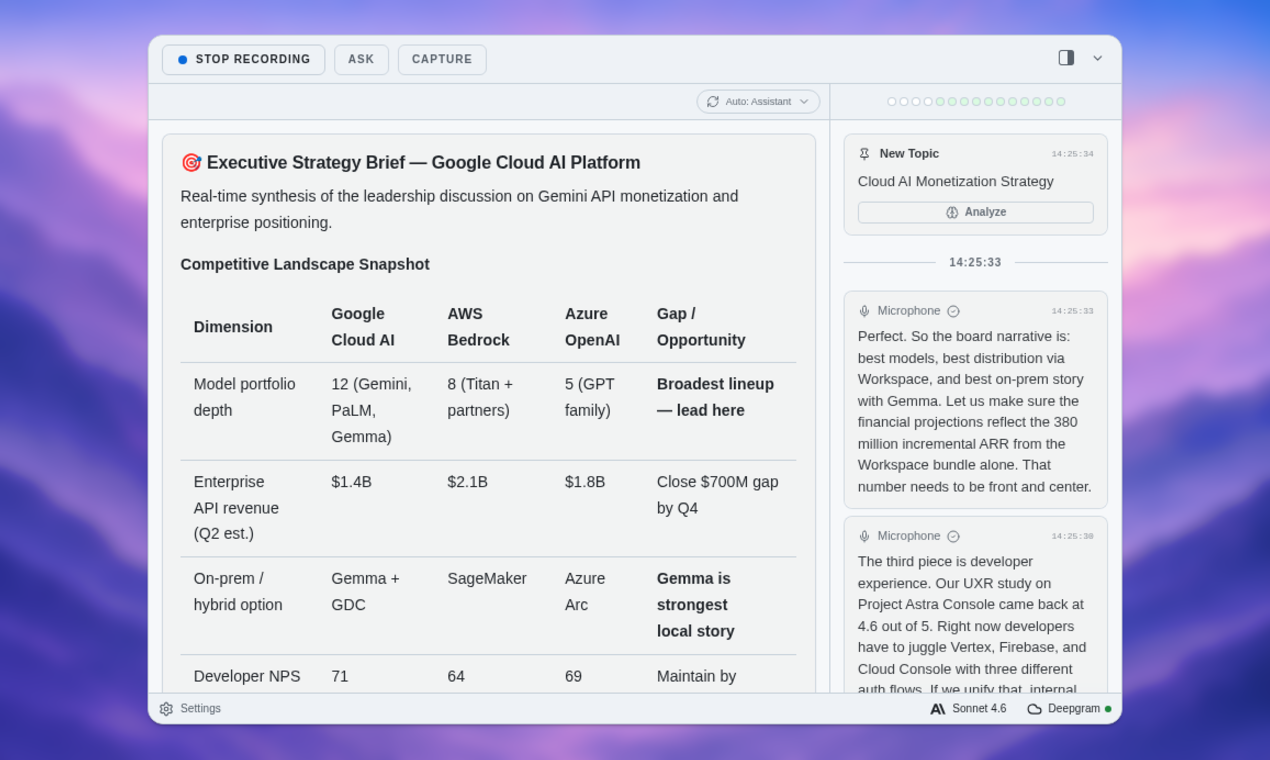
The interview used to be the moment when preparation ended and performance began. You researched the company, rehearsed your answers, walked into the room, and hoped your memory held up under pressure.
That line is blurrier now. AI is already in the hiring process. Candidates use it to understand job descriptions, rewrite resumes, practice answers, and debrief after calls. Hiring teams use it to summarize interviews, structure notes, and compare candidates. Some companies are experimenting with AI-assisted technical interviews. Others are tightening rules because they worry candidates are secretly outsourcing the work.
So the real question is no longer whether AI belongs anywhere near interviewing. It already does. The better question is: how do you prepare for interviews in an AI-shaped world without becoming an AI-shaped candidate?
The answer is not to memorize more scripts. It is to build a preparation system that helps you think clearly, remember your own experience, protect your privacy, and show up as yourself.
The Old Interview Prep Playbook Is Too Thin Now
For years, interview prep meant a familiar checklist: update the resume, research the company, practice common questions, prepare a few STAR stories, and review the job description before the call.
That still helps, but it is no longer enough.
Modern interviews create a different kind of pressure. You may be competing against candidates who use AI to sharpen every answer, evaluated through transcripts, or asked how you use AI at work. You may face an interviewer who wants to know not just what you did, but how you think when tools are available and constraints change.
The old playbook was built around recall. The new one has to be built around clarity: not “Can I remember the answer?” but “Can I explain my judgment when the conversation moves?”
Start With Evidence, Not Generic Questions
Most candidates begin by searching for interview questions. That is understandable, but it often creates weak preparation. You end up trying to attach memories to prompts instead of starting from the work you actually did.
A better first step is to build an evidence bank.
List ten to fifteen real moments from your work history: a launch you helped rescue, a conflict you handled, a customer problem you understood early, a system you improved, a mistake that taught you something, or a decision you made with incomplete information.
Then map each story to themes. One story may show leadership, ambiguity, stakeholder management, technical judgment, and resilience. This prevents the common problem of preparing twenty separate answers when five strong stories could cover most of the conversation.
AI can help here if you keep the source material yours. Instead of asking, “Write me an answer about leadership,” ask:
Here is a real project I worked on. Help me identify the interview themes it supports, the clearest decision point, the measurable outcome, and the follow-up questions an interviewer might ask.
That prompt keeps you in control. You bring the experience. AI helps you see the structure.
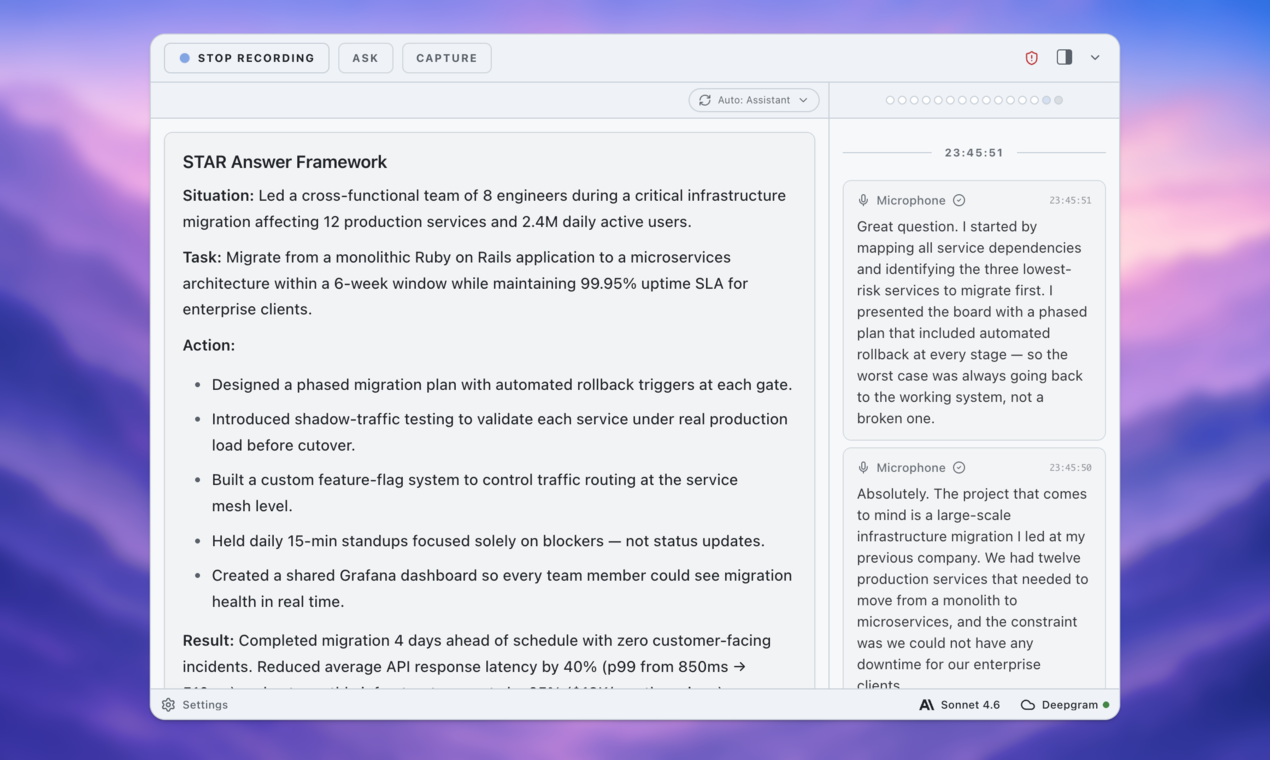
Tools like ExtraBrain are useful in this phase because they are designed around capturing and analyzing real conversations. As an AI interview preparation workspace, it can help you talk through a story out loud, review the transcript, and notice where your explanation was strong or vague.
Practice Thinking, Not Performing
The biggest mistake in AI-era interview prep is using AI to create answers you would never naturally say.
You have probably seen these answers. They sound smooth, confident, and strangely empty. They include phrases like “cross-functional alignment,” “strategic execution,” and “driving impact” without enough detail to prove anything happened. They may look good in a document, but they are fragile in a live conversation.
Interviewers do not only evaluate the first answer. They listen for ownership. They ask what changed. They ask who disagreed. They ask what you personally did. They ask why the result mattered.
That means your preparation should include interruptions.
After shaping a story, practice follow-up questions:
- What was the hardest tradeoff?
- What did you do that someone else on the team did not?
- What evidence told you the approach worked?
- What would you change if you had another month?
- Where were you wrong at first?
If you cannot answer those without reading a script, you are not done preparing.
A private AI interview copilot should make this easier, not lazier. The best use is not to feed you perfect lines. It is to ask better questions, catch vague explanations, and help you rehearse the parts of the conversation where real judgment appears.
Build a Personal AI Boundary Before the Interview
AI creates a practical ethics problem for candidates: the same tool can be responsible preparation in one context and cheating in another.
Before the interview, using AI to organize your stories, research a role, practice explanations, or review a mock interview is usually appropriate. After the interview, using AI to debrief, identify weak answers, and draft a follow-up email you edit yourself is also reasonable.
During the interview, the rules change.
If the employer allows notes, documentation, search, or AI tools, follow the stated rules. If the employer does not allow them, do not secretly use them. If the rules are unclear, ask:
Are candidates allowed to use notes, documentation, search, or AI tools during this exercise?
That question is not a weakness. It signals professionalism.
A useful personal boundary is this: AI can help you prepare your thinking, but it should not impersonate your thinking while you are being evaluated.
This matters for trust and fit. If you win a role by presenting a version of yourself that only exists with hidden real-time assistance, you have created a day-one problem.
Protect Your Context Like It Matters
Interview preparation involves more sensitive information than candidates realize.
Your prep notes may include former managers, internal conflicts, customer examples, salary expectations, unreleased projects, or confidential metrics. Even a harmless-sounding story can reveal more than you intended if you paste the whole thing into a tool without thinking.
Before using any AI tool, ask whether you can remove names, use safe metric ranges, avoid confidential employer details, understand where the information is processed, and keep sensitive practice material local.
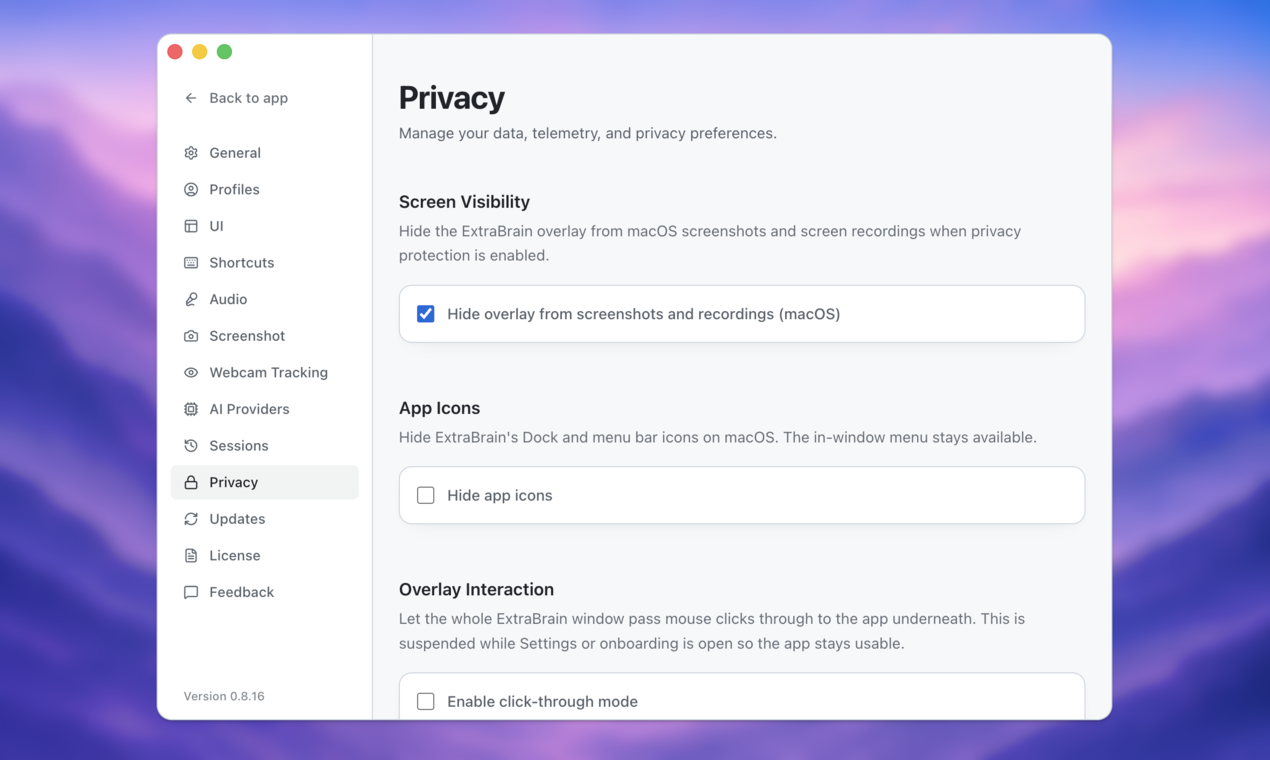
This is one reason I like the idea of a local-first AI meeting copilot for interview preparation. The calmer version of AI prep is not “paste everything into a random chat window and hope.” It is a workspace where your practice conversations, transcripts, and reflections stay under your control.
Privacy is not paranoia. It is professionalism.
Use AI to Hear Yourself More Clearly
There is a strange gap between the answer you think you gave and the answer you actually gave. In the transcript, you may notice that you spent ninety seconds on background, rushed through your actual action, and never named the result.
This is where AI can be genuinely helpful.
Record a practice answer. Review the transcript. Ask for patterns, not perfection:
- Where did I ramble?
- Where did my personal contribution get unclear?
- What follow-up question would expose a weak spot?
- Which sentence sounds least like me?
- What is the simplest version that preserves the truth?
That last phrase matters: preserves the truth. The best interview prep does not turn you into a smoother stranger. It helps you explain the same reality with less friction.
ExtraBrain fits naturally here because it works like a memory layer for conversations. You can practice out loud, let the tool capture what happened, then use the analysis to refine your own answer. The workflow is closer to reviewing game tape than generating a script.
Prepare for AI Questions Too
AI is not only changing how candidates prepare. It is changing what companies may ask. For many knowledge-work roles, you should expect some version of: “How do you use AI tools?”
The strongest answer is not “I use it for everything” or “I never touch it.” The strongest answer shows judgment:
I use AI for research, summarizing my own notes, and pressure-testing explanations. I do not use it to invent facts, bypass review, or handle work I cannot verify. I treat it like a junior collaborator: useful, fast, and sometimes wrong.
Prepare one or two examples. If you use AI for writing, coding, or meetings, explain how you verify output, preserve accuracy, and protect sensitive information. AI fluency is becoming part of professional fluency. The signal is not whether you can prompt. The signal is whether you can supervise.
Create a Simple Prep Loop
You do not need a complicated system. You need a repeatable one.
The week before an interview, use a simple loop:
- Translate the role. Turn the job description into likely themes: outcomes, skills, collaboration patterns, technical depth, and leadership expectations.
- Build the evidence bank. List real stories from your experience and map them to those themes.
- Talk, do not type. Practice the most important stories out loud because interviews happen in conversation.
- Review the transcript. Look for rambling, missing outcomes, unclear ownership, and places where you sound unlike yourself.
- Practice follow-ups. Ask harder questions than you hope to receive.
- Set boundaries. Decide what AI use is appropriate before, during, and after the interview. Protect sensitive context.
- Debrief quickly. After the interview, capture what they asked, what felt strong, what felt weak, and what to improve next.
This loop turns AI into a preparation layer instead of a performance crutch.
The Future Belongs to Clearer Candidates
The interview has changed, but the human stakes have not.
A hiring team still wants to know how you think, what you have done, how you communicate, and whether the role fits. You still want to know whether the work is real, whether the manager is clear, whether the team is healthy, and whether you can succeed there.
AI can make that process noisier. It can flood the market with polished sameness, tempt candidates into shortcuts, and push companies toward suspicion.
But it can also make preparation more honest. It can help you find your real stories, practice the hard follow-ups, hear where you ramble, protect your memory, and walk into the conversation calmer than before.
That is the version worth using.
Do not prepare to sound like AI. Prepare to sound like yourself with sharper recall, cleaner structure, and better boundaries.
If you want a calmer way to practice interviews, review your own answers, and keep control of your context, try ExtraBrain as your private preparation layer before the next conversation.