
ExtraBrain Blog
LeetCode Was Never the Job. AI Just Made That Obvious.

The InterviewCoder debate showed technical hiring should test judgment, communication, debugging, and responsible AI use.
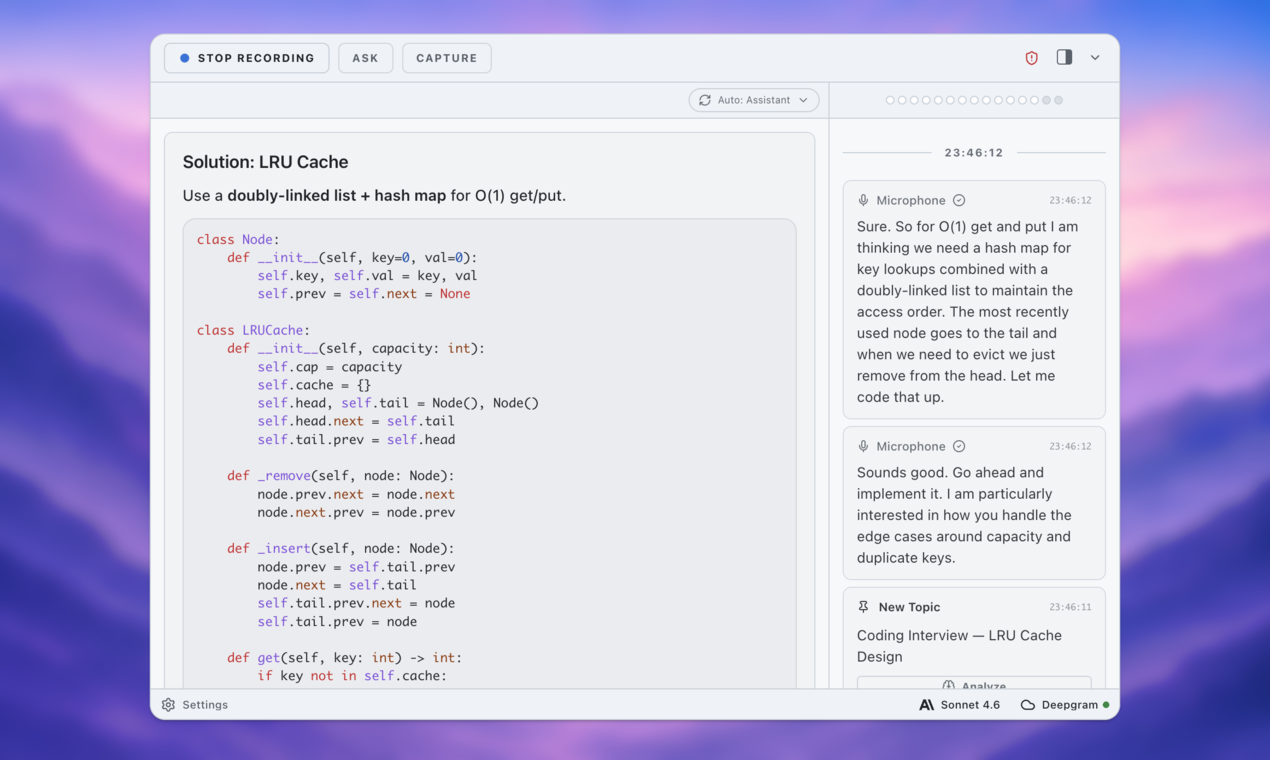
A strange thing happened when AI interview tools became controversial: everyone started arguing about cheating, but fewer people wanted to talk about why the old test was so easy to cheat in the first place.
The InterviewCoder and Cluely discourse made the issue impossible to ignore. A tool that could listen to an interview, understand a coding prompt, and suggest answers in real time felt like a direct attack on technical hiring. Some people saw it as proof that candidates had lost integrity. Others saw it as proof that LeetCode-style interviews were already theater.
Both reactions contain some truth. Secretly using AI to answer a live technical interview is not responsible. It changes the assessment without consent and misrepresents the candidate’s ability. But the panic also exposed something many engineers have known for years: LeetCode was never the job.
It was a proxy. Sometimes a useful proxy. Often a lazy one.
AI did not make engineering judgment less important. It made judgment harder to avoid.
The LeetCode interview was a scalability hack
LeetCode-style interviews became popular because companies needed a repeatable way to compare technical candidates. A standardized algorithm problem is easy to schedule, easy to score, and easy to discuss in a hiring debrief. It gives teams the comforting feeling of objectivity.
That does not mean it measures the whole job.
Most software engineers do not spend their days recognizing the exact trick behind a graph traversal problem under a 40-minute timer. They read messy requirements. They ask clarifying questions. They work inside existing systems. They debug strange failures. They review code that almost works. They decide when the simplest solution is good enough and when a shortcut will become expensive later.
None of that fits neatly into a single puzzle.
The LeetCode era trained candidates to optimize for pattern recall. Two pointers. Sliding window. Heap. Dynamic programming. Union find. If you practiced enough problems, you could sometimes recognize the family before you fully understood the specific situation.
That is not useless. Fundamentals matter. Data structures matter. Complexity matters. But there is a difference between knowing fundamentals and performing memorized fluency.
The job was never “produce a clever solution from memory while someone watches.” The job was always closer to: understand the problem, choose a reasonable approach, explain tradeoffs, implement carefully, verify behavior, and collaborate when reality changes.
AI makes that distinction impossible to ignore.
InterviewCoder was a warning sign, not the whole story
The InterviewCoder controversy became a flashpoint because it sat directly on the boundary between preparation and deception. Reports described it as a real-time assistant for coding interviews, and TechCrunch covered the later Cluely funding story around a product marketed with the deliberately provocative idea of helping people “cheat on everything.”
That framing matters. If a company says, “We want to see how you solve this problem,” and a candidate secretly routes the prompt through an AI assistant for live answers, the candidate is not just using a tool. They are hiding material help during an assessment.
That is cheating when the rules prohibit it or when the expectation is independent work. But if hiring teams only conclude “we need better surveillance,” they will miss the bigger lesson. Hidden answer tools are powerful because many interviews still over-reward final answers.
A better interview makes hidden answer generation less useful. Ask why the candidate chose the approach. Change a constraint. Ask what breaks at scale, how they would test it, or what they would do differently if this code were going into production.
Those questions are harder to outsource because they require situated judgment.
AI can still help produce language. It can still suggest plausible ideas. But a candidate who does not understand the answer will struggle when the conversation leaves the happy path.
The real signal is not the answer. It is ownership.
The most useful technical interviews reveal whether a candidate owns their reasoning.
Ownership sounds like this:
- “I am assuming the input fits in memory. If not, I would change the approach.”
- “This solution is simpler, but it makes writes slower. That seems acceptable because reads dominate here.”
- “I would test the empty case, duplicate values, and the largest input because those are where I expect this to fail.”
- “I do not know the library call from memory, but I know the shape of the solution and would verify the exact API.”
- “The AI-generated version looks correct at first glance, but it silently changes the requirement.”
That is engineering behavior.
A candidate who owns their reasoning can accept help, inspect it, reject parts of it, and explain what remains. A candidate who does not may produce an impressive answer and then collapse under one follow-up question. The better question is not whether engineers will use tools. They will. The better question is whether this person can use available tools while remaining accountable for the result.
Candidates should prepare for judgment, not scripts
If you are interviewing for engineering roles, the lesson is not “stop practicing.” It is “practice the part that transfers to the job.”
You still need fundamentals: data structures, complexity tradeoffs, basic algorithms, APIs, databases, concurrency risks, and system design vocabulary appropriate to your level. AI will not save you if you cannot tell whether an answer is wrong. But the way you practice should change. Instead of grinding hundreds of problems for recognition speed, take fewer problems deeper. After solving one, ask yourself:
- What was my first assumption?
- What constraint would force a different approach?
- What edge case did I almost miss?
- What would I log if this failed in production?
- How would I explain this to a teammate who disagrees?
- If AI suggested this answer, how would I verify it before trusting it?
That last question matters now. Responsible AI use is becoming part of professional judgment. The best candidates will not pretend AI does not exist; they will use it for preparation, reflection, and clarity without letting it impersonate them. This is where a private tool like ExtraBrain can be useful as an AI interview preparation workspace: record a mock interview, review where your explanation got vague, generate follow-up questions, and practice turning a half-formed answer into a clearer one.
Preparation builds the skill. Deception borrows the appearance of skill.
Interviewers should stop asking questions that only reward recall
Hiring teams have a responsibility here too.
If your technical interview can be beaten by memorizing the top 150 problems or hiding an AI window, it is probably too focused on output instead of reasoning.
That does not mean every interview needs to become a sprawling take-home project. Candidates already deal with too much unpaid labor in hiring. The answer is better signal density. A good live interview can start with a small coding task, but it should use the code as an artifact for discussion.
For example:
- “Walk me through the failure mode you are most worried about.”
- “What would change if the input were streamed?”
- “Which part would you simplify if we had to ship today?”
- “Which part would you harden if this handled payments?”
- “Here is an AI-generated alternative. What do you trust, and what would you verify?”
These prompts evaluate how candidates think. They also create a more humane interview. Instead of forcing candidates to guess the trick, the interview becomes a conversation about constraints.
That is closer to the job.
Speed is a signal. It is just not the only one. A candidate who asks clarifying questions, explains tradeoffs, and adapts when constraints change may be showing more job-relevant behavior than one who types a memorized solution quickly.
AI policy should be explicit, not implied
The worst version of the AI interview era is one where candidates guess, employers surveil, and everyone feels accused. Clear rules are better.
Some interviews should be closed-tool. If the goal is to check fundamentals without assistance, say what is allowed: notes, documentation, search, IDE autocomplete, AI, or none of the above. Some interviews should be open-tool. If the goal is to simulate real engineering work, allow documentation, search, and maybe AI, then evaluate how the candidate uses them. Other interviews should skip puzzles entirely and use architecture reviews, project retrospectives, debugging conversations, incident analysis, or code review exercises.
The key is consent. AI use becomes cheating when it secretly performs the skill being assessed. AI use becomes legitimate when it is disclosed, bounded, and evaluated as part of the work.
A mature hiring process should be able to tell candidates which mode they are in.
Privacy is part of responsible preparation
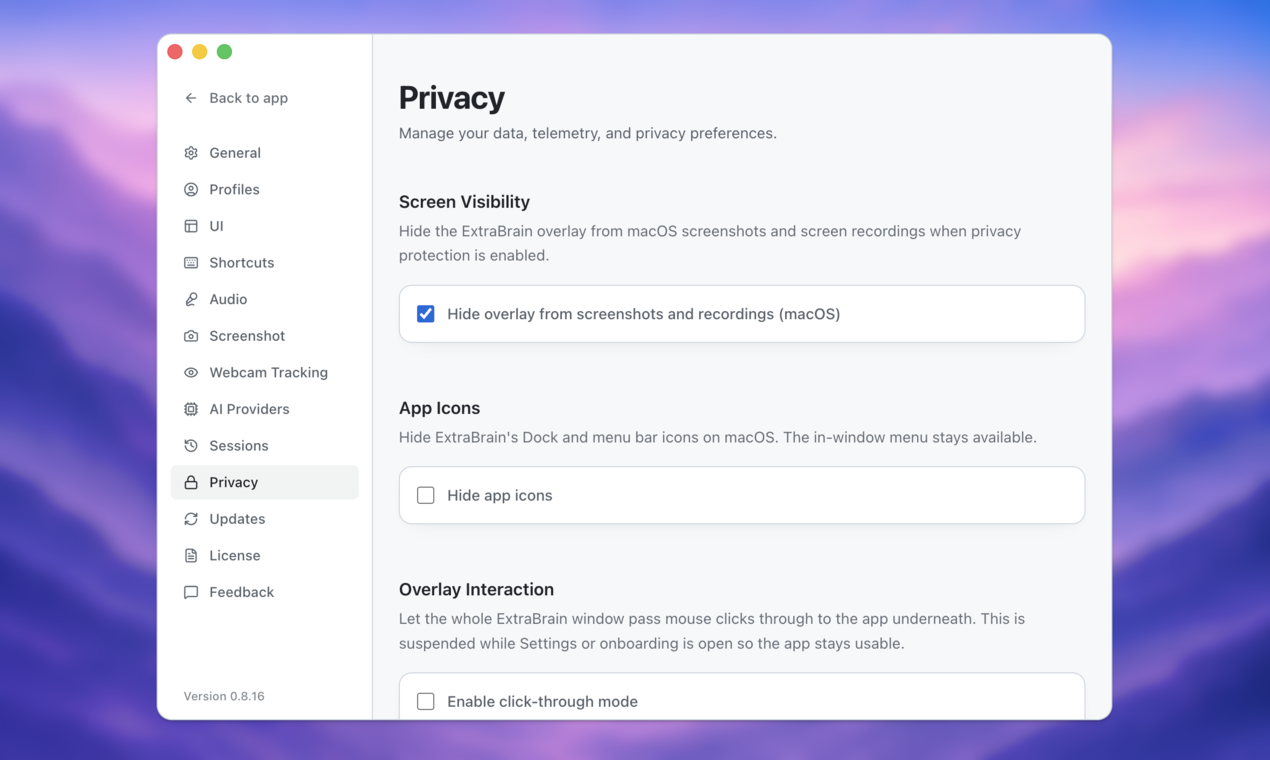
There is another piece candidates and companies should not ignore: privacy. Interview preparation can include sensitive material: current employers, unreleased projects, compensation concerns, personal anxieties, or examples from real incidents. If AI is part of preparation or interviewing, people need control over what is captured and where it goes.
That is why the “private” part of a private AI interview copilot is not a marketing detail. It is central to trust. A responsible workflow should make capture obvious, keep the user in control, and avoid turning interview prep into another place where sensitive context disappears into a black box.
The same principle applies to employers. If a company responds to AI anxiety with aggressive proctoring or suspicion-first monitoring, it may protect one part of the process while damaging candidate trust. Better interview design reduces the need for surveillance because it tests reasoning in ways that are harder to fake. Privacy and integrity are not opposites. A good process respects both.
The future technical interview is more human
The irony of AI in coding interviews is that it may push hiring toward more human signals.
When code generation gets easier, explanation matters more. When answer lookup gets faster, problem framing matters more. When tools can produce plausible output, verification matters more. When candidates can rehearse scripts, authentic follow-up conversation matters more.
That is not the death of the coding interview. It is the death of a narrow ritual that confused memorized puzzle fluency with engineering ability. LeetCode was never the job. The job is judgment under constraints, communication when the answer is not obvious, debugging when the system disagrees with your theory, and owning the work after the first draft appears. AI just made that obvious.
For candidates, the path forward is to prepare in a way that makes you clearer, not more scripted. Use AI to practice, reflect, and find weak spots. Do not use it to impersonate competence you cannot defend. For hiring teams, the path forward is to reward reasoning instead of recall: write explicit AI rules, test tradeoffs, ask for verification, and make the conversation resemble the work. Tools like ExtraBrain are most valuable when they help people remember, prepare, and communicate with more control - not when they replace the human at the center of the interview.
The old memory test is losing power.
Good.
Now we can finally interview for the job.