
ExtraBrain Blog
Why Mid-Career Professionals Need a Different Kind of Interview Coach

Mid-career professionals need more than mock questions. Learn how AI prep can rebuild confidence, organize context, and protect privacy.
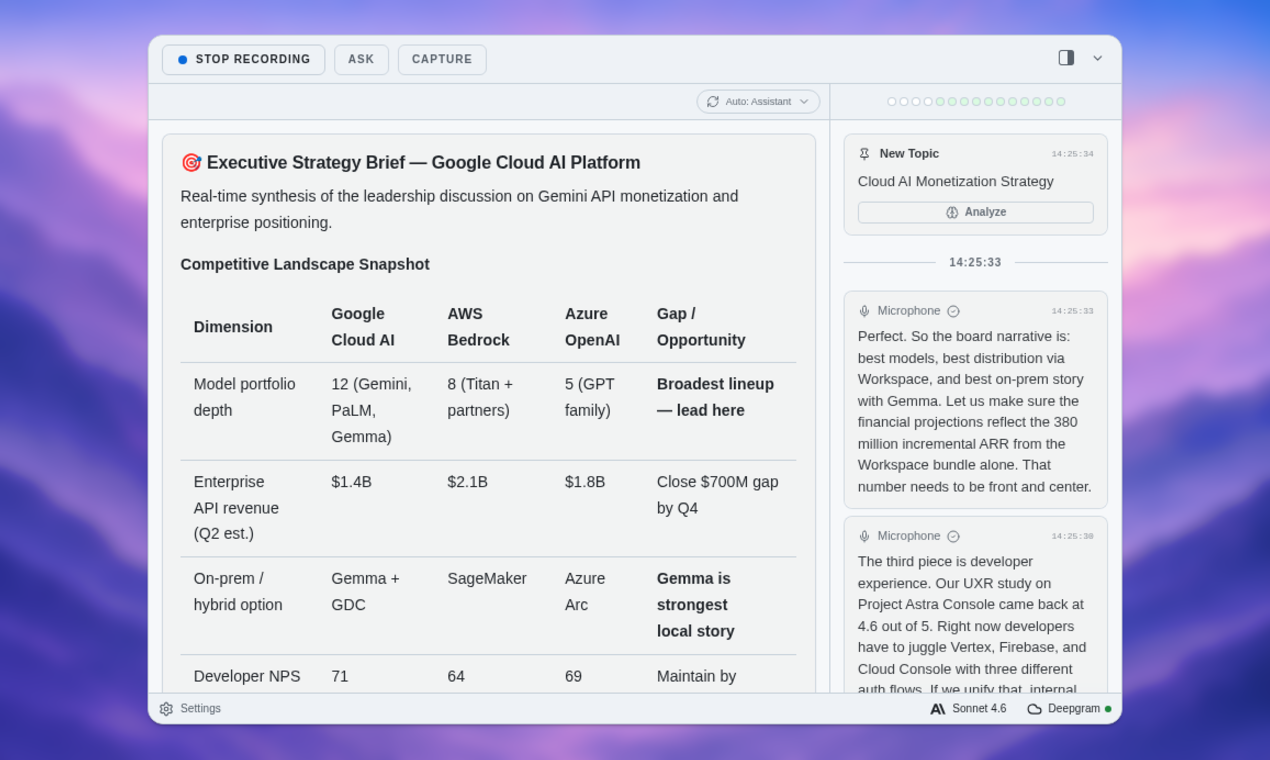
The hardest part of interviewing after ten or fifteen years of real work is not that you have nothing to say. It is that you have too much.
You have projects with history, decisions with context, failures that were not simple, wins that took a team, and lessons that do not fit neatly into a two-minute answer. Then most interview advice still sounds built for someone trying to get their first job: memorize common questions, use STAR, rehearse your pitch, and do not ramble.
That advice is not wrong. It is just incomplete. Mid-career professionals need a coach who helps them recover confidence, sort through years of experience, compress context, and practice sounding clear without becoming over-polished. The point is not to have AI answer for you. The point is to use AI responsibly as a preparation layer that helps your own judgment come through.
Mid-career interview anxiety is different
A junior candidate often worries, “Do I have enough experience?” A mid-career candidate often worries, “Can I explain my experience quickly enough for this room?”
That is a very different problem.
If you have been inside one company for years, your work may be loaded with shorthand. You know the product acronyms, the political constraints, the customer history, the reorg that changed the project, and the hidden reason a simple decision was not simple. In your head, all of that context matters. In an interview, too much of it can bury the answer.
This is why mid-career candidates can feel strangely less confident than they expected. You are not inexperienced. You are out of practice at translating your experience for strangers.
A traditional interview coach might tell you to “be concise” or “practice your stories.” Useful, but vague. What you really need is a way to turn a messy career memory into a clear explanation: what happened, what made it difficult, what you personally did, what changed, and what you learned.
That is context management.
The old coaching model over-focuses on performance
A lot of interview coaching still treats the interview like a stage performance. Stand taller. Smile more. Answer in a framework. Keep the story under two minutes. Do not say “um.” Prepare your weakness answer. Have three strengths ready.
Some of that helps. But for experienced professionals, performance polish can become a trap.
If you over-rehearse, you start sounding like every other candidate. If you compress too aggressively, your answers lose the judgment that actually makes you senior. If you rely on generic phrasing, you accidentally hide the strongest signal you have: the way you understand tradeoffs.
Mid-career interviews test whether you can explain how you think across ambiguity, people, constraints, and time. A hiring manager wants to hear how you made decisions when the answer was not obvious, what you noticed that others missed, and how you changed after a project went badly.
A better coach helps you find the story beneath the story: not “I drove alignment,” but “I got three teams to agree on the one metric we would not sacrifice.” That is the difference between sounding polished and sounding credible.
The real job is rebuilding your story bank
Most experienced professionals have a story bank. They just do not call it that.
It is scattered across old performance reviews, project notes, launch memories, Slack scars, customer escalations, promotion packets, and the moments you still think about years later. The challenge is not inventing stories. It is retrieving them.
Start by listing twelve to fifteen moments from your career without trying to make them interview-ready. Use rough labels:
- The launch that nearly slipped
- The conflict you handled badly at first
- The manager who taught you what not to do
- The customer problem that changed your roadmap
- The time you pushed back on an unrealistic deadline
- The hire or teammate you helped grow
- The project that failed but made you better
- The decision you made with incomplete information
Then map each story to themes: leadership, judgment, conflict, ambiguity, execution, influence, learning, resilience, technical depth, customer insight, or operational discipline.
This proves you have material and prevents you from preparing fifty separate answers when six strong stories can cover most of the interview.
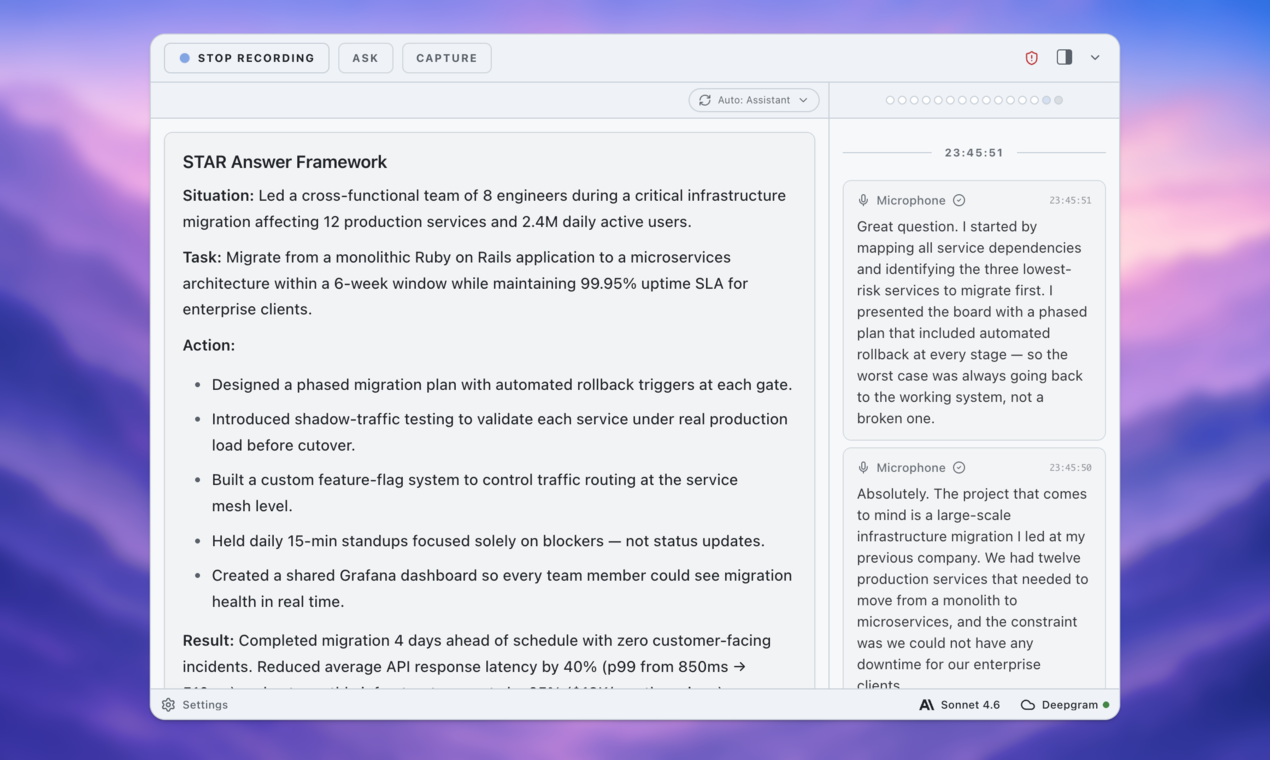
This is where an AI interview preparation workspace can help without taking over. You can talk through a story in your own words, capture the transcript, and ask the tool to identify the themes, decision points, and likely follow-up questions. The raw material stays yours. The structure becomes easier to see.
Confidence comes from clearer recall, not fake certainty
When people say they want more interview confidence, they often mean they want to feel less surprised by themselves.
They do not want to blank on the example. They do not want to ramble for four minutes and realize they never answered the question. They do not want to undersell a major accomplishment because they are worried about sounding arrogant. They do not want to get a follow-up question and discover the answer they rehearsed only worked in one direction.
Real confidence comes from being able to move around inside your own experience.
That is why mid-career preparation should include follow-up practice. After you shape an answer, ask questions like:
- What was the hardest tradeoff?
- What did I personally do that another person might not have done?
- What evidence showed the decision worked?
- Who disagreed, and why were they reasonable?
- What did I misunderstand at the beginning?
- What would I do differently now?
These are not trick questions. They are the questions that reveal seniority.
AI can be helpful here because it can play the role of a patient, skeptical listener. A private AI interview copilot can generate follow-ups from your actual story, point out where you used vague language, and help you practice the part of the answer that makes you nervous. It should not feed you lines during the interview. It should help you build enough clarity before the interview that you do not need lines.
Mid-career candidates need help compressing context
The biggest communication challenge for experienced professionals is deciding what to leave out.
You know too much about the situation. You remember the prehistory. You remember why the org chart mattered. You remember the metric definition nobody agreed on. You remember the vendor limitation, the executive escalation, and the team member who quietly saved the project.
All of that may be true. Not all of it belongs in the first answer.
A useful interview coach helps you create layers:
The thirty-second version: the headline, tension, action, and result.
The two-minute version: enough context to show judgment, with one concrete example.
The follow-up version: the details you can expand if the interviewer asks.
This layered approach is especially important for leadership, product, engineering, operations, and finance roles where the work is full of dependencies. You are not dumbing down your experience. You are making it navigable.
Try this exercise: speak one story out loud for three minutes. Then review the transcript and highlight three things: the moment the story actually starts, the sentence where your personal contribution becomes clear, and the result. Most people discover that the strongest answer is already in the transcript, surrounded by too much setup.
A tool like ExtraBrain is useful because it treats interview prep like reviewing game tape. You can capture the spoken version, study what actually came out, and refine from evidence instead of guessing how you sounded.
Privacy matters more when your stories are real
Mid-career interview prep often includes sensitive context.
You may discuss former employers, customer incidents, compensation expectations, internal conflicts, confidential metrics, unreleased projects, or the real reason you left a role. The more experienced you are, the more your stories are attached to organizations and people who still exist.
That means your interview coach should not casually encourage you to paste everything into a random tool.
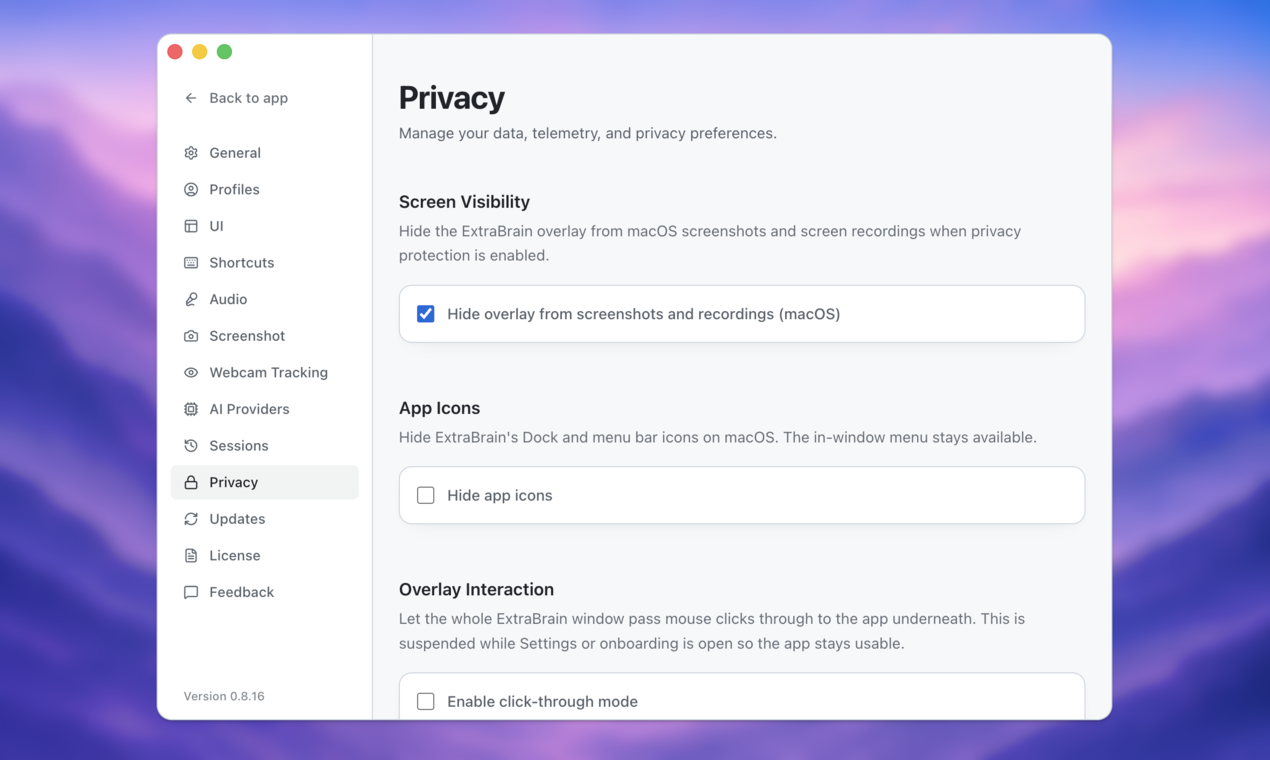
Before using AI in preparation, create a privacy habit. Remove names. Generalize customer details. Use ranges instead of exact confidential numbers. Avoid proprietary documents. Do not upload private code. Keep your most sensitive reflections in a workspace you trust.
This is one reason local-first tools are appealing for serious preparation. A local-first AI meeting copilot is not just a convenience; it is a better model for handling personal professional context. If the goal is to practice with honest material, the material deserves careful boundaries.
Privacy is not a side issue. It is what allows you to prepare truthfully.
A better interview coach sounds like an editor, not a ghostwriter
The wrong AI coach tries to write the perfect answer for you.
The right one asks better questions.
It notices that your answer used “we” six times but never clarified your role. It points out that you named the action but not the result. It helps you replace inflated language with words you would actually say. It asks what changed after your decision. It catches the moment you are hiding a strong accomplishment because you do not want to sound boastful.
That last point matters for mid-career professionals. Many experienced candidates undersell themselves because their achievements were collaborative. They know the team mattered, so they hesitate to claim anything. The result is an answer that sounds generous but unclear.
A good coach helps you separate credit from ownership. You can say, “The team delivered the launch, and my specific role was resolving the prioritization conflict that was blocking the final scope decision.” That is honest. It gives the team credit while making your contribution visible.
This is the kind of preparation AI can support responsibly. Not by inventing confidence, but by helping you locate the evidence for confidence you already earned.
Use a smaller routine than you think you need
If you are returning to interviews after years away, do not rebuild your whole professional identity in a weekend. Build a repeatable routine: list your career stories, choose six core examples, practice them out loud, review the transcript, answer skeptical follow-ups, and prepare questions that test whether the role is actually right for you.
On the day of the interview, review your story bank, not a script. Your goal is a clear conversation, not a flawless performance.
The goal is to sound like yourself again
The best mid-career interview coach does not make you sound younger, louder, smoother, or more like a generated answer. It helps you sound like yourself again after years away from the interview format.
That means remembering the projects that shaped you, explaining complexity without drowning in it, naming your contribution without erasing the team, and practicing enough that follow-up questions feel like a conversation instead of a threat.
Mid-career professionals do not need a shortcut through interviews. They need a better way to translate the work they have already done.
If you want a private place to practice that translation, try ExtraBrain. Use it to capture mock interviews, organize your story bank, review your own words, and walk into the next conversation with clearer recall, stronger context, and your voice still intact.