
ExtraBrain Blog
How Recruiters Can Spot Real Thinking in an AI-Assisted Interview

A recruiter-facing guide to evaluating authentic reasoning in AI-assisted interviews without surveillance, suspicion-first hiring, or invasive monitoring.
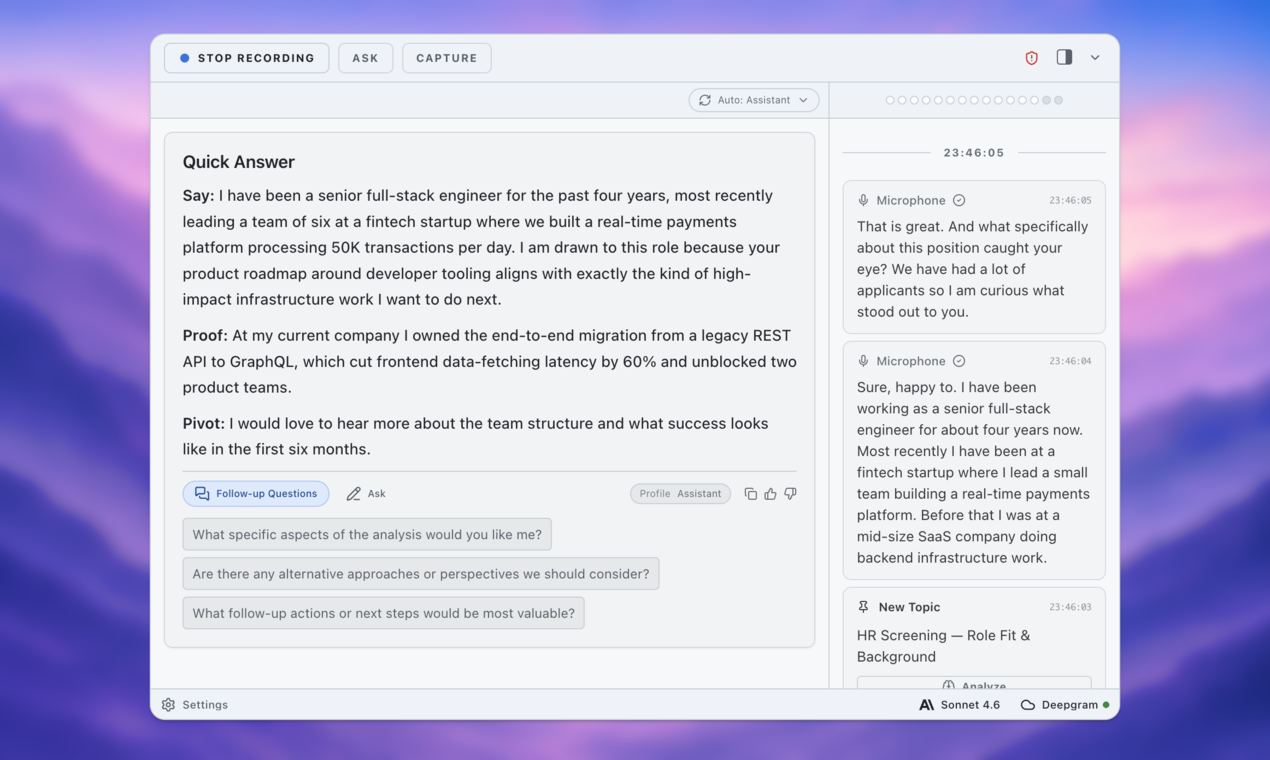
Every recruiter has felt the shift. A candidate joins the call, answers smoothly, structures every story perfectly, and seems ready for every follow-up. A few years ago, that polish signaled strong preparation. Now it raises a harder question: am I hearing the candidate think, or an AI-assisted performance?
That question is fair. Hiring teams need authentic signal, and candidates need a process that does not treat modern preparation as misconduct. AI can help with resumes, story banks, mock interviews, transcription, and reflection. The mistake is assuming the only way to protect hiring integrity is to watch candidates more closely.
Recruiters do not need to become surveillance operators. They need better interview design.
Start with the right question
The weakest question to center the process around is: “Is this candidate using AI?”
It sounds concrete, but in practice it leads to speculation. Was that pause normal? Did they look away too often? Was the answer too polished? Those are poor signals, and they can punish candidates for communication style, disability, nervousness, language background, or simply being well prepared.
A better question is: can this candidate explain, adapt, and take ownership of the thinking behind their answer?
That question is job-relevant. It does not require spying. It also works whether the candidate used AI to prepare or not. Someone who genuinely understands their work can move around inside an answer, explain why a decision was made, name tradeoffs, and describe what changed after new information appeared.
A script can sound impressive on the first pass. Real thinking survives the second and third pass.
Make your AI policy explicit before the interview
Recruiters lose signal when candidates have to guess the rules.
If the company has not explained whether notes, search, documentation, or AI tools are allowed, every candidate is forced into a private ethics decision. Some avoid all tools and feel disadvantaged. Some use AI quietly because they assume everyone else is. Some cross a line they would not have crossed if the boundary had been clear.
A short pre-interview AI policy helps honest candidates and protects the evaluation. It can be simple:
- Prepared notes are allowed for conversational interviews.
- Real-time answer generation is not allowed unless the exercise explicitly permits it.
- For work samples, candidates should disclose tools used and explain their own decisions.
- The interview will evaluate reasoning, evidence, communication, and ownership.
That last line matters. It tells candidates what the process values. You are not saying, “We are trying to catch you.” You are saying, “We are trying to understand how you think.”
Ask for the path, not just the answer
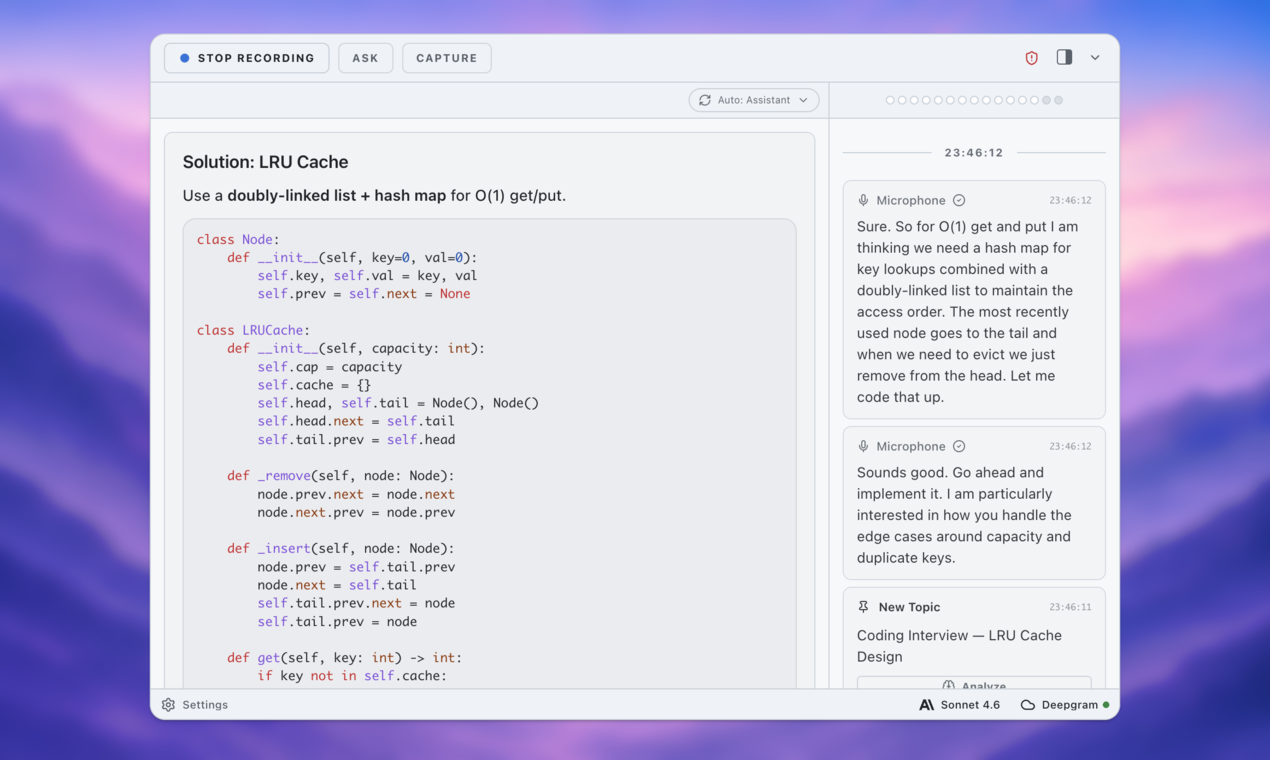
AI is very good at producing a polished destination. It is weaker at proving the path, especially when the path depends on lived experience.
Recruiters should therefore shift from answer collection to reasoning exploration. After a candidate gives a response, ask questions that reveal the decision process:
- “What options did you consider and reject?”
- “Who disagreed with the approach?”
- “What was your personal contribution versus the team’s contribution?”
- “What would you do differently if the same situation happened now?”
These are not gotchas. They are normal professional probes. They separate someone who owns the answer from someone who only has access to the answer. A candidate using AI responsibly in preparation should still be able to handle them. A candidate relying on a live script will usually struggle when the conversation leaves the prepared lane.
Watch for reasoning markers
Recruiters do not need technical expertise in every role to identify real reasoning. There are patterns that show up across functions.
Strong reasoning often includes constraints. The candidate can explain what limited the decision: time, budget, data quality, team capacity, customer risk, regulation, technical debt, or stakeholder conflict.
It includes tradeoffs. The candidate can say what they gave up by choosing one path over another. If every answer sounds like an obvious win, the story may be too sanitized.
It includes sequence. The candidate can describe what happened first, what changed, and how their thinking evolved. Real work usually has a timeline. Generic answers often float above time.
It includes ownership language. The candidate can distinguish “we” from “I.” They do not claim credit for everything, but they can name what they personally decided, built, wrote, escalated, questioned, or changed.
It includes limits. The candidate can say what they did not know, what failed, what they would not repeat, or where their solution was incomplete. Counterintuitively, this often makes an answer more credible.
Change the scenario midstream
One of the simplest ways to test understanding is to modify the problem.
If a candidate describes how they prioritized a roadmap, introduce a new constraint: “Now assume your largest customer escalates a reliability issue the same week.” If they explain a hiring plan, ask what changes if the role must be filled in four weeks and the compensation band cannot move.
This is not about making the interview harder for its own sake. It is about observing adaptability. AI-generated first answers often sound complete because they assume a stable problem. Real work rarely stays stable.
Listen for whether they freeze because the script broke, reach for another generic framework, or identify what changed and which assumptions no longer hold. That is real thinking.
Ask candidates to critique their own answer
Self-critique is one of the cleanest ways to detect ownership.
After a candidate gives a strong answer, try asking: “What is the weakest part of that approach?” or “If someone on the team challenged you, where would they probably push back?”
A candidate who understands the material can usually name risks. They may say the data was incomplete, the communication plan depended too heavily on one stakeholder, the timeline was optimistic, or the solution solved the immediate problem but left a process issue behind.
A candidate who is performing a generated answer may struggle because the answer was designed to sound complete. There is no obvious seam to pull on.
This is also a healthier alternative to suspicion-based questioning. You are not accusing the candidate of using AI. You are evaluating whether they can reason about their own reasoning.
Treat responsible AI use as a professional skill
Recruiters should not collapse every AI use case into cheating.
There is a meaningful difference between a candidate who uses AI to prepare a story bank and a candidate who secretly receives live answers after being told not to. There is a difference between using AI to summarize a job description and using AI to fabricate experience. Practicing with a private AI interview copilot before the call is not the same as outsourcing the actual interview.
The line is not “AI or no AI.” The line is ownership.
Responsible AI use helps candidates organize memory, practice communication, protect privacy, and reflect on performance. Irresponsible use hides the source of the work, invents evidence, or substitutes the tool for the candidate’s judgment.
Recruiters can make this distinction explicit by asking neutral disclosure questions:
- “Did you use any tools to prepare for this exercise?”
- “If AI helped, what did it help with?”
- “What did you change, reject, or add based on your own judgment?”
- “What part of the final answer are you most confident is yours?”
These questions invite honesty without making AI a taboo subject.
Do not use surveillance as a substitute for evaluation
Surveillance feels like control, but it can weaken the hiring process.
Eye tracking, room scans, forced camera rules, keystroke monitoring, and suspicion-first proctoring may catch some misconduct. They can also damage trust, exclude candidates with legitimate accessibility needs, and shift attention away from job-relevant evidence.
Surveillance can also create false confidence. A candidate can pass a monitoring check and still lack judgment. Another candidate can look nervous or glance away and still be deeply competent. Polished language is not proof of cheating. Pauses are not proof of deception. Looking away is not proof of reading.
A stronger approach is to design interviews where the evidence is in the conversation itself: follow-up depth, examples, adaptation, tradeoffs, and disclosure.
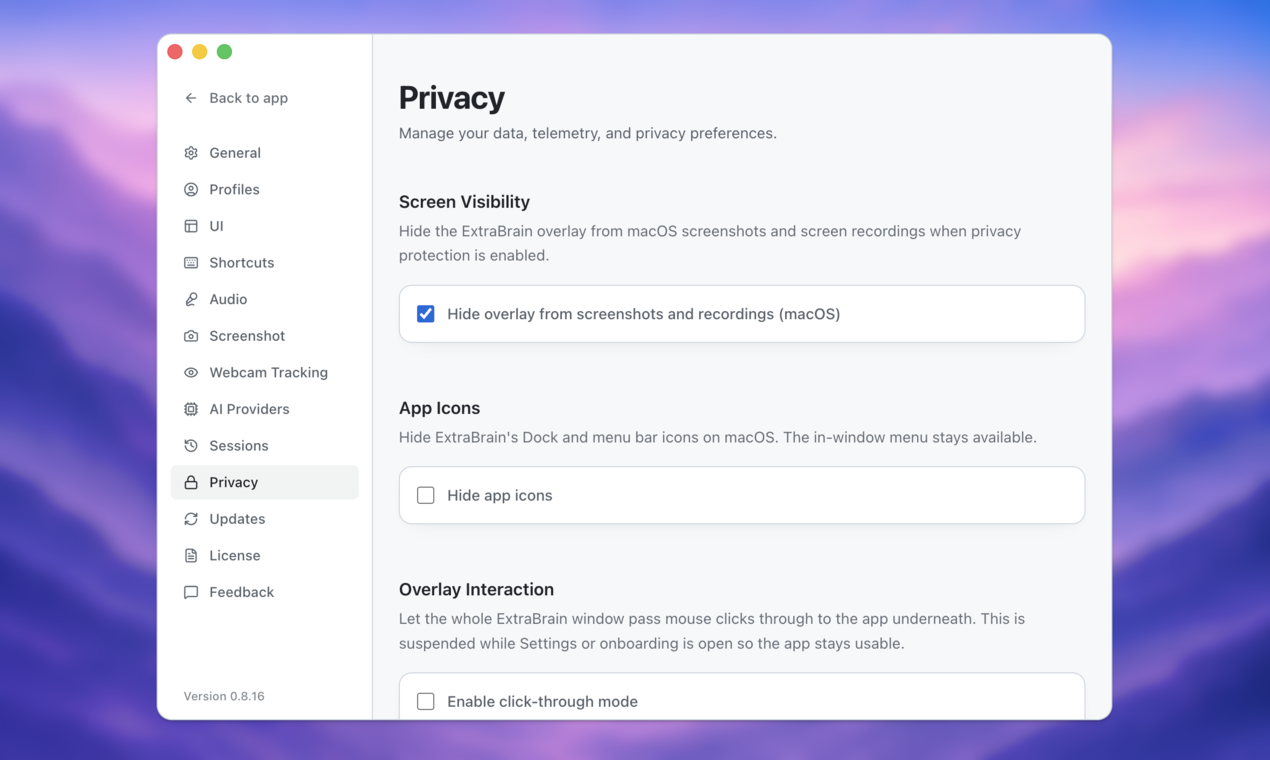
Tools can still help. A privacy-conscious local-first AI meeting copilot can support note-taking, recall, and post-interview analysis without turning the candidate into a target of hidden monitoring. The key is user control and clear consent, not covert evaluation.
Score the evidence, not the suspicion
If AI changes anything about recruiting, it should push teams toward clearer rubrics.
Instead of leaving interviewers to write comments like “seemed scripted” or “felt authentic,” score observable evidence:
- Did the candidate explain relevant constraints?
- Did they identify tradeoffs?
- Did they provide concrete examples?
- Did they clarify personal ownership?
- Did they adapt when the scenario changed?
- Did they acknowledge limits or risks?
- Did they disclose tool use appropriately when asked?
This creates a record that is more useful to hiring managers and fairer to candidates. It also reduces the chance that AI anxiety becomes a proxy for bias.
A candidate should not advance because they felt smooth. They should not be rejected because they felt too smooth. They should advance because the evidence suggests they can do the work.
Use AI after the interview to improve the process
Recruiters can use AI responsibly too.
After an interview, AI can summarize notes, compare evidence against a rubric, identify missing follow-ups, and make debriefs more consistent. That helps when multiple interviewers are involved and feedback needs to be structured quickly.
But the same rules apply to recruiters as candidates: AI should assist judgment, not replace it. Do not let a summary become the decision. Do not paste sensitive candidate data into tools without understanding retention. Do not generate feedback that sounds objective if the evidence is thin.
A tool like ExtraBrain is useful as an AI interview preparation workspace and review layer because it points toward a better model: capture what matters, keep context under user control, and use AI to clarify thinking rather than impersonate it.
The future of recruiting is not detection. It is better signal.
AI-assisted interviews are not going away. Candidates will use AI to prepare. Recruiters will use AI to take notes. Hiring managers will expect faster summaries. The question is whether the hiring process becomes more paranoid or more precise.
Paranoia asks, “How do we stop candidates from using tools?”
Precision asks, “How do we evaluate the human judgment that tools cannot replace?”
That is the better path. Make the rules clear. Ask for reasoning, not just answers. Change scenarios. Invite self-critique. Score evidence. Respect privacy. Treat responsible AI use as a professional skill while drawing a firm line against hidden impersonation.
Recruiters can spot real thinking in an AI-assisted interview without surveillance. They do it by designing conversations where reasoning has to show its work.
If your team is rethinking interviews for the AI era, start with a simple principle: tools may help people prepare, remember, and reflect, but the candidate must still own the judgment. ExtraBrain is built around that same idea: private, user-controlled AI support for conversations where clarity matters. Try ExtraBrain for AI-assisted preparation and post-conversation reflection.