
ExtraBrain Blog
The STAR Method Is Broken Without Memory
The STAR method helps behavioral interview prep, but it fails when candidates cannot remember real examples under pressure.
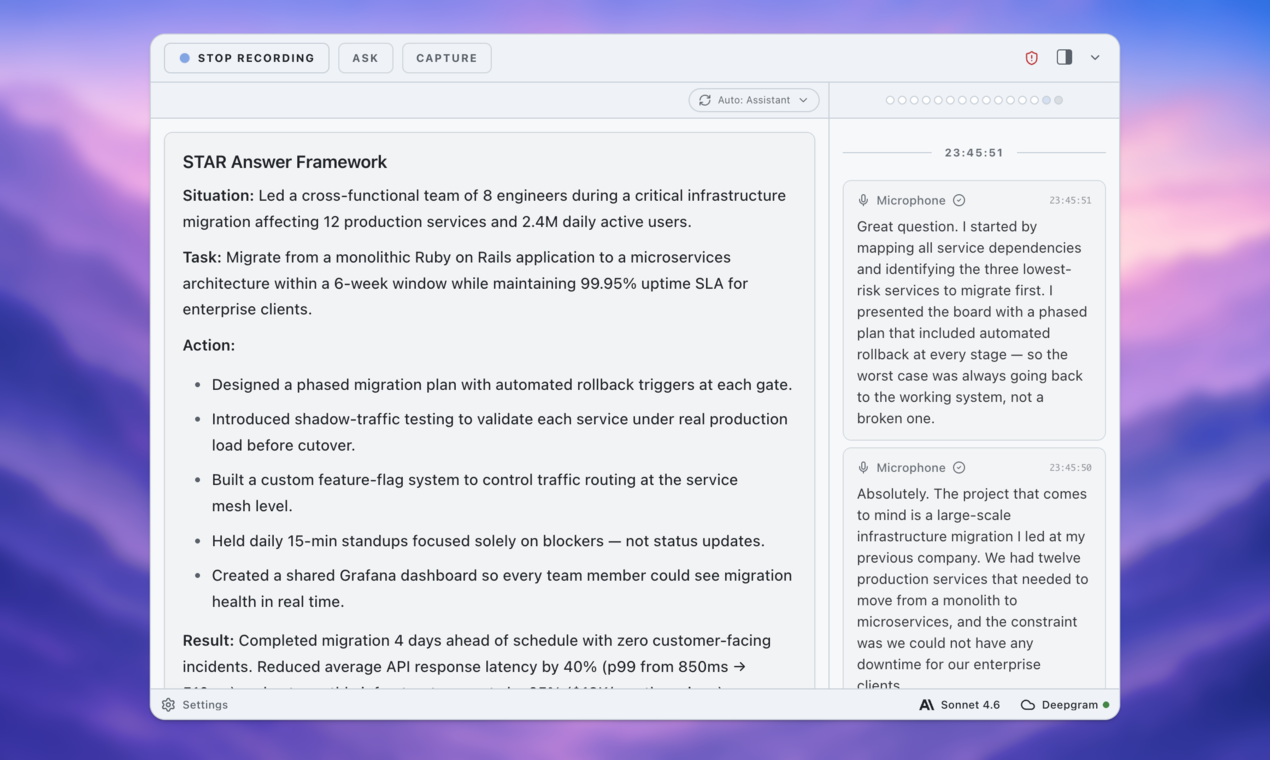
The STAR method is not the problem.
The blank mind before the STAR method is the problem.
Most behavioral interview advice assumes your best examples are already available in your head. The interviewer asks, “Tell me about a time you handled conflict,” and you calmly retrieve the perfect story. You explain the situation, define the task, describe the action, share the result, and move on.
That is not how pressure works for most people.
Under interview stress, strong candidates forget the very examples that would make them credible. They remember the framework but not the material. They know they have led projects, resolved conflict, influenced stakeholders, recovered from mistakes, and made hard tradeoffs. But the memories are stored under messy labels like “that Q3 launch,” “the customer escalation,” “the reorg project,” or “the time the dashboard broke before the review.”
The STAR method gives you a container. It does not give you memory.
That gap matters more now because AI can generate polished behavioral answers in seconds. If every candidate can produce a clean STAR response, the differentiator is no longer structure alone. The differentiator is whether you can recall real evidence, explain the messy middle, and handle follow-up questions without sounding like you memorized a paragraph.
STAR works only after you remember the right story
STAR stands for situation, task, action, and result. It is popular because it solves a real problem: many interview answers ramble. The framework reminds candidates to set context, clarify responsibility, explain what they did, and connect the work to an outcome.
That is useful.
But STAR quietly depends on a condition that often fails: you must already know which story to tell.
If you choose a weak example, STAR only makes the weak example more organized. If you choose a vague example, STAR makes the vagueness easier to hear. If you choose a story where you cannot explain your personal contribution, the structure may actually expose the problem faster.
This is why candidates can practice behavioral questions for hours and still freeze in a real interview. They prepared answers to common prompts, but they did not build a reliable way to retrieve their own experience.
The hard part is not always writing the answer. The hard part is finding the story that actually proves the trait.
The pressure problem is real
Behavioral interviews are memory tests disguised as reflection.
In normal life, you remember work through context. A calendar invite reminds you of the meeting. A dashboard reminds you of the metric. A teammate’s name reminds you of the disagreement. A document title reminds you of the decision you made.
In an interview, that context disappears. You are given an abstract prompt and expected to retrieve a concrete moment from years of work.
“Tell me about a time you influenced without authority.”
You may have done this twenty times. But your brain did not file those moments under “influence without authority.” It filed them under project names, deadlines, teams, incidents, customers, emotions, and unfinished business.
So the candidate reaches for the safest generic answer. They talk about communication, collaboration, alignment, empathy, and results. None of that is necessarily false. It is just thin. It lacks the detail that proves the experience happened.
This is where a private memory layer changes the workflow. Instead of waiting for interview day to search your head, you capture examples while they are still fresh. You save the project, the tension, the people involved, the decision, the measurable outcome, and the lesson. Later, when the behavioral question appears, you are not starting from a blank page.
You are searching your own evidence.
A memory layer makes STAR useful again
The best use of AI in behavioral prep is not “write me a perfect STAR answer.”
The better prompt is: “Help me find where I have actually demonstrated this.”
That is why a tool like ExtraBrain is valuable as an AI interview preparation workspace. It can act as a private place to capture messy notes, transcripts, reflections, and story fragments, then help you organize them into interview-ready memory.
A memory-first workflow starts with raw material: project notes, mock interview transcripts, meeting takeaways, performance review fragments, metrics, difficult conversations, decisions, mistakes, and customer or stakeholder feedback.
Then you tag that material by themes interviewers actually ask about: leadership, conflict, ambiguity, ownership, influence, resilience, judgment, communication, failure, technical depth, and learning.
Only after that do you shape the answer.
This matters because one real story can answer several questions. The same project may show conflict if you focus on the stakeholder disagreement, leadership if you focus on how you organized the team, ambiguity if you focus on incomplete information, and learning if you focus on what you would do differently now.
A memory layer helps you see those connections before the interview.
Story cards beat memorized scripts
Scripts feel safe until the interviewer asks a follow-up.
A memorized answer is brittle. If the question is phrased differently, or the interviewer interrupts, or the conversation moves toward a detail you did not rehearse, the script starts to break.
Story cards are stronger because they help you understand the example rather than recite it.
For each important example, create a compact card with the fields that make recall easier: story name, interview themes, situation, stakes, task, action, result, tradeoff, lesson, privacy notes, and follow-up risk.
Notice that this is more than STAR. STAR gives you the spine. The extra fields give you credibility.
Tradeoffs show judgment. Lessons show reflection. Privacy notes keep you from oversharing. Follow-up risks prepare you for the part of the interview where real thinking becomes visible.
The missing piece is often the result
Many candidates can explain the situation and action but struggle with the result.
They know the project mattered, but they cannot remember the number. They know the team improved, but they cannot remember what changed. They know the customer was happier, but they never saved the evidence. So the answer ends with a vague result: “It improved efficiency,” “the team was aligned,” or “the project was successful.”
Those phrases are not useless, but they are weaker than evidence.
A stronger result sounds concrete: “We reduced the support backlog from four days to under one day,” “The launch slipped by one week instead of six because we cut scope early,” or “The customer renewed after we changed the escalation path.”
You do not need to reveal confidential numbers. You can use ranges, percentages, relative changes, or anonymized context. The point is to preserve enough evidence that your answer has weight.
A private AI interview copilot can help by prompting for missing proof before you are under pressure: What changed? How do you know? What was the before-and-after? Which detail can be shared safely? What should be generalized?
That is a much healthier use of AI than inventing an impressive result after the fact.
AI should challenge your story, not replace it
The danger of AI interview prep is that it can make weak material sound strong.
A generated STAR answer may look impressive on the page. It may include crisp verbs, tidy structure, and a confident lesson. But if the story is not yours, or if the details are too generic, it will collapse under follow-up questions.
Responsible AI prep should do the opposite. It should make your story harder to fake by forcing more truth into it.
Ask AI to challenge the answer: Where is my personal contribution unclear? Which sentence sounds generic? What follow-up question would expose missing context? Am I hiding behind “we”? What result needs better evidence? What sensitive detail should I redact?
This keeps the ethical boundary clear. AI is not impersonating you. It is helping you examine your own experience more carefully.
That distinction matters. Using AI to prepare from real notes is responsible. Using AI to invent accomplishments or secretly answer for you during a closed interview is not. The goal is not to outsource judgment. The goal is to remember and explain your judgment more clearly.
Privacy matters because real stories are sensitive
The best behavioral examples are rarely sanitized at the beginning.
A real conflict story may involve a difficult manager. A failure story may include a missed deadline. A leadership story may mention team morale, customer pressure, or confidential metrics. A story about influence may include internal politics. A story about resilience may touch on burnout, layoffs, or personal constraints.
That is why interview prep notes are career data, not disposable text.
If candidates do not trust the workspace, they will remove the very details that make the story useful. They will paste a vague version into a generic tool and get vague coaching back. The answer may become safer, but it also becomes less specific.
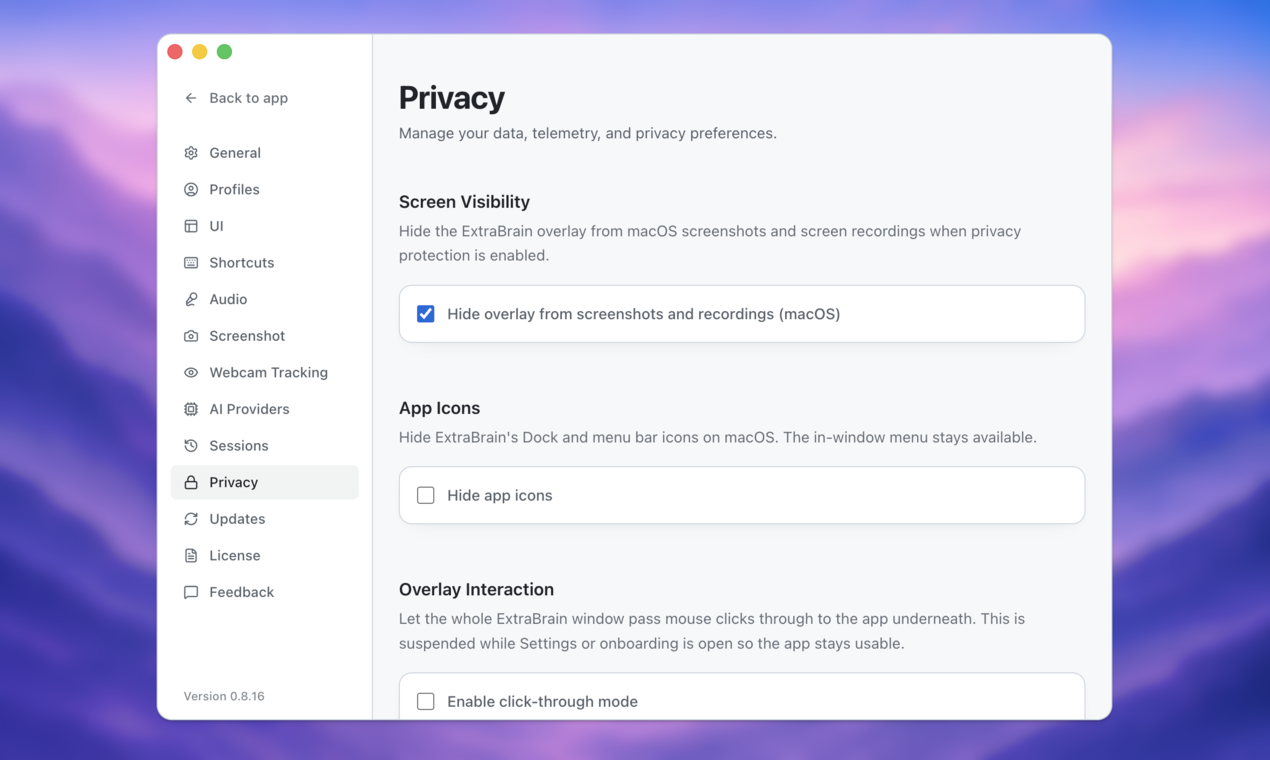
A local-first AI meeting copilot points toward a better default for this kind of work: capture sensitive context in a user-controlled place, review it intentionally, redact before sharing, and keep preparation grounded in material you understand.
Privacy is not separate from quality. Privacy makes honest preparation possible.
Build your story memory before you need it
Do not wait until the night before an interview to build your behavioral story bank.
Start with ten examples from your recent work: a project that almost failed, a conflict you handled carefully, a time you influenced without authority, a measurable improvement, a decision made with incomplete information, a mistake that changed how you work, a mentoring moment, a customer or stakeholder situation, a technical or operational tradeoff, and a moment when you took ownership beyond your role.
For each one, make a story card. Do not write the polished answer yet. Capture the messy truth first. Then use AI to organize it, identify missing evidence, create interview-safe wording, and generate skeptical follow-ups.
Over time, this becomes a personal interview memory system. You are no longer trying to manufacture confidence from a blank page. You are preparing from accumulated evidence.
The future of behavioral prep is memory plus judgment
The STAR method is not dead. It is just incomplete.
It still helps candidates avoid rambling. It still gives answers a useful shape. It still reminds you to connect action with result. But on its own, it cannot solve the hardest part of behavioral interviewing: remembering the right example, with the right evidence, at the right moment.
AI makes that weakness more visible. When polished answers are easy to generate, interviewers will listen harder for specificity, ownership, tradeoffs, and follow-up depth. Candidates who rely on generic STAR scripts will sound increasingly interchangeable. Candidates who build a real memory layer will sound grounded.
The better goal is not to become more rehearsed. It is to become more retrievable.
Remember the project. Remember the tension. Remember what you personally did. Remember the evidence. Remember what changed in how you work. Then use STAR to communicate it clearly.
If you want a private place to build that kind of behavioral interview memory, try ExtraBrain. Use it to capture practice sessions, organize real examples, protect sensitive context, and turn your own experience into stories you can actually defend.