
ExtraBrain Blog
The New Interview Skill: Thinking Out Loud With Help

Learn how candidates can use AI responsibly to structure reasoning, practice explanations, protect privacy, and stay authentic.
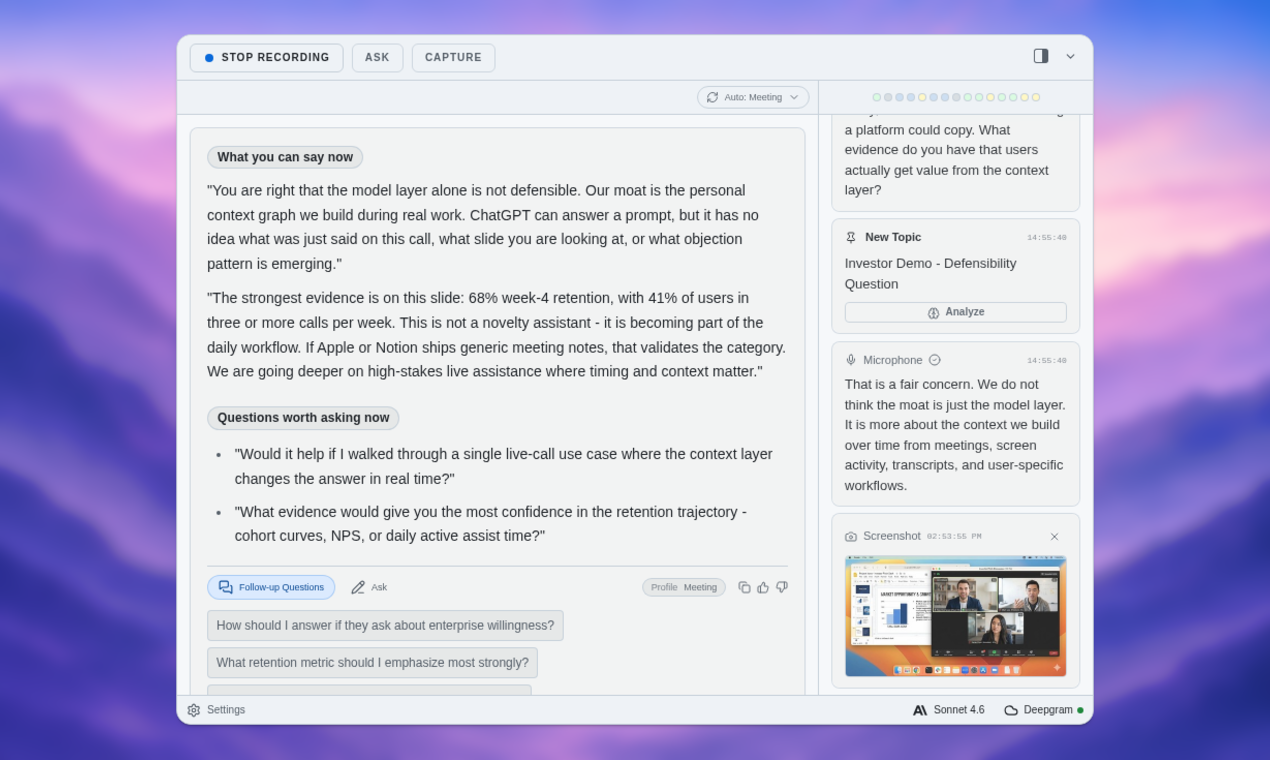
The most important interview skill in the AI era is not having a perfect answer ready. It is being able to think out loud clearly while tools, pressure, and uncertainty are all in the room.
For years, interview prep rewarded polished responses: memorize a STAR story, rehearse a few technical explanations, prepare a crisp answer to “tell me about yourself,” and hope the conversation follows the script. AI can now generate those scripts in seconds. That does not make interviews easier. It makes scripted preparation less trustworthy.
A better candidate skill is emerging: structured reasoning with help. The candidate still owns the judgment. The candidate still explains the tradeoffs. The candidate still answers follow-up questions. But AI can help organize messy thoughts, surface gaps, and turn practice into a feedback loop.
That is very different from answer-spitting.
The old goal was sounding prepared
Traditional interview prep often treats the interview like a performance: build answers, polish them, remove uncertainty, and deliver them naturally enough that the interviewer does not hear the rehearsal underneath.
The problem is that real interviews rarely stay inside the rehearsal. An interviewer asks why you chose one tradeoff over another. They interrupt before your second paragraph. They ask what you personally did, not what the team did. Suddenly the memorized answer becomes a cage.
AI makes this problem more visible because it can produce interview answers that look excellent and feel hollow. They are smooth, but under pressure they fail the ownership test: can you explain every sentence as something you actually thought, did, or learned?
The new goal is not to sound prepared. It is to be prepared to reason.
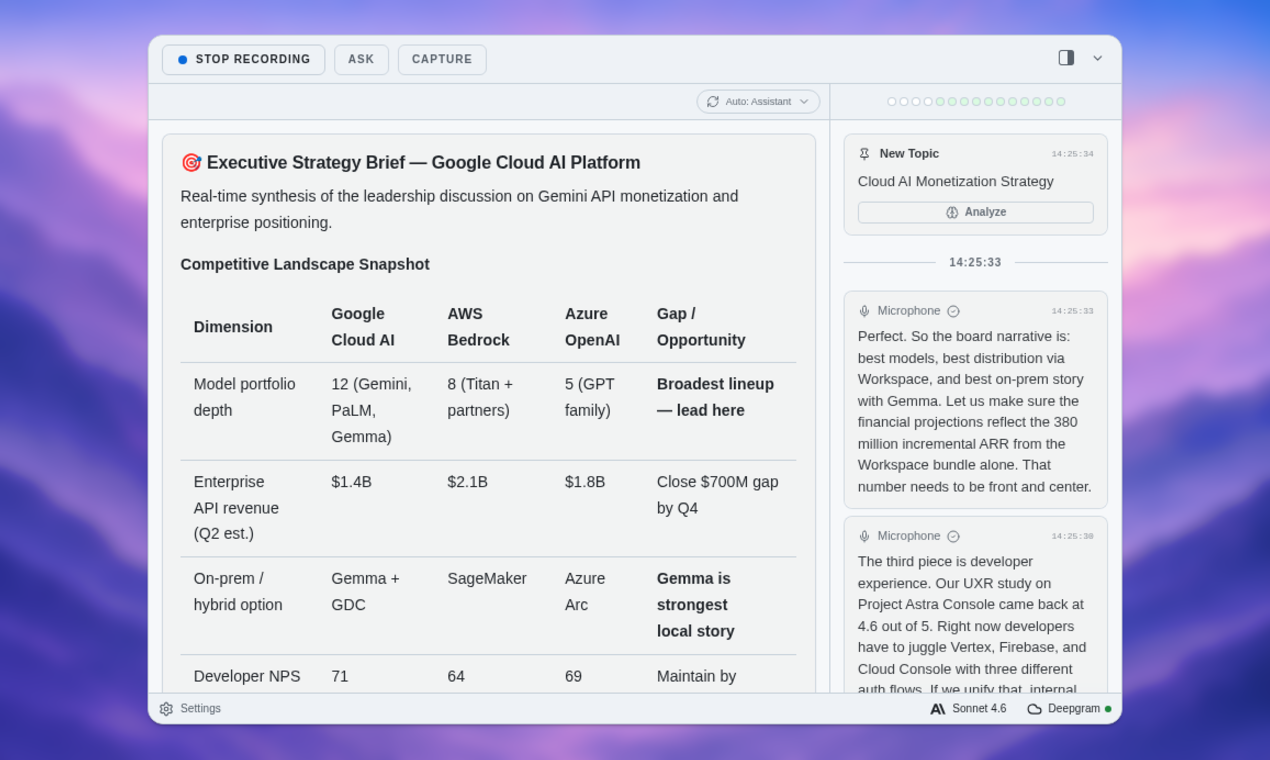
AI assistance should make your thinking more visible
The best use of AI in interview preparation is not “write my answer.” It is “help me see the shape of my answer.”
If you ask AI for a perfect response to “Tell me about a time you handled conflict,” it can produce something plausible without knowing the conflict, the people, the stakes, or what you learned. You may get a tidy paragraph, but you do not get better at handling the interview.
A stronger prompt starts with your real material:
Here is a real situation from my work. Help me identify the context, the tension, the options I considered, the decision I made, the result, and the likely follow-up questions. Do not invent details. Keep the structure clear enough that I can explain it out loud.
Now AI is not impersonating you. It is organizing you.
This is where a tool like ExtraBrain can be useful as a private AI interview copilot. The point is not to create a fake candidate. The point is to capture your practice, help you review your own words, and turn a rambling explanation into a clearer reasoning path you can actually defend.
Thinking out loud is a skill, not filler
Many candidates misunderstand thinking out loud.
They treat it as narration: “Now I am going to think about the problem. I am considering option A. Option B might also work.” That can become noise if it does not reveal anything useful.
Good thinking out loud is not a stream of consciousness. It is structured visibility.
In a behavioral interview, it might sound like this:
“The hard part was not the deadline itself. It was that support and product had different definitions of what counted as fixed. I first tried to get agreement on the customer impact, because without that we were arguing about priorities in the abstract.”
In a technical interview, it might sound like this:
“I see two possible approaches. The simpler one is probably enough if the data set stays small. If scale matters, I would change the data structure because lookup cost becomes the bottleneck. I’ll start simple, but I want to call out the point where I would switch.”
In a leadership interview, it might sound like this:
“At the time, I thought the issue was execution speed. Looking back, it was actually decision ownership. I solved the immediate problem, but the better long-term fix was changing who had authority to make tradeoff calls.”
These answers are not polished monologues. They are windows into judgment.
That is what interviewers are trying to evaluate anyway. The answer matters, but the path to the answer often matters more.
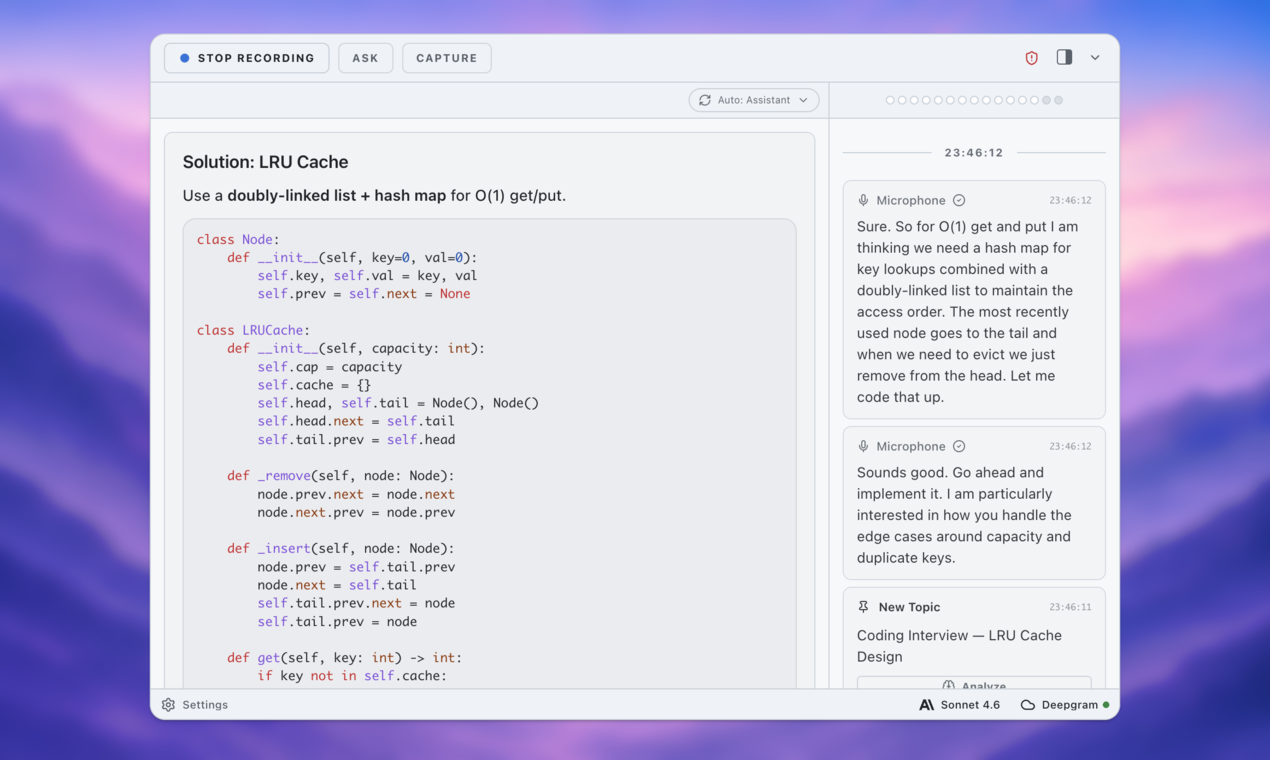
The real value of AI is in the follow-up
A generated first answer can make you feel ready too soon. The follow-up is where preparation becomes real.
After you draft or speak through an answer, ask AI to challenge it:
- What part of this answer sounds vague?
- What follow-up question would test whether I really owned the work?
- Where did I use “we” when I should clarify my personal contribution?
- What metric, constraint, or tradeoff is missing?
- What would a skeptical interviewer ask next?
- What part sounds over-polished or unlike my normal voice?
This is a responsible use of AI because it strengthens the human part of the interview. It helps you notice weak reasoning before someone else does. It teaches you to move around inside your own experience instead of clinging to a memorized paragraph.
A candidate who can answer follow-ups has not just rehearsed. They understand.
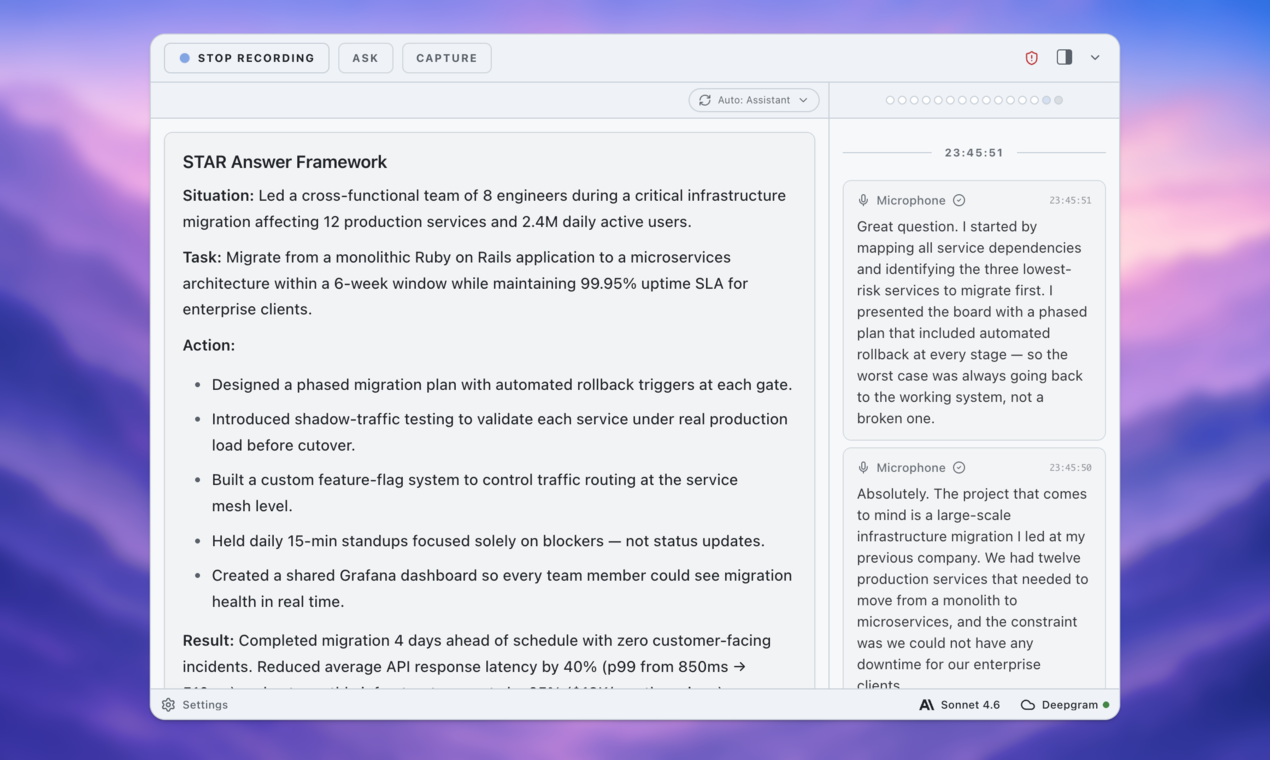
Responsible help is not hidden impersonation
AI-assisted interview prep sits on an ethical line that candidates should take seriously.
Before an interview, using AI to organize stories, practice explanations, research the company, role-play follow-up questions, and debrief mock sessions is generally responsible. It helps you prepare. It does not misrepresent your ability as long as the facts remain yours.
During an interview, the rules depend on the employer and the format. A conversational interview with permission to use notes is not the same as a closed-book coding assessment. A company that explicitly allows AI tools is not the same as one that bans them.
The safest rule is simple: AI can help you prepare your thinking, but it should not secretly impersonate your thinking while you are being evaluated.
If the rules are unclear, ask:
“Are candidates allowed to use notes, documentation, search, or AI tools during this exercise?”
That question may feel uncomfortable, but it is better than guessing. It also signals professionalism. You are showing that you understand the difference between responsible support and hidden substitution.
Some companies are already making that boundary explicit. Canva’s engineering team has written that some engineering candidates may use AI tools in technical interviews because those tools reflect real engineering work. HackerRank’s 2025 Developer Skills Report says 97% of developers use at least one AI assistant. AI fluency is becoming part of modern work, but fluency is not the same as deception.
A practical framework for AI-assisted reasoning
If you want to use AI for interview preparation without turning yourself into a script, use a simple five-part framework.
1. Start with the real story
Write or speak the messy version first. Include what happened, who was involved, what made it hard, what you tried, what changed, and what you learned. Do not optimize for polish yet.
AI cannot responsibly structure what you have not honestly provided.
2. Ask for a reasoning map
Have AI extract the underlying structure: context, tension, options, decision, evidence, result, and lesson. This map is more useful than a paragraph because it helps you answer in different lengths.
If the interviewer says, “Give me the short version,” you can compress. If they ask, “Why did you choose that?” you can expand.
3. Practice the answer out loud
Reading silently is not enough. Interviewing is spoken reasoning.
Record a practice response or use an AI interview preparation workspace to capture the session. Then review where you rambled, where you became abstract, and where you sounded like you were reading from a document.
4. Generate skeptical follow-ups
Ask for questions that pressure-test the answer. The best follow-ups are specific:
- “What did you do that another teammate would not have done?”
- “What evidence proved the decision worked?”
- “What did you misunderstand at first?”
- “What would break if the constraint changed?”
- “What did you learn that changed your future behavior?”
Answer those without reading. That is the practice.
5. Rewrite for your actual voice
Finally, remove language you would never say.
If the answer includes “leveraged stakeholder alignment,” translate it. Maybe you mean, “I got support, product, and engineering to agree on the same customer problem.” If it says “drove measurable impact,” name the impact. If it says “navigated ambiguity,” describe the ambiguity.
The goal is not to sound casual. The goal is to sound real.
Privacy is part of responsible preparation
Interview prep can contain sensitive material.
You may discuss former employers, customer problems, internal tools, compensation, immigration status, health constraints, unreleased projects, or confidential metrics. A careless AI workflow can turn preparation into oversharing.
Before pasting anything into an AI tool, remove details the tool does not need. Replace customer names. Generalize internal project names. Use ranges instead of exact confidential metrics. Avoid uploading proprietary documents or private code. Keep personal notes in a workspace you trust.
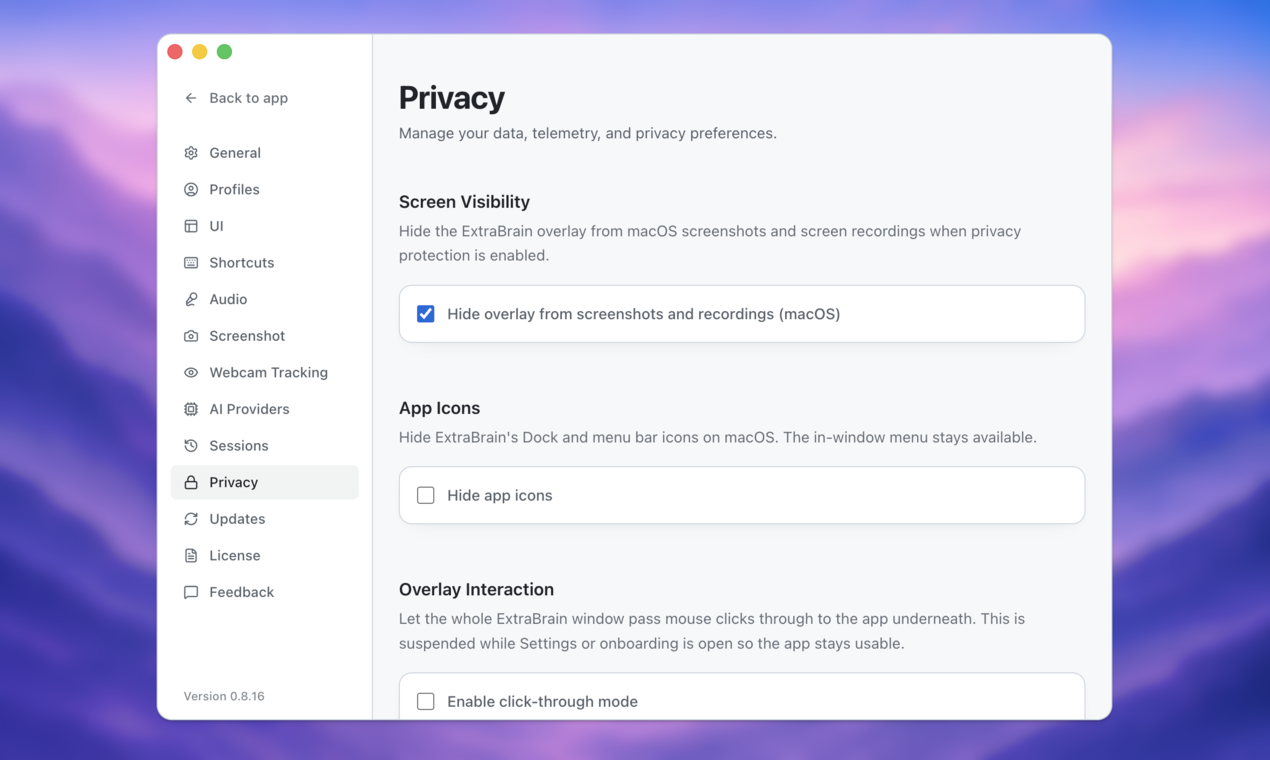
This is why local-first and user-controlled tools matter. A local-first AI meeting copilot is not just a convenience feature. For interview preparation, privacy affects whether you can safely practice with real context instead of watered-down placeholders.
Clear thinking requires honest material. Honest material deserves careful handling.
The new skill is assisted clarity
AI will keep getting better at producing first drafts.
That means first drafts will become less impressive.
The valuable skill is what happens around the draft: framing the problem, choosing the right constraint, checking the output, explaining the decision, noticing the missing detail, protecting private context, and staying honest about what you know.
That is the new interview skill. Not answer-spitting. Not hidden assistance. Not pretending to be a flawless machine.
Thinking out loud with help means using AI to sharpen your reasoning before the moment of evaluation, while keeping ownership of the answer when it counts. It means preparing with structure instead of scripts. It means letting tools make your thinking clearer, not less yours.
If you want a private place to practice that kind of interview preparation, try ExtraBrain. Use it to capture mock interviews, review your reasoning, generate follow-up questions, and build the habit that actually matters now: clear, honest, human thinking with the right support behind it.