
ExtraBrain Blog
How to Use AI in an Interview Without Sounding Like AI

Use AI interview prep responsibly, organize your thoughts, protect privacy, and still sound authentic in live interviews.
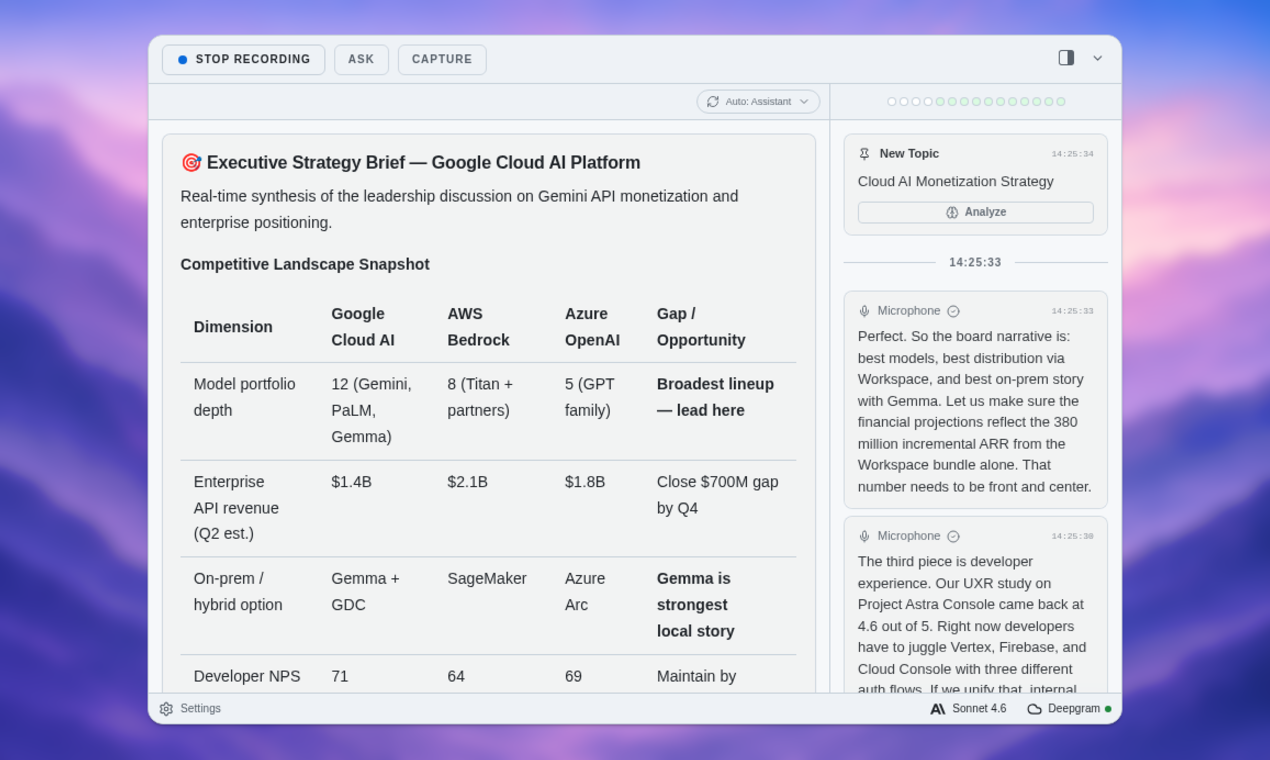
The fastest way to sound like AI in an interview is to let AI write the version of you that shows up.
You know the voice: polished, balanced, vaguely impressive, and strangely empty. “I leveraged cross-functional alignment to drive scalable outcomes.” It looks acceptable on a screen and feels terrible out loud. Worse, it collapses the moment an interviewer asks, “What did you actually do?”
That is the real risk of using AI for interviews. Not that every tool is cheating. The subtler risk is that you outsource the shape of your thinking until your own experience starts sounding like a generated LinkedIn post.
Used well, AI can do the opposite: help you remember better examples, organize messy career stories, practice follow-up questions, and walk into the conversation calmer.
Start With the Rule: AI Can Organize, But You Must Own
Responsible AI interview prep begins with one rule: use AI to clarify what is already true, not to create a candidate you cannot defend.
That rule protects you in two ways. Ethically, it keeps you away from fabricated achievements, hidden real-time answers, and interview behavior that would feel embarrassing to disclose. Practically, it keeps you from preparing answers that fall apart under normal follow-up questions.
A good interviewer is not only listening for the first answer. They are listening for ownership. Can you explain the tradeoff? Can you name the constraint? Can you describe what changed because of your work? Can you admit what you would do differently now?
Use this quick test before keeping any AI-assisted answer:
- Did this come from my real experience?
- Could I explain every sentence without looking at the AI output?
- Does this sound like something I would actually say?
- Would I be comfortable saying how I used AI to prepare?
If the answer is no, keep editing.
Build a Story Bank Before You Generate Answers
Most candidates use AI too late in the process. They paste in an interview question and ask for a perfect answer.
That produces generic content because the prompt has no real memory in it. AI does not know the escalation you handled, the migration that almost failed, the teammate you coached, the customer who changed your roadmap, or the messy decision that taught you how to lead.
Start with a story bank instead. Open a document and list eight to twelve real moments from your career. Do not polish them. Just name them in plain language:
- The launch that slipped until you reset scope
- The customer escalation you stabilized
- The conflict between engineering and sales you helped resolve
- The project where you made the wrong call and fixed it
- The ambiguous problem nobody owned until you picked it up
Then use AI to map those stories to interview themes: leadership, conflict, technical depth, ambiguity, collaboration, failure, judgment, ownership, customer empathy, and execution.
This is where ExtraBrain can be useful as an AI interview preparation workspace. Instead of starting from a blank prompt, you can talk through your real examples, review what you said, and turn your own words into clearer preparation notes.
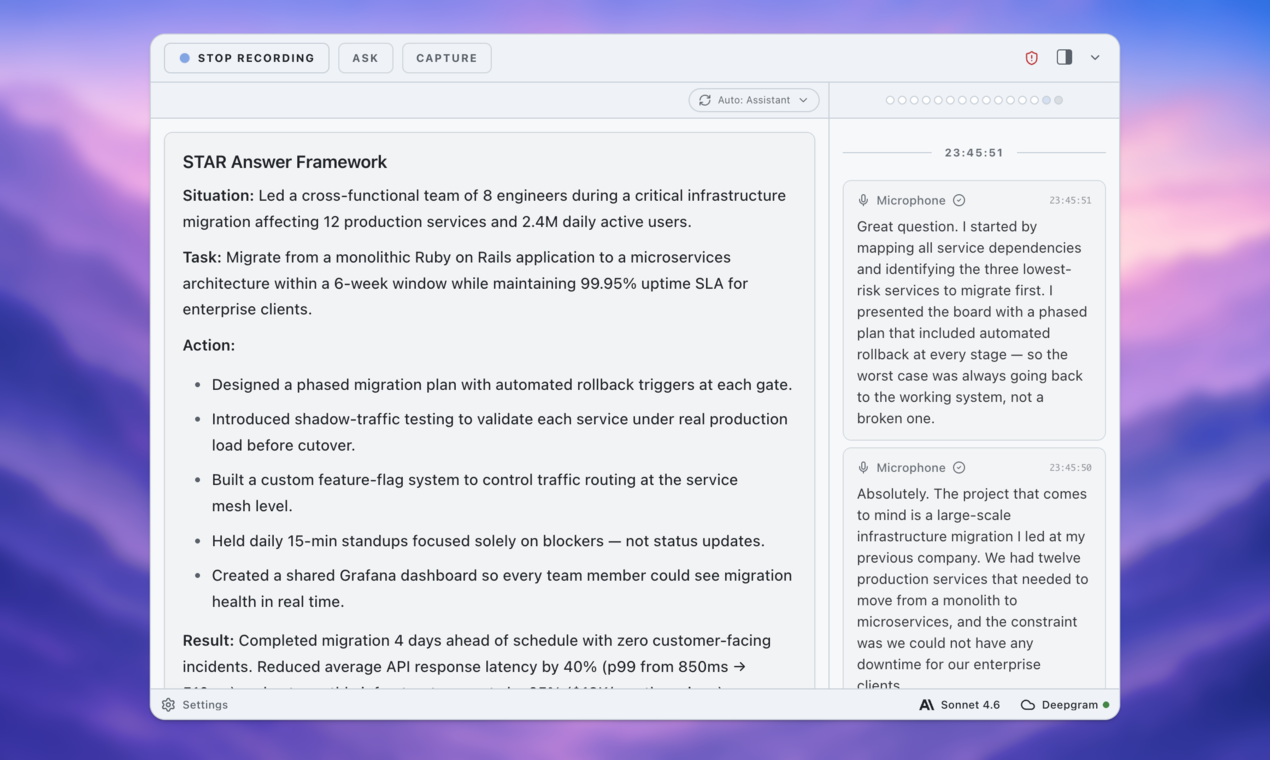
The goal is not to memorize twelve speeches. The goal is to remember your raw material so you can choose the right story in the moment.
Ask AI to Find the Shape, Not Write the Script
Once you have real stories, AI becomes much more useful.
Take one story and describe it roughly. Include the context, what made it hard, what you did, what changed, and what you learned. Then ask AI for structure, not performance.
Try a prompt like this:
I am preparing for an interview. Here is a real work story from my experience. Help me identify the clearest situation, tension, action, result, and lesson. Do not invent details. Preserve my voice. After that, list three follow-up questions an interviewer might ask.
That prompt does three important things. It anchors the answer in your experience. It asks for structure rather than a finished monologue. And it makes follow-up questions part of preparation from the beginning.
This matters because “perfect” AI answers often have no handles. They sound complete, but there is nowhere for the interviewer to go deeper. Real answers have texture: constraints, tradeoffs, partial information, disagreement, pressure, and learning.
A strong answer usually has four beats: context, tension, action, and result. You do not need to say those labels out loud. You just need the shape underneath your answer.
Keep Your Voice by Reading Everything Out Loud
If you only do one thing to avoid sounding like AI, do this: read your prepared answers out loud.
Your ear will catch what your eyes tolerate.
On the page, “I facilitated stakeholder alignment across multiple workstreams” may seem fine. Out loud, you may realize you would normally say, “I got product, support, and engineering into the same room and made us decide what we were not going to do.”
The second version is better because it sounds like a person. It is specific. It has action. It creates a visual.
Create a “do not say it that way” list during prep. Add phrases that feel inflated, vague, or unlike you: “leveraged synergies,” “drove alignment” without saying how, “passionate about innovation” with no evidence, or “fast-paced environment” as a substitute for a real constraint.
Then give AI a direct instruction:
Rewrite this in plainer language. Keep the meaning, but remove corporate buzzwords. Make it sound like something I could say naturally in a live conversation.
A good private AI interview copilot should help you sound more like yourself, not less. If the output feels too smooth, make it rougher. If it feels too abstract, add concrete details. If it sounds like everyone else, ask what only you would know because you were there.
Practice Follow-Up Questions Instead of Memorizing Paragraphs
Memorized answers create fragile confidence.
You may feel ready because you can recite a clean two-minute response. Then the interviewer interrupts: “Why did you choose that approach?” or “What would you do differently?” Suddenly the script is useless.
The better practice is to rehearse follow-ups.
After you shape an answer, ask AI:
Act like a thoughtful interviewer. Ask five follow-up questions that would test whether this example is real. Focus on my specific role, the tradeoffs, the measurable result, and what I learned.
Then answer without reading.
This is the difference between sounding prepared and sounding scripted. Prepared candidates know their material well enough to move around inside it. Scripted candidates panic when the order changes.
Follow-up practice also helps you find weak spots. Maybe you can describe the situation but not the result. Maybe you mention “we” too often and need to clarify your personal contribution. Those are fixable problems. AI is useful because it can expose them before the real interview does.
Use AI During Interviews Only Within Clear Boundaries
Preparation is one thing. Live interviews are different.
Before an interview, using AI to organize your thoughts, practice stories, research likely themes, and review mock answers is generally responsible. After an interview, using AI to debrief and improve is also useful.
During the interview, the boundary depends on the employer’s rules and the format.
If you are in a normal conversation and you use a note-taking tool with permission, that may be acceptable. If you are completing a technical assessment, writing exercise, live case, or coding challenge, assume AI assistance is not allowed unless the company explicitly says it is.
The safest question is direct:
“Are candidates allowed to use notes, documentation, search, or AI tools during this exercise?”
Asking may feel awkward. It is still better than silently violating expectations.
The ethical line is not “AI touched the process.” The line is deception. AI becomes a problem when it secretly performs the skill being assessed or feeds you answers that you present as spontaneous judgment.
A local-first AI meeting copilot can support responsible workflows when it helps you capture practice sessions, review your own words, and protect your notes. It should not be used to impersonate your thinking in a live assessment.
Protect Privacy While You Prepare
Interview prep can involve surprisingly sensitive information.
You may discuss names of former managers, customer problems, internal systems, unreleased projects, salary expectations, immigration details, health constraints, or confidential metrics. AI makes it easy to paste too much context into a box without thinking about where it goes.
Before using AI, remove details the tool does not need. Replace customer names with placeholders. Generalize internal project names. Remove personal contact information. Summarize proprietary systems instead of copying internal documents. Do not paste confidential code, strategy documents, or private company data into tools you do not trust.
Privacy is not a side issue. It is part of professionalism.
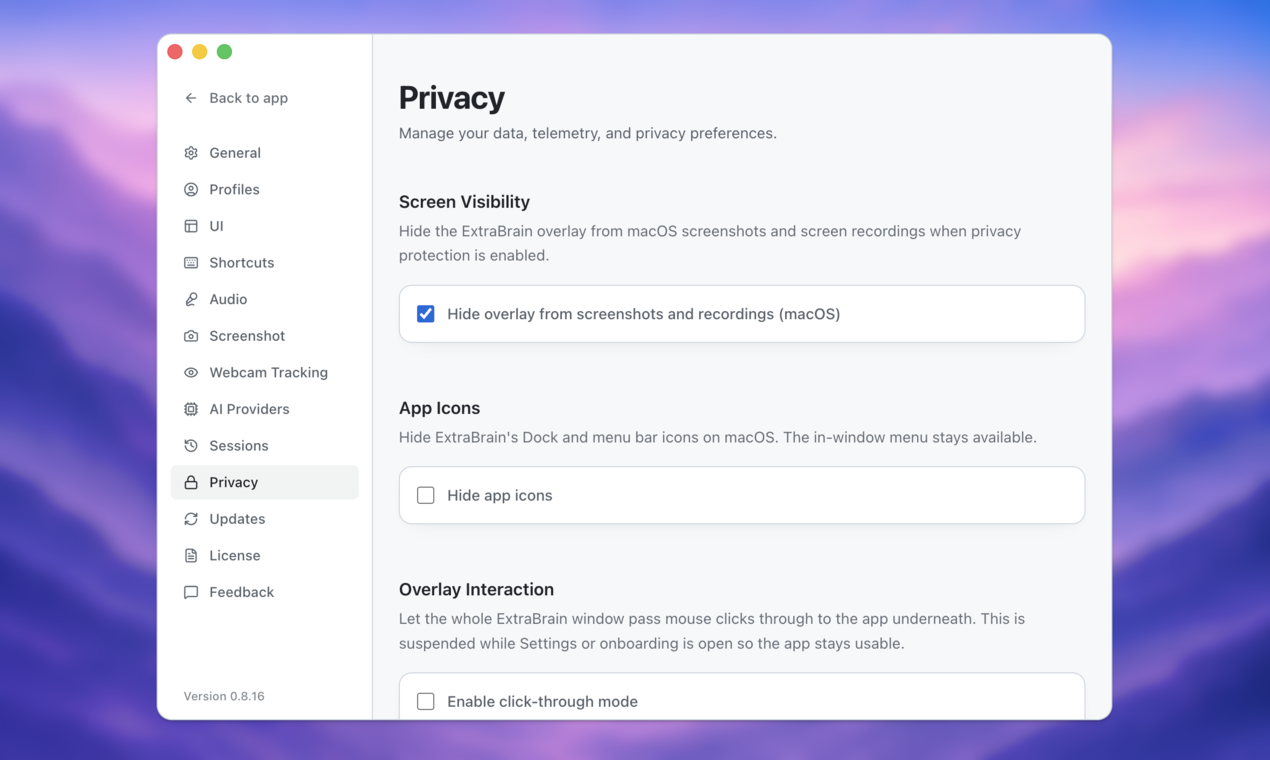
This is also why user control matters. When your interview preparation includes real conversations and personal career details, you want tools that respect the sensitivity of that context. ExtraBrain’s positioning as a private, local-first workspace is valuable because the best AI interview prep should help you think clearly without turning your job search into someone else’s data source.
Use AI After the Interview to Improve, Not Spiral
After the interview, AI can help you learn while the conversation is fresh.
Do not ask, “Did I get the job?” AI cannot know that. Do not paste in every tiny moment and ask it to read the interviewer’s mind. That turns preparation into anxiety automation.
Instead, do a short debrief: what they asked, which answers felt clear, where you rambled, which examples landed well, what follow-up you should send, and what to practice before the next round.
Then ask AI to identify patterns. If you use a tool like ExtraBrain, you can review a transcript or session summary and look for concrete improvement areas: unclear endings, missing metrics, overlong context, weak questions for the interviewer, or repeated filler phrases.
The point is iteration. Each interview should make the next one easier.
The Goal Is Clearer, Not Less Human
The best interviews do not reward the person with the smoothest generated answer. They reward the person who can explain real work clearly, respond to follow-up questions, and show judgment under uncertainty.
AI can help you get there. It can organize memory, compress rambling stories, reveal weak spots, and make practice less lonely. It can help you prepare for the questions you hope no one asks.
But it should never replace your voice.
Use AI to become clearer, not counterfeit. Use it to remember what you have done, not invent what you wish you had done. Use it to prepare your thoughts, not outsource your judgment.
And if you want a private place to practice interviews, review conversations, and stay in control of your own context, try ExtraBrain as your AI interview preparation workspace before your next round.