
ExtraBrain Blog
Xobin AI Help in 2026: What to Know Before an Online Test

A practical guide to Xobin AI assistance, proctoring risks, detection signals, and responsible ExtraBrain preparation before online tests.
People search for “Xobin how to cheat with AI” because online assessments can feel strict, opaque, and high pressure. The test clock is running, the browser may be locked down, the webcam may be on, and the platform may be watching for screen changes, suspicious movement, copy-paste behavior, or unusual answer patterns. It is easy to understand why candidates look for invisible AI help.
It is also where candidates can create serious risk for themselves. Using undisclosed AI during a restricted online test can violate employer, school, platform, or certification rules. Even if a tool seems technically capable, the result can still be disqualification, an invalid score, a withdrawn offer, or a damaged reputation.
This guide keeps the practical search intent in view without pretending there is a magic bypass. If you are thinking about AI help for a Xobin-style online test in 2026, the useful answer is to understand how proctoring works, where AI answers fail, what behavior can get flagged, and how to use ExtraBrain responsibly for preparation, mock sessions, post-test review, and live support only where the rules allow it.
Key Takeaways
- Xobin-style assessments may use browser lockdowns, webcam proctoring, off-tab monitoring, microphone checks, screen recording, plagiarism analysis, and answer-timing review.
- AI chatbots can help with preparation, explanations, edge cases, and practice questions, but they can also produce wrong, generic, or unverifiable answers.
- Screen sharing, second devices, remote helpers, browser extensions, and hidden answer tools can create detection and integrity risks.
- The safest AI workflow is to practice before the real test, build your own reasoning, and follow the assessment rules on test day.
- ExtraBrain is a free, local-first Mac desktop AI interview assistant and meeting copilot with live transcription, screen-aware context, local-first options, bring-your-own providers, and privacy controls for allowed use cases.
Can You Cheat on Xobin 2026 With AI?
The short answer is that people try, but the better question is whether the risk is worth it. Xobin-style assessments are built to measure independent skill under defined rules. If those rules prohibit outside help, secretly using AI changes what the assessment is evaluating.
That does not mean AI has no place in your process. AI is useful for studying, mock interviews, answer review, coding drills, and learning from mistakes. ExtraBrain should be used only where interview, employer, school, workplace, meeting, and platform rules allow AI assistance, transcription, screenshots, or notes.
Xobin’s Anti-Cheat Technology
Online proctoring systems usually look at more than the final answer. They may watch the browser state, webcam feed, microphone input, copy-paste events, screen focus, full-screen status, suspicious pauses, and whether the candidate appears to be receiving outside help.
Common controls can include:
- Locking the test to a browser session or full-screen mode.
- Flagging tab switches, window changes, or repeated focus loss.
- Monitoring webcam movement, face visibility, and extra people in the room.
- Recording microphone audio or detecting background voices.
- Reviewing answer speed, similarity, plagiarism, and unusual consistency.
You do not need private implementation details to make a good decision. If the assessment instructions say no AI, no outside help, no notes, or no second device, assume that those restrictions matter.
Weaknesses and Unknowns
Candidates often assume every proctoring system has weak spots. Some systems may miss certain behavior, some may rely on later human review, and some may update their detection rules without warning. That uncertainty is exactly why trying to outguess the platform is a poor strategy.
Even if an AI workflow appears to work in a mock session, it may not behave the same way in a real assessment. Device settings, browser permissions, network conditions, employer configuration, screen recording rules, and human review can all change the outcome.
The stronger strategy is to use AI before the test to reduce panic and improve skill. That gives you useful help without depending on hidden behavior during a restricted assessment.
Common AI Methods Around Xobin Assessments
Candidates usually explore AI help in a few predictable ways. Some are useful for preparation. Others are risky during a formal test.
Using ChatGPT, Gemini, Claude, and Similar Tools
General AI chatbots can explain coding problems, outline essays, summarize concepts, generate practice questions, and critique answers. They are helpful when you are preparing outside the real assessment.
For example, you can ask an AI tool to:
- Explain a sample coding prompt in plain English.
- Compare a brute force solution with an optimized solution.
- Generate edge cases for SQL, arrays, strings, or debugging tasks.
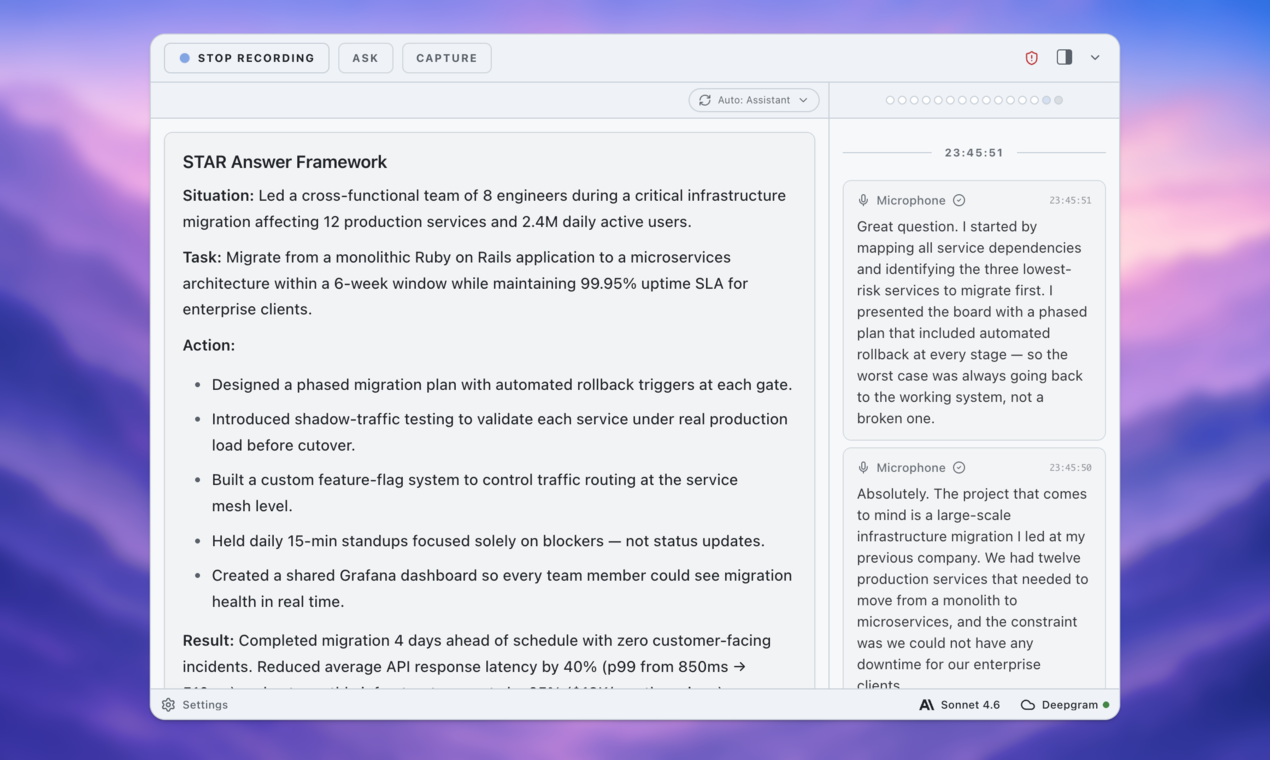
- Turn a behavioral prompt into a STAR outline.
- Ask follow-up questions like an interviewer would.
Use these answers as study material, not as final truth. AI can hallucinate, miss constraints, produce code that fails edge cases, or write in a style that does not match your own reasoning.
Screen Sharing and Remote Help
Some candidates consider using a second device, a video call, or a remote helper. That is risky. Webcam proctoring can reveal eye movement, background voices, extra screens, unusual posture, or another person in the room.
It is also usually a direct rule violation if the assessment requires independent work. If you would not be comfortable telling the employer about the helper, the workflow has probably crossed the line.
Automation and Browser Extensions
Browser extensions and automation tools can be especially risky in locked assessment environments. They may require permissions that conflict with the test browser, leave logs, trigger unusual focus or input patterns, or produce answers too quickly.
They can also make you dependent on output you cannot explain. That is dangerous in any follow-up interview, where a hiring team may ask you to defend the solution or solve a related problem live.
Where ExtraBrain Fits
ExtraBrain is a free, local-first Mac desktop AI interview assistant and meeting copilot. It supports live transcription, screen-aware context, local Gemma 4 on-device AI where installed and compatible, bring-your-own AI providers, and clear privacy controls. It is built for coding interviews, system design rounds, behavioral interviews, meetings, lectures, research calls, and review workflows.
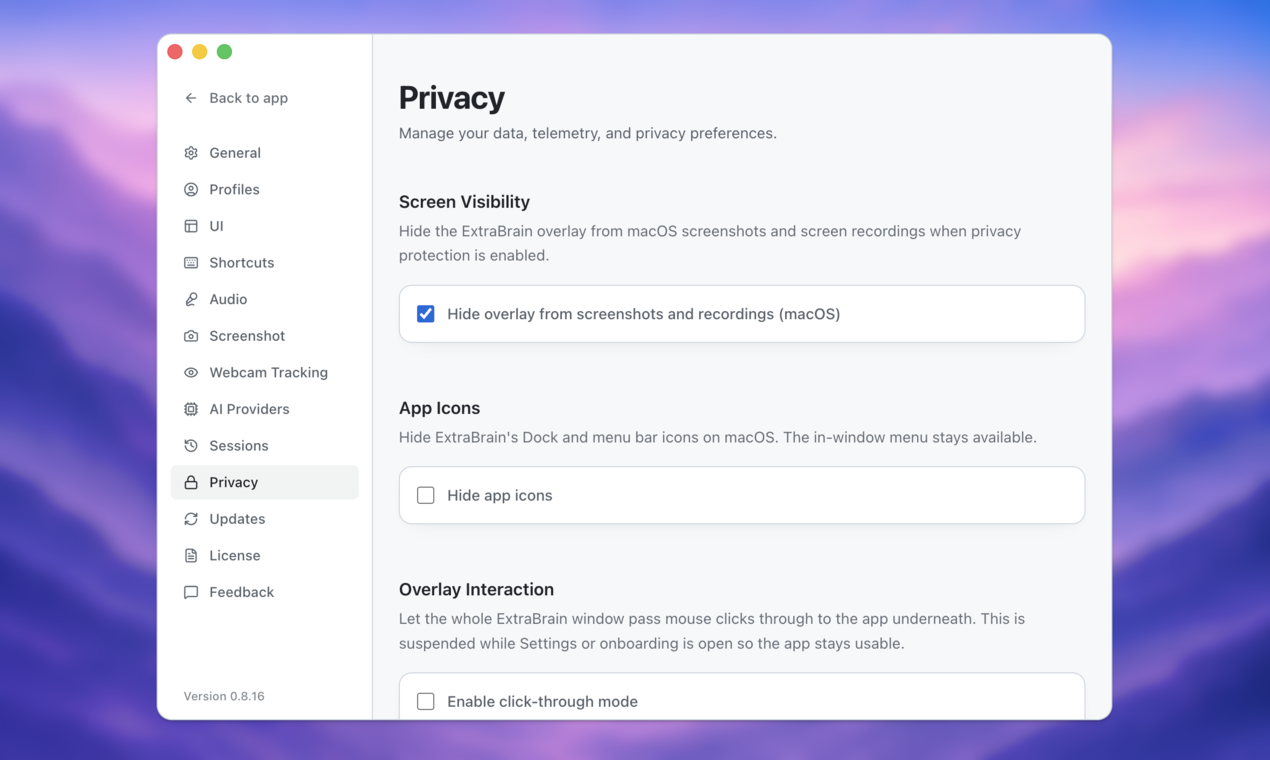
ExtraBrain is designed to stay hidden from screen sharing and screen recording on major meeting tools, while users remain responsible for following all rules. That privacy posture is useful for allowed interviews and meetings where you do not want private notes or assistant UI exposed to the room. It is not permission to use AI in a restricted Xobin assessment.
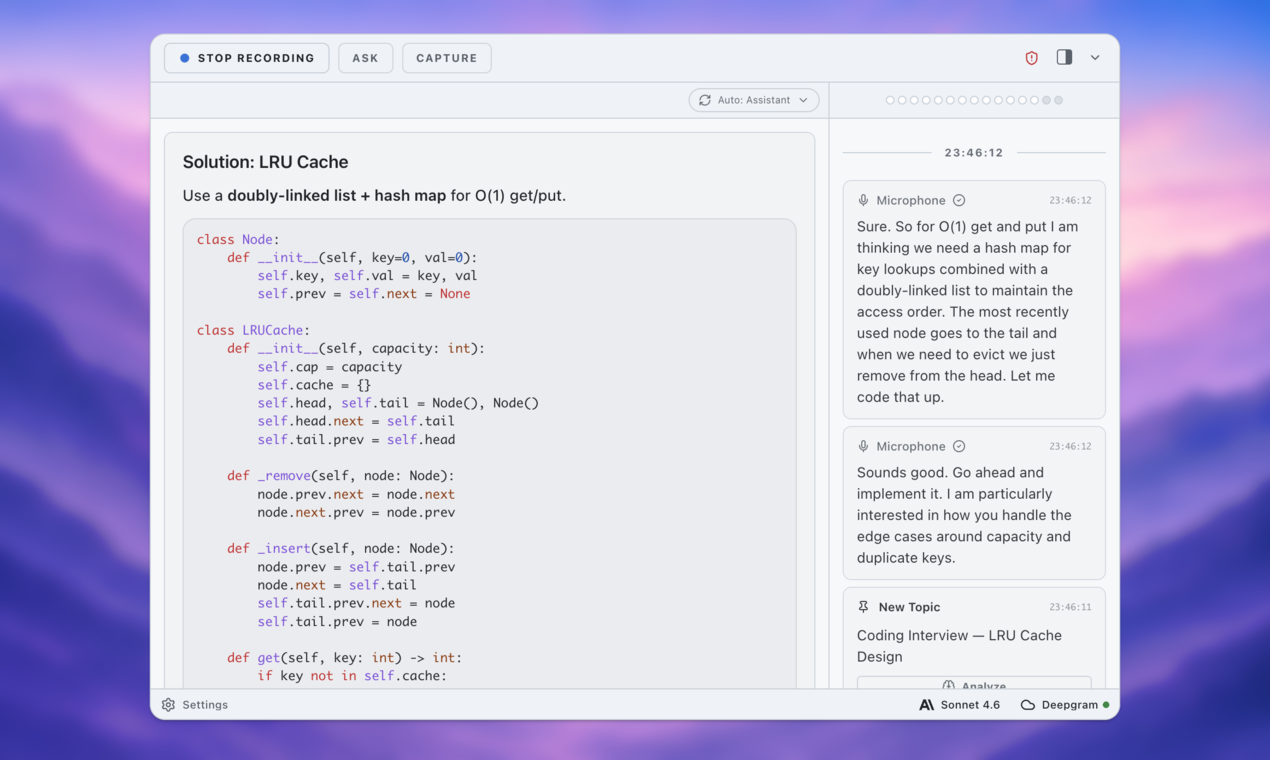
If AI assistance is allowed, ExtraBrain can help you follow live context, structure your thoughts, generate clarifying questions, and review the session afterward. If AI assistance is not allowed, use ExtraBrain before the assessment for preparation and after the assessment for debriefing.
Step-by-Step: Responsible AI Preparation for Xobin
The original impulse behind “how to cheat on Xobin” is usually not laziness. It is anxiety about time pressure, unfamiliar prompts, and not knowing what the platform will measure. A better AI workflow targets those problems before the real test starts.
Step 1: Prepare Your Device and Workspace
Before any legitimate online assessment, make the basics boring. Use one reliable computer, test your internet connection, check your webcam and microphone, update your browser if required, and close apps that are not permitted.
Keep your desk clean and remove materials that the assessment rules do not allow. If notes, calculators, documentation, or IDEs are allowed, keep them within the stated limits. If they are not allowed, do not use them.
This setup is not about hiding anything. It is about reducing avoidable flags and making sure technical problems do not distract from your actual work.
Step 2: Practice With Representative Questions
Collect practice questions that match the role and assessment format. For software engineering, include coding fundamentals, SQL, debugging, data structures, algorithms, and practical tradeoffs. For business, product, analyst, support, or operations roles, include judgment prompts, prioritization scenarios, writing tasks, communication exercises, and domain-specific reasoning.
Use AI to turn each question into a learning loop. Ask for the concept, a worked example, edge cases, common mistakes, and a short explanation you could say out loud. Then close the assistant and solve it again without help.
If you cannot explain the answer without the AI window, keep practicing. The goal is to build reasoning you can own.
Step 3: Run Timed Mock Sessions
Xobin-style tests are often stressful because timing changes how you think. Run short mock sessions with the same time pressure you expect in the real test. Do not pause the timer every time you get stuck.
After the mock session, use ExtraBrain or your chosen provider to review what happened. Look for slow problem types, missing edge cases, unclear explanations, and moments where you panicked. Then create a smaller retry set instead of vaguely “studying more.”
Step 4: Decide What Is Allowed on Test Day
Before the real assessment, read the instructions carefully. Look for rules about AI tools, second monitors, notes, browser tabs, calculators, IDEs, screen recording, transcription, screenshots, and outside help.
If the rules allow AI assistance, keep your workflow simple, transparent, and within the stated limits. If the rules do not allow AI assistance, do not use it during the test. Use the practice you already completed.
Risks and Xobin Detection Signals
Trying to bypass a proctored assessment creates two categories of risk. The first is technical detection. The second is integrity review, where the employer or platform questions whether the result represents your own work.
Proctoring and Monitoring
A proctored Xobin assessment may use automated flags, live proctors, or post-test review. The webcam can show whether your face stays visible. The microphone can capture background voices. The browser can report focus changes, blocked actions, or full-screen exits. The submitted answers can be compared against known solutions or other candidates’ responses.
Some proctors may also ask for a room scan or identity confirmation. Follow the instructions calmly and do not improvise around them.
Common Red Flags
| Red flag | Why it can be risky |
|---|---|
| Very fast answers | May suggest copied or externally generated responses |
| Frequent eye movement | May suggest reading from another screen or device |
| Long unexplained pauses | May suggest searching, prompting, or waiting for help |
| Background voices | May suggest another person is assisting |
| Window switching | May show that the candidate left the test environment |
| Perfect but unexplained code | May fail later follow-up or originality review |
| Sudden writing style changes | May suggest pasted or AI-generated text |
These signals do not prove misconduct on their own. They are reasons a platform or reviewer may take a closer look.
Better Ways to Avoid Getting Flagged
The best way to avoid getting flagged is not to hide prohibited behavior. It is to avoid prohibited behavior and make your legitimate test setup clean, stable, and easy to review.
Blend AI Preparation With Your Own Reasoning
Use AI before the assessment to sharpen your own thinking. Do not memorize polished scripts. Do not copy full answers without understanding them. Do not practice in a way that makes your real response sound like someone else.
For coding practice, write the solution yourself after reviewing an explanation. Change the constraints and solve a variation. Explain the complexity and edge cases out loud.
For behavioral or written prompts, use AI to outline. Then replace generic claims with true examples from your own work.
Keep Your Test-Day Behavior Simple
On assessment day, reduce noise. Use the required browser, stay within the permitted tools, keep your camera view stable, and answer at a natural pace.
If something goes wrong, such as a network drop, camera failure, or unclear instruction, document it and contact the test administrator through the approved channel. Do not create a workaround that looks like evasion.
Review After the Test
After the assessment, write down what you remember while it is fresh. Which questions felt slow? Which concepts were weak? Which explanations sounded unclear? Which parts of the platform added stress?
ExtraBrain can work as a focused AI second brain for interviews and meetings: a workspace for live sessions, transcripts, notes, screen context, and review. For assessment prep, that post-session review is often more valuable than a one-time answer.
Privacy and Provider Choices
AI preparation can involve sensitive information. You might be working with job descriptions, employer prompts, personal stories, code snippets, or notes from a recruiting process. Before you paste that into any tool, understand where the data goes.
ExtraBrain supports local Parakeet transcription and optional Deepgram. It can use local Gemma 4 on-device AI where installed and compatible, Anthropic, OpenAI, custom OpenAI-compatible endpoints, Claude Subscription, and Codex Subscription.
A fully local ExtraBrain posture requires local Parakeet transcription plus local Gemma 4 on-device AI where installed and compatible, with no external provider requests. External providers may receive selected prompts, transcript text, screenshots, audio, or context depending on configuration. Local Gemma 4 requires installation and compatible hardware and may not be available on every Mac or customer environment.
If privacy matters for your preparation, choose providers deliberately. Do not upload confidential employer data, private customer information, unreleased code, or sensitive personal details unless you understand and accept the data flow.
FAQ
Can I use my phone during a Xobin test?
Use a phone only if the assessment instructions explicitly allow it. In many proctored tests, a second device can be treated as outside assistance or suspicious behavior. If you need your phone for identity verification or two-factor authentication, follow the platform instructions exactly.
What if Xobin blocks copy and paste?
Treat blocked copy and paste as part of the assessment environment. Do not try to bypass it with automation or extensions unless the test instructions explicitly allow that workflow. For preparation, practice typing solutions and explanations by hand so the real interface feels less disruptive.
How do I avoid getting flagged for cheating?
Follow the rules, keep your setup clean, and avoid prohibited tools or outside help. Practice with AI before the test so your real answers come from your own reasoning. If AI is allowed, use it within the stated limits and be ready to explain every answer.
Is it safe to use browser extensions?
Browser extensions can conflict with locked assessment environments and may create suspicious activity. Use only software that the assessment instructions allow. If you need tooling for practice, keep it outside the formal test session.
What happens if Xobin catches cheating?
Consequences can include canceled results, disqualification, removal from a hiring process, academic discipline, offer withdrawal, or loss of trust with the employer or school. The exact outcome depends on the organization and the assessment rules.
Can ExtraBrain help me prepare for Xobin?
Yes, when used responsibly. ExtraBrain can help Mac users practice coding explanations, system design tradeoffs, behavioral answers, live transcription review, and post-session notes. Use it only where the relevant interview, employer, school, workplace, meeting, and platform rules allow AI assistance, transcription, screenshots, or notes.