
ExtraBrain Blog
Korn Ferry Talent Q Assessment Help in 2026 Without Risking Your Offer

A practical Korn Ferry Talent Q guide for 2026: question types, timing, prep tactics, AI risks, and responsible ExtraBrain support.
Searches for how to cheat on a Korn Ferry assessment usually come from panic, not laziness. A candidate gets a Talent Q invitation for a project manager, analyst, graduate, consulting, finance, or leadership role, opens the practice questions, and realizes that the test is fast, adaptive, and easy to overthink.
The better question is not how to bypass Korn Ferry or hide outside help. The better question is how to prepare for the real question types, manage the timer, understand the risks of unauthorized assistance, and use AI only where the employer, school, assessment provider, and platform rules allow it.
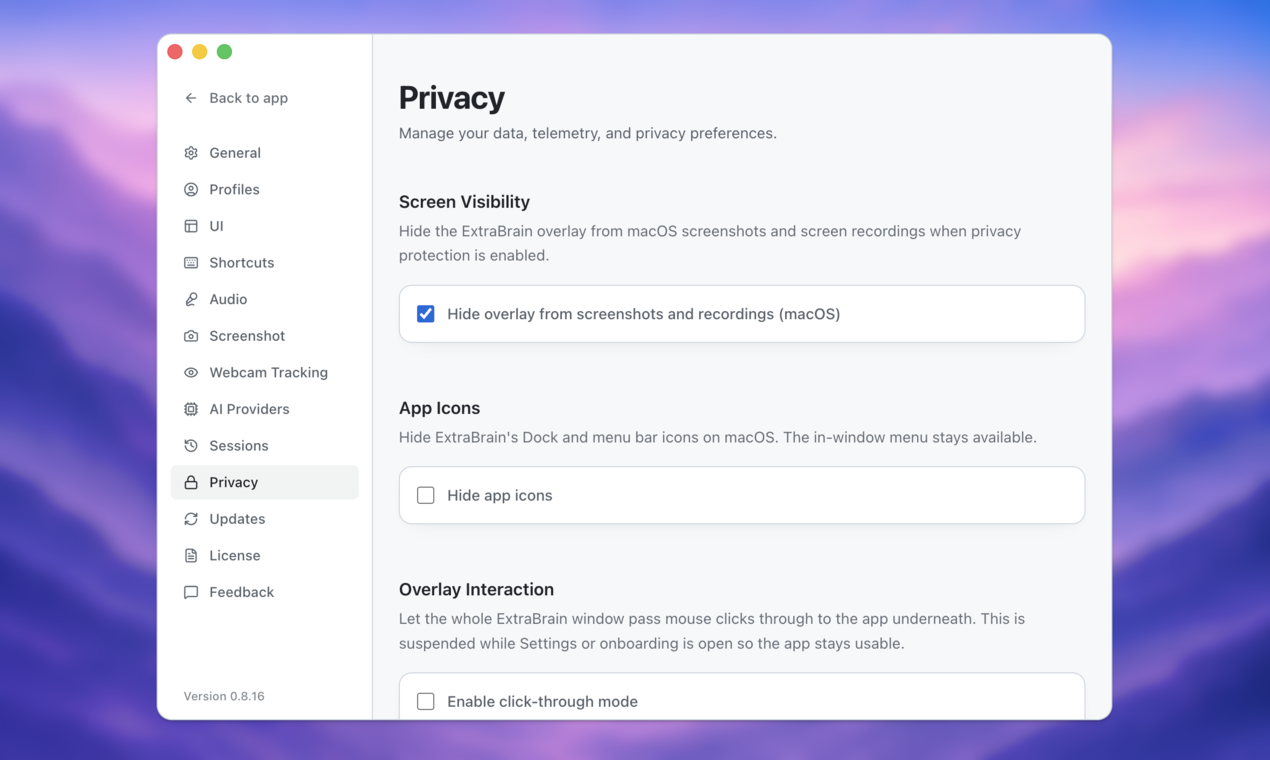
ExtraBrain is a free, local-first Mac desktop AI interview assistant and meeting copilot with live transcription, screen-aware context, local Gemma 4 on-device AI where installed and compatible, bring-your-own AI providers, and clear privacy controls. It can help with interview preparation, mock assessment review, behavioral answer practice, meeting notes, and permitted live sessions. Use it only where your interview, workplace, school, meeting, and platform rules allow AI assistance, transcription, screenshots, or notes.

Key Takeaways
- Korn Ferry Talent Q assessments often combine personality, motivator, behavioral, numerical, verbal, and logical reasoning sections.
- The hardest part is usually not the math or reading alone, but the strict time pressure and the need to avoid unsupported assumptions.
- Personality and motivator sections should be answered honestly because consistency matters more than guessing a perfect profile.
- Numerical questions usually test percentages, ratios, growth rates, charts, tables, and business data interpretation.
- Verbal reasoning questions reward staying inside the passage instead of using outside knowledge.
- Logical reasoning questions reward quick pattern recognition across direction, rotation, quantity, sequence, and alternation.
- AI is safest and most useful before the live assessment, during practice, and after permitted sessions for review.
- Do not use ExtraBrain or any other AI assistant in a live Korn Ferry assessment unless the rules explicitly allow it.
My Korn Ferry Talent Q Assessment Experience
The original candidate experience behind this guide was a project manager hiring process that included a Korn Ferry Talent Q assessment. The invitation asked for the assessment to be completed soon, but the exact deadline was not obvious from the first message. That uncertainty made the test feel more urgent than it needed to be.
The assessment included personality, motivator, and behavioral competency questions. Those sections were designed to understand work style, leadership tendencies, decision-making patterns, and how the candidate might behave as an employee or manager.
There were also practical reasoning sections. The practical parts measured numerical reasoning, verbal reasoning, and logical thinking under tight time limits. The verbal section felt especially demanding because some passages contained enough detail to slow down careful reading. The logic questions were manageable in principle, but a 60 to 75 second timer can make even familiar pattern problems feel rushed.
The lesson is straightforward. Do not treat Korn Ferry as a test you can skim ten minutes before the deadline. Even if the underlying skills are basic, the format punishes hesitation.
What Korn Ferry Talent Q Usually Measures
Korn Ferry assessments vary by employer, role, region, and assessment setup. Your invitation may include only some of these sections, and the timing can differ from one hiring process to another. Read the instructions in your own assessment invitation before relying on any public guide.
Still, many Talent Q-style assessments are built around four broad areas.
Part 1: Personality and Work Style
The personality section may ask you to rate statements about your normal work behavior. It is usually not a conventional right-or-wrong test. It is trying to understand how you communicate, solve problems, handle pressure, work with others, and respond to goals.
Common trait areas include people and relationships, tasks and projects, and drives and emotions.
| People and Relationships | Tasks and Projects | Drives and Emotions |
|---|---|---|
| Communicative | Analytical | Relaxed |
| Influencing | Conceptual | Resilient |
| Socially confident | Creative | Flexible |
| Supportive | Methodical | Decisive or action-oriented |
| Consultative | Conscientious | Achievement-oriented |
The best strategy is consistency and honesty. Trying to reverse-engineer the perfect leadership profile can backfire because later interview questions may reveal a mismatch. If you say you are highly decisive, highly consultative, highly relaxed, highly urgent, highly independent, and highly collaborative all at once, the pattern may look less credible than a normal human profile.
Part 2: Numerical Reasoning
Numerical reasoning questions usually ask you to interpret charts, tables, rates, percentages, ratios, growth, costs, sales, currency conversions, staffing data, or other business scenarios. The arithmetic is often not advanced. The challenge is finding the right numbers quickly and avoiding distractors.
Some versions use around 12 questions with roughly 75 to 90 seconds per question. Your version may differ, so treat those numbers as examples rather than a guarantee.
Bring whatever the assessment instructions allow. If a calculator, paper, or pen is permitted, prepare them before you start. If they are not permitted, practice mental estimates and simple written reasoning inside the allowed interface.
The most useful habit is to read the question before studying the chart. That tells you what data matters. Then scan only for the relevant row, column, year, product line, or percentage.
Part 3: Verbal Reasoning
Verbal reasoning is similar to reading comprehension, but the scoring usually depends on evidence discipline. You read a short business passage and decide whether a conclusion is true, false, or cannot be determined from the information given.
This section catches candidates who bring in common sense too quickly. If the passage says a strategy may reduce operating costs, that does not mean it will reduce costs. If it says some regions improved, that does not mean most regions improved. If it says a policy was proposed, that does not mean the policy was adopted.
Watch for words like some, many, all, none, may, must, likely, always, never, and probably.
Small qualifiers often decide the answer.
Part 4: Logical Reasoning
Logical reasoning questions often show symbols, arrows, shapes, grids, or sequences with one missing item. You identify the pattern and choose the answer that completes it.
The common patterns are simple, but they can be layered. Look for rotation, movement, mirroring, color changes, shape count, filled versus empty elements, odd-even alternation, direction changes, and repeated cycles.
Do not stare at the whole sequence at once. Check one feature at a time. If shape count changes, track shape count. If direction changes, track direction. If two rules appear to operate together, separate them before choosing an option.
Representative Korn Ferry Question Patterns
The original exported article included screenshots of real-looking questions from a prior test experience. Those remote images are not republished here because this ExtraBrain article uses only approved local assets. Instead, the useful parts are rewritten as representative patterns you can practice without depending on a leaked question bank.
Example Pattern 1: Sales Table Calculation
You may see a table with revenue by product, region, or month. The question might ask for a percentage increase, the highest margin, a ratio between two categories, or the effect of a price change.
Practice move: identify the units before calculating. Confusing thousands, millions, percentages, and raw counts is one of the fastest ways to lose a correct answer.
Example Pattern 2: Business Passage Inference
You may read a short passage about a company policy, market expansion, hiring plan, or customer satisfaction survey. The answer choices may sound plausible, but only one may be supported by the text.
Practice move: underline the exact phrase that supports your answer.
If you cannot point to it, choose Cannot Be Determined when that option exists.
Example Pattern 3: Shape Sequence
You may see arrows rotating clockwise while a shape count alternates between two and three objects. The missing item must satisfy both rules, not just one.
Practice move: write the rules in fragments.
For example, arrow +90 degrees each step and filled circle alternates left-right.
Then eliminate answers that violate either rule.
Example Pattern 4: Personality Tradeoff
You may be asked to choose between statements that both sound positive. For example, one statement may emphasize quick independent decisions while another emphasizes group consultation.
Practice move: answer as your actual work behavior, not as the most impressive slogan. The employer is usually looking for role fit and consistency, not a fantasy candidate who scores high on every trait.
How to Cheat on Korn Ferry Talent Q: The Safer Answer
The phrase how to cheat on Korn Ferry Talent Q gets searched because the assessment is stressful and the timer is unforgiving. But detection evasion, proxy test-taking, hidden devices, unauthorized AI, copied answers, and leaked question banks can create bigger problems than a low score.
They can lead to disqualification, offer withdrawal, school discipline, employment consequences, or a follow-up interview where you cannot explain your own result. They also make the live test more stressful because you are managing concealment instead of reasoning.
The safer answer is to prepare with AI in the open parts of the process and respect the closed parts. Use ExtraBrain for mock assessments, review, coaching, transcripts, screen-aware study sessions, and interview practice. Do not use it during a live Korn Ferry assessment unless your specific rules permit AI assistance, screenshots, transcription, or notes.
How Korn Ferry-Style Assessments May Discourage Cheating
Assessment monitoring varies. Do not assume that one person’s setup is the same as yours. Some candidates may see only a browser-based test, while others may face identity checks, proctoring tools, webcam requirements, tab-switch warnings, copy-paste restrictions, or post-test review.
Browser and Tab Activity
Browser-based assessments may be able to detect certain actions inside the browser environment, such as leaving the active tab, opening prohibited resources, copying and pasting, or exiting full-screen mode. Some tests may also use a lockdown browser or additional proctoring layer.
Do not build your strategy around a technical loophole. Even when a desktop app is separate from a browser, unauthorized outside help can still violate the assessment rules. Behavioral patterns, timing, answer quality, and follow-up interviews can all matter.
Identity Verification
Some Korn Ferry setups may include identity verification. Others may not. That depends on the employer, role, region, and assessment configuration.
The right move is simple. Take the assessment as yourself, using the name and identity expected by the hiring process. Do not use a proxy test-taker or paid answer service.
Timing and Consistency Signals
Strict timing is part of the test design. If a candidate repeatedly pauses for a long time, then enters polished answers at unusual speed, the pattern may be reviewed. If a reasoning score is far above the candidate’s later interview performance, the employer may ask follow-up questions.
This is another reason preparation beats shortcuts. You need to understand the reasoning well enough to repeat it live.
Question Variation
Talent Q-style tests can use question banks or adaptive elements. Even if someone posts a question online, your version may use different data, different wording, different answer choices, or a different section mix.
Memorized answers are fragile. Recognizing the pattern is durable.
A Responsible ExtraBrain Workflow for Korn Ferry Prep
ExtraBrain is most useful when it helps you learn faster without misrepresenting your ability. Here is a responsible workflow to use before the assessment, during permitted practice, and after mock sessions.
1. Recreate the Test Conditions
Practice with one clean browser window, a timer, and the same materials you expect to be allowed on test day. Close messaging apps and unrelated tabs. Put your phone away. Make the environment boring enough that your attention stays on the question.
If the real assessment allows a calculator, use one during practice. If it does not, practice without one. This matters because time pressure changes the skill being tested.
2. Build Four Practice Blocks
Create separate study blocks for personality, numerical, verbal, and logical reasoning. Do not mix them randomly at first. Train each skill, then combine them later in timed practice.
For personality, write down examples of how you actually communicate, make decisions, handle conflict, and respond to pressure. For numerical reasoning, drill percentages, ratios, growth rates, and table interpretation. For verbal reasoning, drill true, false, and cannot-be-determined decisions. For logical reasoning, drill one pattern family at a time.
3. Use AI for Critique, Not Substitution
During preparation, ExtraBrain can help you turn a missed question into a lesson. Ask it to explain the pattern, generate a similar practice item, or identify why a wrong answer was tempting.
Good prep prompts look like this:
I am practicing Korn Ferry-style numerical reasoning. Give me one business table question at a time. After I answer, explain the calculation and show the fastest route. Track the mistake type if I get it wrong.
I am practicing verbal reasoning. Give me a short business passage and one conclusion. I will answer true, false, or cannot be determined. Explain only from the text and call out the exact qualifier that matters.
I am practicing logical reasoning. Describe a symbol sequence rule in words, then give me four answer options. After I answer, explain the rule and the elimination path.
4. Practice Behavioral Consistency
For personality and motivator sections, do not ask AI to tell you the perfect answers. Ask AI to help you clarify your real work style.
For example:
Interview-coach me on my management style. Ask me about communication, prioritization, conflict, ambiguity, resilience, and decision-making. Summarize my actual patterns in plain language. Do not make me sound more senior, more extroverted, or more decisive than my examples support.
That kind of preparation helps you answer consistently and later discuss your results honestly in interviews.
5. Review After Timed Practice
After each practice set, write a short debrief. ExtraBrain can help turn your notes or permitted transcripts into a study plan.
Use a simple table:
| Missed Area | What Went Wrong | Next Drill |
|---|---|---|
| Percent increase | Used the final value as the denominator | Drill base versus final value questions |
| Verbal reasoning | Treated may as will | Drill qualifier words |
| Logic sequence | Tracked rotation but missed color alternation | Drill two-rule patterns |
| Personality | Chose ideal answers instead of real behavior | Prepare examples from actual projects |
Practical Section-by-Section Tips
Personality Test Tips
Answer based on your normal behavior at work. Avoid extreme answers unless they are genuinely true. Expect similar themes to appear in different wording. Think about the role, but do not pretend to be a different person.
If you are preparing for a manager or project manager role, review real examples of stakeholder management, missed deadlines, prioritization conflicts, ambiguity, and team disagreement. Those examples will make your answers more grounded.
Numerical Reasoning Tips
Read the question first. Identify the required output. Scan the chart for only the necessary values. Write the formula before calculating. Estimate the answer before looking at options.
Common formulas include:
| Task | Formula |
|---|---|
| Percentage increase | (new value - old value) / old value * 100 |
| Percentage decrease | (old value - new value) / old value * 100 |
| Ratio | part A / part B |
| Share of total | part / total * 100 |
| Average | sum / count |
If answer options are far apart, estimate first. If they are close, calculate carefully.
Verbal Reasoning Tips
Stay inside the passage.
Do not use what you know about the company, industry, or real world.
Treat every qualifier as meaningful.
Be especially careful with absolute words like all, none, always, and never.
If a conclusion is plausible but not proven, it is not true. If a conclusion contradicts the passage, it is false. If the passage does not give enough information, it cannot be determined.
Logical Reasoning Tips
Look for one rule at a time. Track direction, then count, then color, then position. If you find one rule, do not stop too early because many questions combine two or three rules.
Use elimination aggressively. If an answer violates one confirmed rule, remove it. Then compare the remaining options against the second rule.
What to Do on Test Day
Read the instructions before the timer starts. Confirm whether notes, calculators, scratch paper, headphones, AI tools, screenshots, transcription, or outside resources are allowed. If anything is unclear, ask the recruiter or assessment administrator before starting.
Set up your environment cleanly. Use stable internet, power, a quiet room, and a simple desk. Close unrelated apps and browser tabs. Silence notifications.
During the test, do not dwell on one question until it ruins the section. Some timed assessments move forward automatically. If you are stuck, eliminate impossible answers, make the best supported choice, and keep moving.
After the test, write down what felt hard while the memory is fresh. That debrief helps if you face a follow-up interview, assessment center, or later reasoning test.
Where ExtraBrain Fits
ExtraBrain is not a promise that you can bypass Korn Ferry. It is a Mac desktop AI interview assistant and meeting copilot that can support preparation and permitted live workflows.
It can help you:
- Practice numerical, verbal, and logical reasoning questions.
- Turn missed practice questions into targeted drills.
- Build behavioral examples from your real work history.
- Review mock interview transcripts and notes.
- Prepare for follow-up interviews after an assessment.
- Keep more processing local when using local Parakeet transcription plus local Gemma 4 on-device AI where installed and compatible.
- Choose external providers only when you understand that selected prompts, transcript text, screenshots, audio, or context may leave the device depending on configuration.
ExtraBrain is available for macOS today, including Apple Silicon and Intel Macs. Windows and Linux are planned.
FAQ
Can ExtraBrain be used for Korn Ferry assessments?
Use ExtraBrain only where the specific assessment rules allow AI assistance, transcription, screenshots, notes, or outside tools. If the Korn Ferry invitation or employer policy says no outside assistance, use ExtraBrain before the live assessment for preparation and after permitted practice for review.
Can I use my phone during the assessment?
Only if the rules allow it. Many assessments prohibit phones, extra screens, messaging apps, or outside communication. If the rules do not allow a phone, keep it away from the test environment.
What are the biggest risks in trying to cheat?
The biggest risks are disqualification, offer withdrawal, integrity flags, identity issues, inconsistent performance in follow-up interviews, and submitting work you cannot explain. Hidden assistance can also increase anxiety because your attention is split between solving and concealing.
What if a question spans multiple pages or has a large table?
In live assessments, follow the platform rules and use only allowed tools. During practice, you can use ExtraBrain to review screenshots, notes, or pasted sample material where you have the right to use them. For long tables, train yourself to read the question first and scan for only the relevant values.
How should I prepare if I have only one day?
Spend the first hour learning the section types. Spend the next two hours doing timed practice across numerical, verbal, and logical reasoning. Review every miss. Then do one mixed timed set and stop cramming early enough to sleep.
Is Extra Brain the same as ExtraBrain?
ExtraBrain is the official product name. Extra Brain is a spaced search alias people sometimes use for the same app.