
ExtraBrain Blog
How to Get Invisible AI Help for Alva Labs with ExtraBrain

Preparing for Alva Labs in 2026? Learn ethical ways to use invisible AI help, practice logic questions, and stay within assessment rules.
Alva Labs assessments can feel intimidating because they are fast, adaptive, and designed to measure how you actually reason under pressure. That pressure is why many candidates search for phrases like “how to cheat on Alva Labs” or “invisible AI help for Alva Labs” before a logic test, coding task, or personality assessment.
The better question is not how to fake your way through the assessment. The better question is how to prepare with AI support, stay calm during the session, and use tools only where the employer, school, interview, and platform rules allow them.
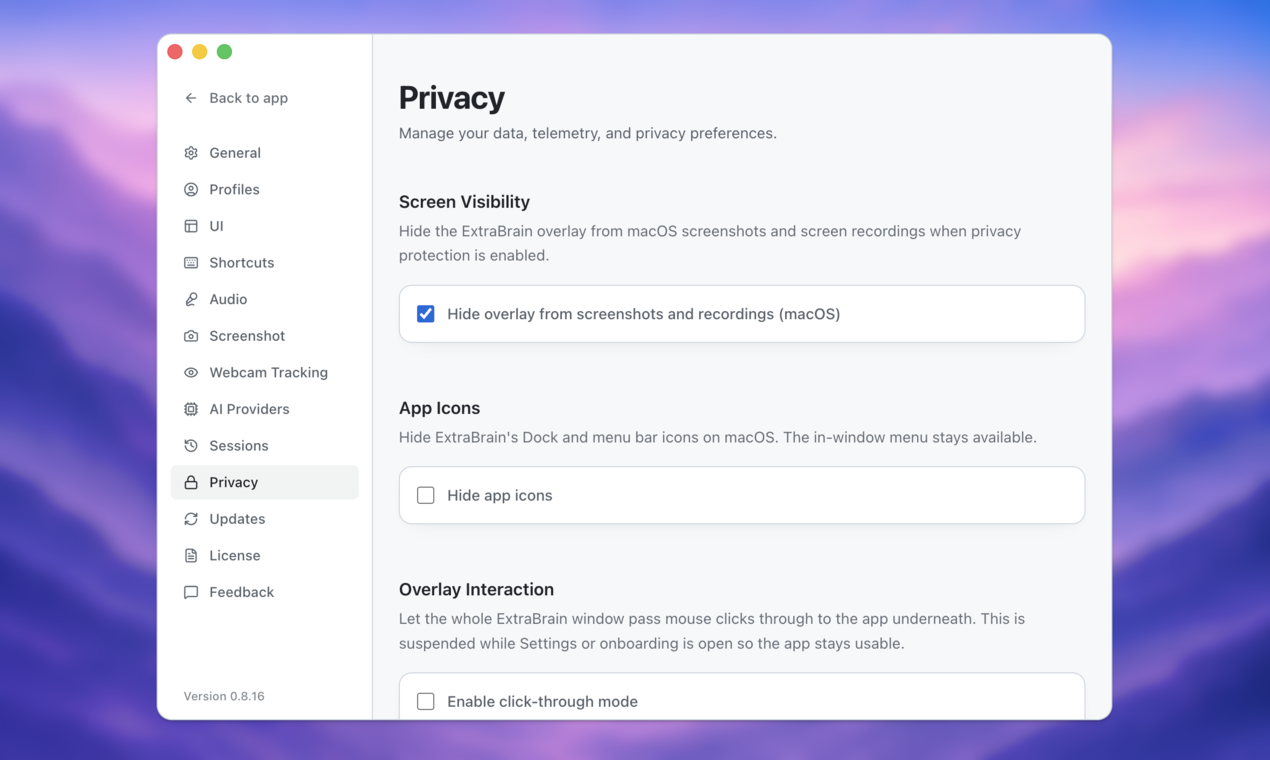
ExtraBrain is a free, local-first Mac desktop AI interview assistant and meeting copilot that can help you practice, review transcripts, reason through screenshots, and organize preparation notes. It is designed to stay hidden from screen sharing and screen recording on major meeting tools, but you are still responsible for following all assessment, interview, workplace, school, and platform rules.
Before You Look for Invisible AI Help, Understand Alva Labs
Alva Labs assessments are commonly used by employers to evaluate candidates before or during a hiring process. Depending on the role, you may encounter logic reasoning, coding, personality, leadership, or role-specific evaluation steps.
The most discussed Alva Labs format is the logic ability test. It usually focuses on visual and non-verbal reasoning rather than memorized facts. Candidates often describe matrix-style problems, pattern completion, sequence changes, and puzzles where you need to infer the missing piece from several answer options.
That design matters because shortcuts are unreliable. If every question depends on real-time reasoning, a saved answer key or copied solution set will not help much. You need pattern recognition, time management, and enough composure to avoid panicking when a question looks unfamiliar.
Why Cheating Is Riskier Than It Looks
Search results make cheating sound simple. In practice, it is risky, stressful, and often counterproductive.
If someone else takes the assessment for you, your result does not represent your own ability. If you paste questions into a browser chatbot during a monitored session, the behavior may be visible through screen share, webcam context, browser history, or timing patterns. If you use a random browser extension that promises invisibility, it may still appear in a tab, overlay, permissions prompt, extension list, or recording.
There is also a career cost. Getting flagged can mean losing an offer, damaging recruiter trust, or creating a mismatch between your assessment score and the role you are expected to perform later. Even if nobody notices, you may enter interviews and onboarding without the confidence that comes from genuine preparation.
Use AI assistance only when it is allowed. Use it to learn the problem types, rehearse under time pressure, review your reasoning, and improve your explanations. Do not use it to impersonate ability you do not have or to violate explicit rules.
Common Alva Labs Assessment Areas
Alva Labs can be used in different hiring workflows, so the exact experience varies by employer. Still, candidates often prepare for these broad areas.
| Assessment area | What it tends to evaluate | How to prepare |
|---|---|---|
| Logic ability | Pattern recognition, abstract reasoning, speed, accuracy | Practice timed visual logic puzzles and review mistakes |
| Coding task | Practical programming ability, problem solving, explanation quality | Rehearse coding prompts and talk through tradeoffs |
| Personality assessment | Work style, preferences, consistency, role alignment | Answer honestly and understand the role expectations |
| Leadership or role report | Decision style, collaboration, communication, management signals | Prepare examples from real experience |
The logic portion is usually the one that creates the most anxiety because it feels unlike everyday work. That is also where deliberate practice helps most.
What Makes the Logic Test Difficult
The difficulty is not just the questions. It is the combination of unfamiliar visual patterns, adaptive scoring, and time pressure.
Many candidates report that the logic test gives only a short amount of time per question. That means you cannot spend several minutes debating every possible rule. You need a repeatable process for checking rows, columns, shape changes, rotation, count, position, shading, and direction.
A strong process matters more than a lucky guess. When you know what to inspect first, you stay calmer and avoid wasting time on random ideas.
How ExtraBrain Fits Into Responsible Preparation
ExtraBrain is not a magic answer machine for violating assessment rules. It is most useful as a private preparation workspace before the assessment and as a review tool afterward when rules allow note taking, transcription, or meeting support.
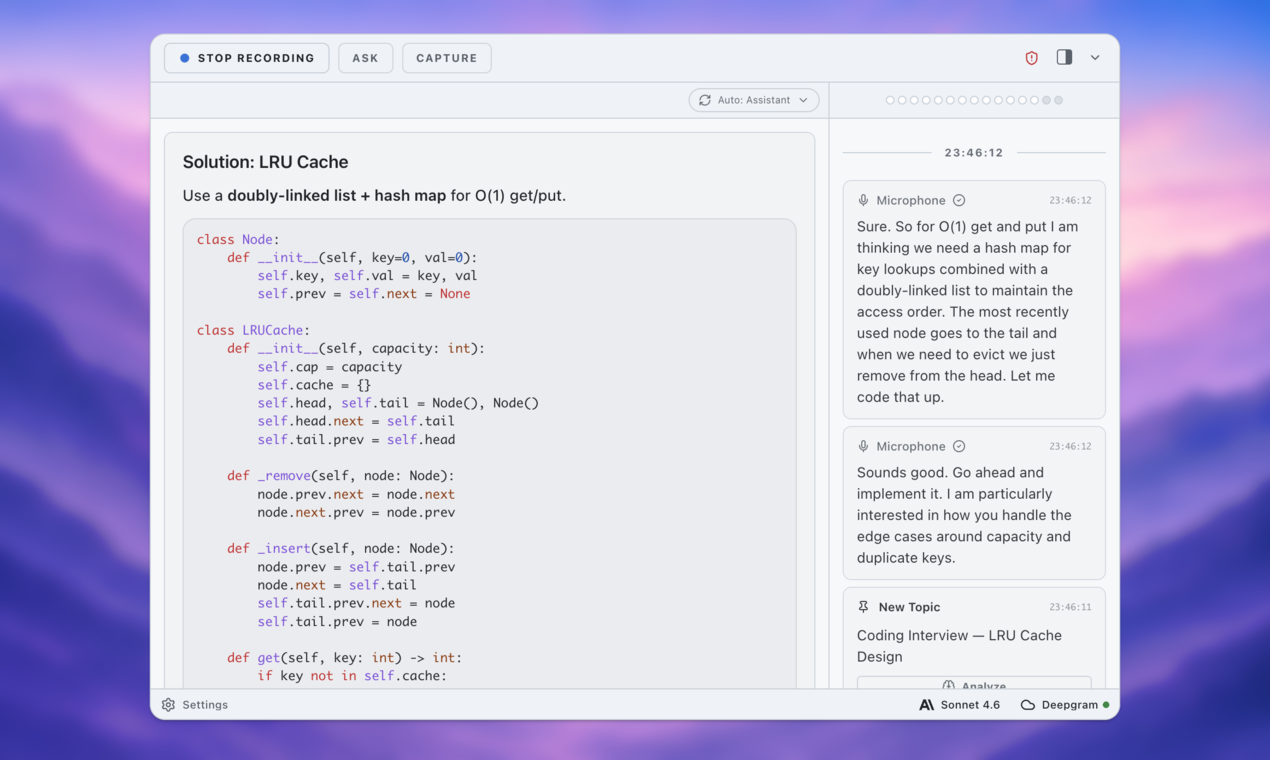
During practice, you can use ExtraBrain to capture your reasoning out loud, summarize where you got stuck, and turn your mistakes into a repeatable checklist. For coding or interview-style portions, it can help structure answer outlines, technical explanations, and follow-up questions from transcript and screen context. For meetings with recruiters or mock interview partners, it can help you keep track of what was said and what you need to review next.
ExtraBrain is available for macOS today, including Apple Silicon and Intel Macs. It supports local Parakeet transcription and optional Deepgram, local Gemma 4 on-device AI where installed and compatible, Anthropic, OpenAI, custom OpenAI-compatible endpoints, Claude Subscription, and Codex Subscription. With local Parakeet transcription plus local Gemma 4 where installed and compatible, transcription and AI prompts can stay local. If you choose external providers, selected prompts, transcript text, screenshots, audio, or context may leave your device depending on your configuration.
A Better Strategy Than Trying to Cheat
Practice Alva-style logic questions under a timer
Timed practice is the closest safe substitute for the real pressure of an assessment. Set a strict timer, answer without pausing the clock, and review every mistake afterward.
When reviewing, do not only ask whether the answer was right. Ask what pattern you missed. Ask whether you checked rows before columns. Ask whether rotation, quantity, color, position, or shape transformation gave the clearest clue.
A simple review prompt for ExtraBrain could be:
I missed this visual logic question during timed practice.Help me identify the likely rule family, explain the reasoning step by step, and create a checklist I can use on similar questions.Build a pattern checklist
Most visual reasoning questions become less mysterious when you inspect them systematically. Start with the simplest possible rule before assuming the puzzle is complex.
Use this checklist during practice:
- Count objects in each cell.
- Compare rows and columns separately.
- Check whether shapes rotate, flip, merge, disappear, or change size.
- Track color, shading, fill, and outline changes.
- Look for arithmetic rules, such as one cell combining features from two others.
- Test one rule at a time before guessing.
The goal is not to memorize every possible puzzle. The goal is to train your eyes to search in a consistent order.
Simulate the real assessment environment
Practice in the same conditions you expect on test day. Use a quiet room, close unrelated apps, put your phone away, and run the timer seriously. If the employer says no outside help, follow that rule. If the employer allows scratch paper, use scratch paper during practice too. If the assessment is paired with a live meeting, rehearse explaining your thinking clearly while solving.
The first time you feel time pressure should not be during the real assessment.
Learn when to move on
A common mistake is spending too long on one difficult question. That creates a cascade where later questions become rushed.
Use a simple rule during practice. If you cannot identify a plausible rule after a set amount of time, make the best answer you can and move forward. If the platform allows review, return later. If it does not, protect your pacing and keep your composure.
Prepare honestly for personality questions
Do not try to game personality assessments with an imagined perfect persona. These assessments are usually designed to look for consistency and role fit. Answering dishonestly can create a mismatch between the job, your working style, and future expectations.
Instead, read the role description carefully. Think about your real preferences, collaboration style, stress response, and decision-making habits. Use ExtraBrain before the assessment to organize examples from your own experience so you can talk about them clearly in later interviews.
Invisible AI Tools: What to Watch Out For
Many tools advertise themselves as invisible, undetectable, or safe for assessments. Be careful with those claims.
Some tools are only invisible in one narrow situation. A browser extension might disappear from the page but still expose itself through extension permissions, tab behavior, or browser UI. A phone-based workflow may fail the moment a webcam is required. A generic chatbot may be useful for practice but awkward or visible during a shared-screen session. A remote AI service may send sensitive prompts, screenshots, or transcript content outside your device.
ExtraBrain takes a different approach. It is a desktop AI assistant for Mac with screen-aware context, live transcription, local-first options, bring-your-own provider setup, and privacy controls. That makes it useful for preparation and allowed live workflows, but it does not remove your responsibility to follow the rules.
Example Alva Labs Preparation Workflow with ExtraBrain
Here is a practical workflow that keeps the focus on learning rather than deception.
Day 1: Baseline practice
Take a timed set of visual logic questions without assistance. Record how many you completed, how many you guessed, and which patterns slowed you down. Then use ExtraBrain to summarize your weak spots and create a study checklist.
Day 2: Pattern families
Practice one pattern family at a time. Focus on rotation, movement, counting, shape combination, and shading changes. After each set, explain your reasoning out loud and let ExtraBrain help turn that explanation into concise notes.
Day 3: Timed mixed sets
Switch to mixed practice so you cannot predict the rule type. Use the same timer you expect in the real assessment. Afterward, review only the questions you missed or nearly missed.
Day 4: Pressure rehearsal
Simulate the assessment as closely as possible. Close unrelated apps, remove distractions, and complete the practice set in one sitting. Do not pause when a question is hard. Train the habit of moving forward.
Day 5: Final review
Review your checklist, not hundreds of new questions. Your goal is to enter the assessment calm, rested, and familiar with the process.
How to Handle Coding or Interview-Style Alva Labs Steps
Some hiring processes combine Alva Labs with coding tasks, recruiter calls, or live interviews. That is where an AI interview copilot can be useful if the rules allow it.
ExtraBrain can help you prepare explanations for coding tradeoffs, system design decisions, and behavioral examples. For example, you can practice answering:
- What assumptions are you making?
- What edge cases would you test?
- How would you explain your solution to a non-technical stakeholder?
- What would you improve if you had more time?
- What did you learn from a previous project that applies here?
The strongest candidates do not simply reach an answer. They show how they think.
FAQ
Can I use AI during an Alva Labs assessment?
Only if the assessment, employer, school, workplace, and platform rules allow AI assistance. If the rules prohibit outside tools, do not use AI during the live assessment. You can still use ExtraBrain before the assessment for practice, review, and preparation.
Is invisible AI help the same as cheating?
Not always. An invisible desktop assistant can be used responsibly for permitted meetings, mock interviews, note taking, and preparation. It becomes cheating when you use it to violate explicit rules, impersonate your ability, or hide prohibited assistance.
How should I prepare for the Alva Labs logic test?
Practice timed visual reasoning questions, learn common pattern families, review mistakes, and build a repeatable checklist. Use AI to explain practice problems and improve your process rather than to fake results.
What should I do if I get stuck on a question?
Do not panic. Check rows, columns, rotation, count, shape, position, and shading. If you still cannot find the rule, choose the best answer you can and move on so one question does not ruin the rest of your timing.
Can ExtraBrain run fully local?
A fully local ExtraBrain setup requires local Parakeet transcription plus local Gemma 4 on-device AI where installed and compatible. If you use external AI or transcription providers, selected prompts, transcript text, screenshots, audio, or context may be sent to those providers depending on your settings.
What is the best way to use ExtraBrain for Alva Labs prep?
Use it before the assessment to rehearse timed sets, summarize mistakes, generate pattern checklists, and practice explaining your reasoning. Use it during live sessions only when the rules clearly allow AI assistance, transcription, screenshots, or notes.